What is Warhammer? A primer for newbies
By Ian
“You have a blog?” my mother-in-law asked.
“Yeah, I have a blog about Warhammer. Do you want to read it?” I said.
“She doesn’t want to read it, Ian,” my wife said.
“I’ll send it to you. I just need to think about a good introductory article to send…Actually, that would be a good blog post…”
And that’s what this is: an introduction to Warhammer.
I’ve written this with the most important information first and the more in depth stuff further down. If you’re just here to learn about your niece’s weird hobby and what to get her for her birthday, I’ve kept that near the top. If you’d like to see just how deep the rabbit hole goes (and spoiler alert: it goes on forever), read to the end, where I’ve included some helpful links.
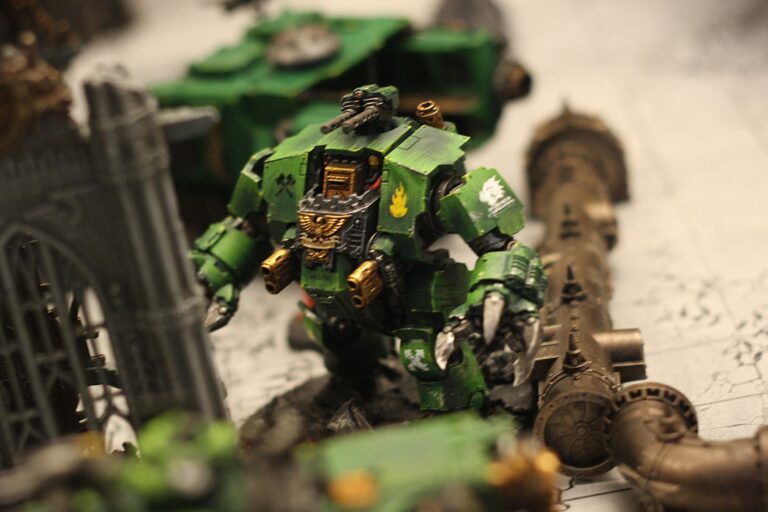
Teeny tiny wars
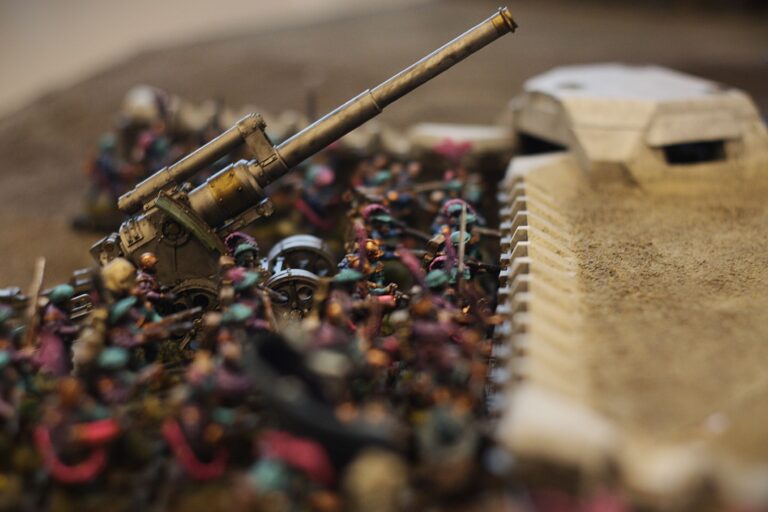
Warhammer is a miniature wargame produced by the company Games Workshop (frequently called “GW”). Typically played between two players, each has an army of approximately 50-100 models (i.e. miniatures or toy soldiers) and played on a table filled with miniature trees, ruins, hills, or much more alien terrain.
There’s a lot of ways to engage with Warhammer: the soldiers are highly detailed model kits that require assembly and painting. Some players focus on the “hobby”, which colloquially refers to building and painting the miniatures (this is often used as a verb within the Warhammer community: i.e. “I’m hobbying tonight”), while some focus on the gaming (whether playing competitively against friends or in tournaments, or more story-driven narrative games, recreating scenes from a movie, history, or one of the game’s companion novels). Warhammer also has a very deep background or lore, and some players focus primarily on reading the published works. Most players though, in my experience, engage in all of the above to varying degrees.
Every model in the game has its own rules, and these may even be specific to the weapon it’s carrying (i.e. a sword vs a two-handed hammer, or a missile launcher compared to a laser cannon). Players take turns moving and attacking with their army: models have movement and weapon ranges in inches, and attacks are resolved by rolling lots of dice. Depending on the scenario, players may win by claiming an objective (score more points over the course of the game, hold the bridge, storm the fort) or by wiping out their opponent’s army.
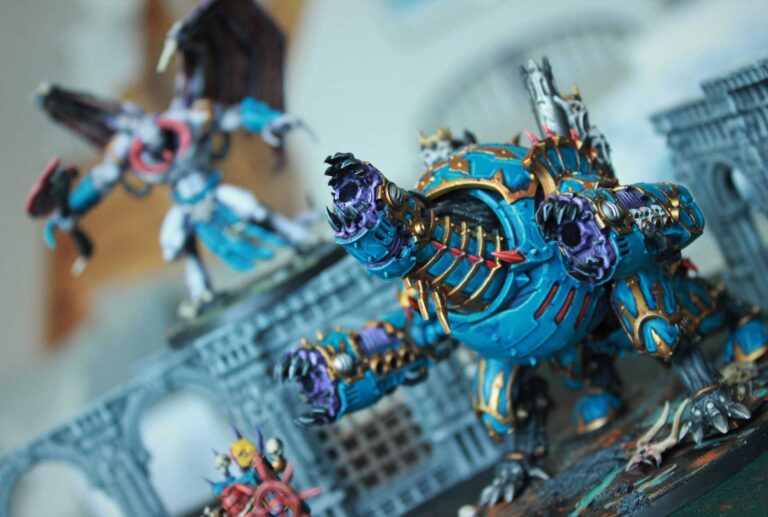
Where do you find this stuff?
GW has stores all over the world (either called Warhammer or Games Workshop) that stock their products exclusively and are on-ramps for new players by providing hobby lessons and introductory games. There are also plenty of independent game stores (sometimes called a “friendly local game store” or FLGS) and online retailers. Googling “Warhammer” should bring up the relevant sites.
There are two main Warhammer games in distinct settings: Warhammer 40,000 (“40k”), the dark, far future sci-fi setting, and Age of Sigmar (“AOS”), the larger-than-life fantasy setting. In addition to these two, there are over half a dozen spin off games in the same or similar settings.
If you want to buy a Warhammer gift for someone (and presumably just don’t out-and-out ask what they want), terrain is often a safe bet. You need terrain on the table to play, and it’s usually an overlooked part of the hobby. Otherwise, try and find out which army they collect.
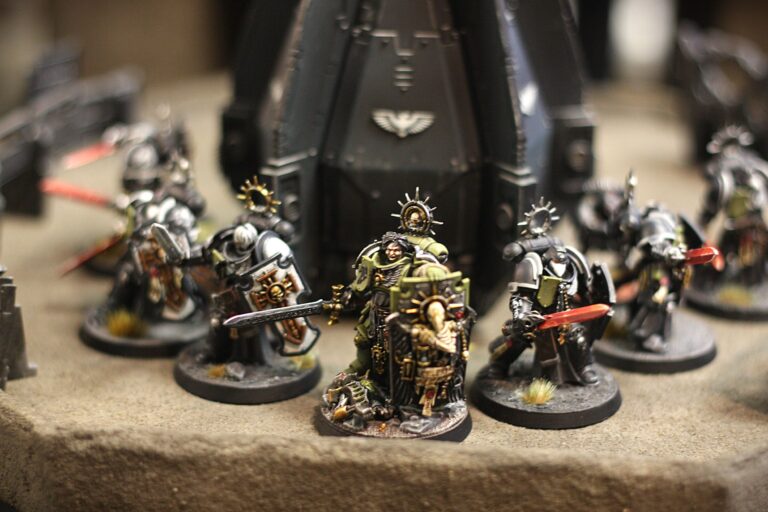
What you purchase will be primarily dictated by your budget: I’d stay away from single character models (i.e. captains, assassins, wizards), as these often aren’t duplicated much in an army and could be quite specific within a faction. If you’re able to go to an aforementioned Games Workshop/Warhammer store, the staff there should be helpful: just tell them what army you’re looking for (or, better yet, show them a picture of the player’s models) and they should be able to steer you to a decent gift. Personally, I can’t recommend enough the Games Workshop at Yonge and Lawrence in Toronto, Ontario, if you live in the GTA: the staff there are fantastic.
The many and varied factions of both 40k and AOS means it’s outside the scope of this piece to give specific recommendations, but the good news is you can take multiples of most units in an army, so there’s a good chance a gift of an infantry, monster, or vehicle kit will be usable. But still get a gift receipt to be on the safe side.
If you’re buying for a new gamer, GW makes excellent starter sets containing two small armies: these come in different sizes at various price ranges. There are also various beginner paint sets to help new hobbyists learn the ropes (and GW’s paint range is designed with the beginner in mind).
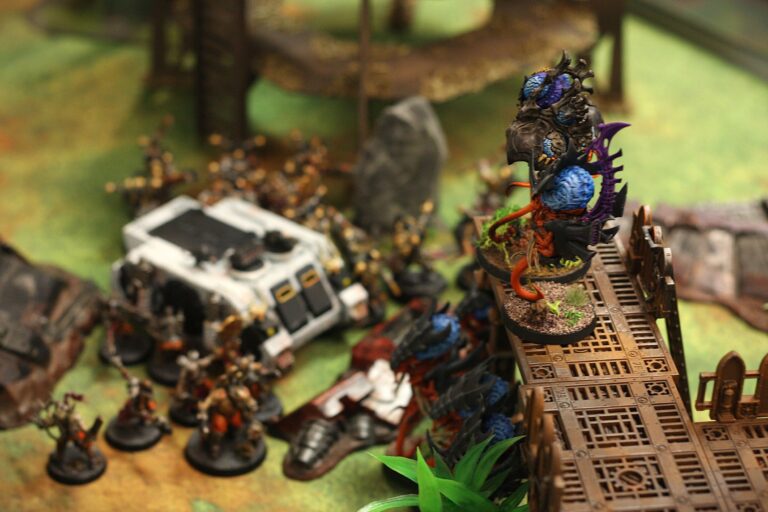
These things cost how much??
There’s definitely sticker shock to seeing a little plastic toy cost $50+. There isn’t any real way to soften that: this stuff is expensive. Maybe not as expensive as some other hobbies, and there are even other miniature companies that charge more for comparable products, but Warhammer is not cheap.
The good news is that GW’s miniatures are some of the highest quality on the market and extremely detailed. Most of their manufacturing is done in the UK rather than China or a third-world country, which can be important for some consumers. And though some people may initially see the fact that you have to build and paint them as a drawback, a single miniature can take hours to complete, making the hour-to-dollar entertainment value surprisingly good.
The game itself, by its very nature, has to be played in person, making it a great alternative to many screen-related hobbies and activities. Compared to online gaming, the fact that you have to look your opponent in the eye often fosters much more mature and supportive gaming groups (though you will still find plenty of toxicity online, like many things on the internet).
Building and painting
Most of GWs miniatures are plastic with the component parts all connected to a flat sprue, which can easily be packed and shipped (there are also a few resin and metal kits: these tend to be standalone infantry models specific to certain games). The parts are cut from the sprue with small clippers or hobby knives, cleaned up of any weird nubbins or mould lines (either from clipping or the manufacturing process), and glued together. You can follow the instructions or “convert” the miniature into something unique. This ranges from swapping in different bits from other kits to sculpting part or the whole of the model from scratch. Whether built stock or converted, once the glue dries the painting begins.
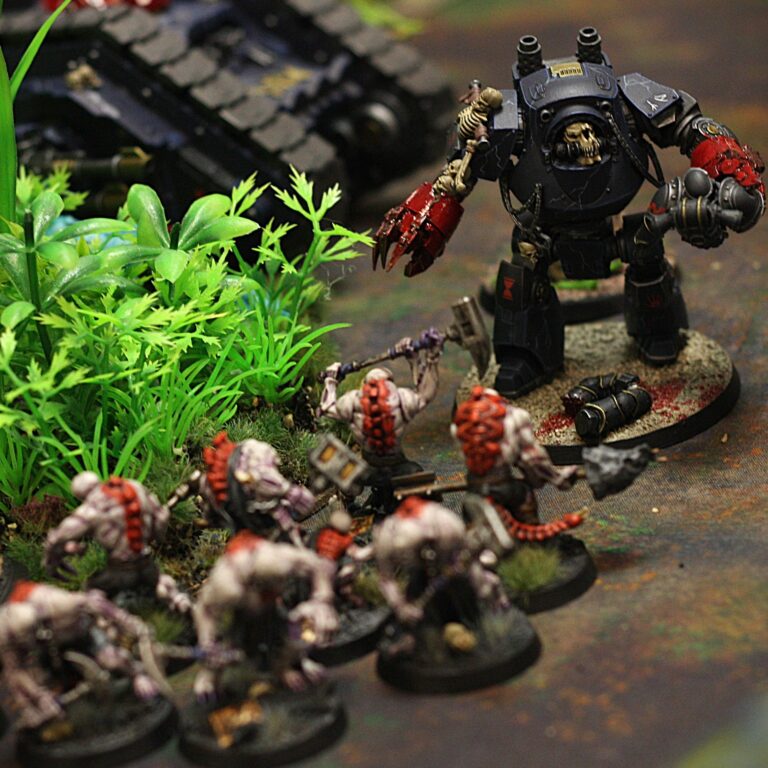
Paint won’t adhere properly to the bare plastic, so the miniatures need to be painted with primer first, most commonly from a spray can/rattle can. After that, you can paint the figures however you’d like. Usually, players will paint their army into a cohesive force with matching uniforms/alien carapace, and GW has multiple examples of colour schemes for each faction, each scheme representing a different army within the lore (some of these might be mentioned in passing in a single paragraph within a rulebook, while others will have multiple novel series dedicated to them). You can also come up with your own paint scheme and background (and, if you’re interested, you can read about my “homebrew” army here).
Painting into the weeds
When you look at something outside, there is usually only one light source: the sun. This directional light creates natural shadows and variations in the colour of an object, something we don’t even think about: our brain just files all those variations as the same colour. But when you’re playing a game of Warhammer in a well-lit room, those shadows can be eliminated by multiple light sources, and it’s easy for your figure to look flat. Therefore, most painters will layer different shades of the same colour onto their miniatures to create that depth and shadow, such as the folds of a cloak. As this can be time consuming, many painters batch-paint their miniatures: i.e. instead of painting one infantry model at a time, you might paint a whole squad of ten at once, painting a colour onto the next as the paint on the previous figure dries.
There are lots of different ways to paint Warhammer: GW sells a range of acrylic paints that are very beginner friendly, but there are other brands. YouTube is your friend here, with thousands of videos to paint every conceivable miniature, with plenty of tutorials for new hobbyists. If you want to feast your eyes on some truly magnificent paint jobs, check out this site with past winners of GW’s Golden Demon competition.
How does all this actually work in the game?
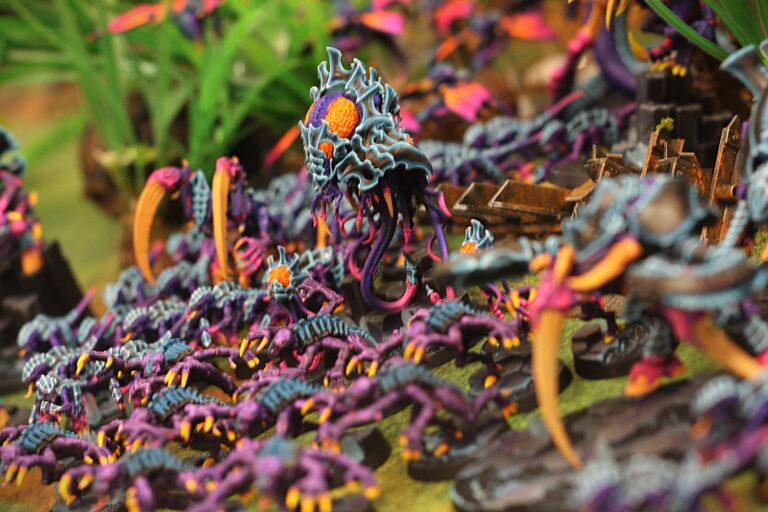
A game of Warhammer is usually played on a table about 5’ x 4’, set-up with lots of model terrain. As mentioned above, each player sets up an army (at the standard game size, these will be 50-100 models each, but some forces can be much fewer or many more than that) and players take turns moving their models and resolving attacks by rolling dice: the whole affair generally takes two to five hours, depending on a lot of factors. Every unit is assigned a points value representing how powerful it is (i.e. a squad of infantry might be 50 points, an officer model 65 points, a tank or a monster 200 points). Players build their armies to a predetermined points limit and ideally the points ensure armies will be roughly balanced, even when the number or type of models are disproportionate. That being said, there is a lot of strategy to building an army, and “list-building” or “list-crafting” is its own sub-activity within Warhammer, whether that’s to make the army more competitive or to make it closely represent a force from the game’s lore.
Online discourse around Warhammer tends to focus on competitive and tournament play, though this is just one way to play the game. This blog is mostly about narrative gaming, where the focus is on immersive games of fully-painted models and terrain, and missions that tell a story rather than the more abstract games you will find at tournaments. Both of these (and others) are perfectly valid ways to play Warhammer and people should be encouraged to discover for themselves their preferred way to play the game or engage with the hobby.
What’s the backstory for Warhammer?
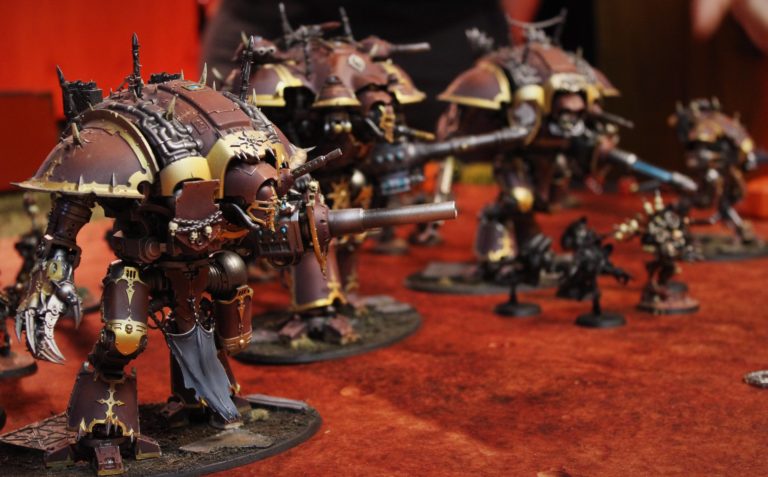
I primarily play 40k, so will focus on that, but you can find more about Age of Sigmar here. Taking place in the Milky Way galaxy about 40,000 years into the future, the universe of 40k is one of constant war. The Imperium of Man–the fascist, galaxy spanning empire–is on the brink of collapse. The enemies are at the gates, with various alien races invading many worlds and humans under the sway of dark gods rising up. The Imperium itself is a monolith of corruption, bureaucracy and religious totalitarianism held together by its own momentum and the blood of infinite soldiers.
40k is a universe of darkness. Every faction is written to be villians, giving gamers the perfect excuse to throw down. Even players of the same army have an excuse to fight, with the lore being littered with betrayals, civil wars, and insurrections. This is sometimes lost within the marketing of the game, which often portrays Space Marines–the game’s protagonists–as super human heroes. But even they are canonically raised up from children to fight and die for a horrific regime.
In all the darkness of 40k, there is a surprising amount of humour. Warhammer draws from a great many sources, and the influences of cultural touchstones and popular media are seen throughout the game. But in almost every case, these are taken to the extreme. There are no half measures in 40k: everything is taken to the Nth degree. And if the sheer oppressiveness of the lore is overwhelming (or, god forbid, someone tells you anything in 40k is a good idea), remember that the setting is satirical, not aspirational.
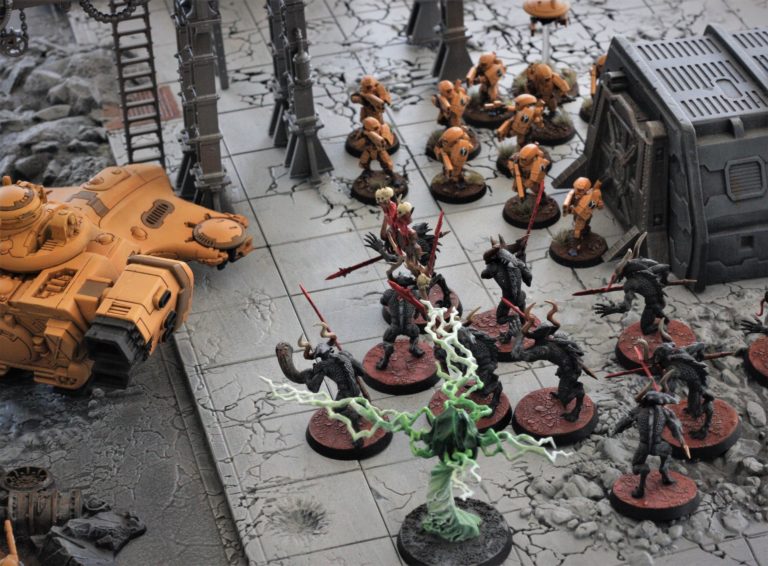
There is only war…with friends
Hopefully, this has given you a nice introduction to Warhammer. It’s a hobby that I’ve grown to love over more than twenty years and I find it’s a fantastic way to express my creative side through painting and writing, not to mention it’s a great excuse to hang out with a friend for a few hours and catch up between dice rolls. I’ve tried to touch on the main pillars of Warhammer: the lore, the hobby, and the game, but there is also the community. Finding a gaming group is a great way to make friends, and the people I’ve met through this game are very dear to me.
If you’re interested in reading about the narrative side of the hobby, our blog focuses on that and we have (at the time of writing) over two years of content you can read through. I’ve compiled links below that you may find useful if you want to go further down the rabbit hole.
Be warned though: there’s no bottom.
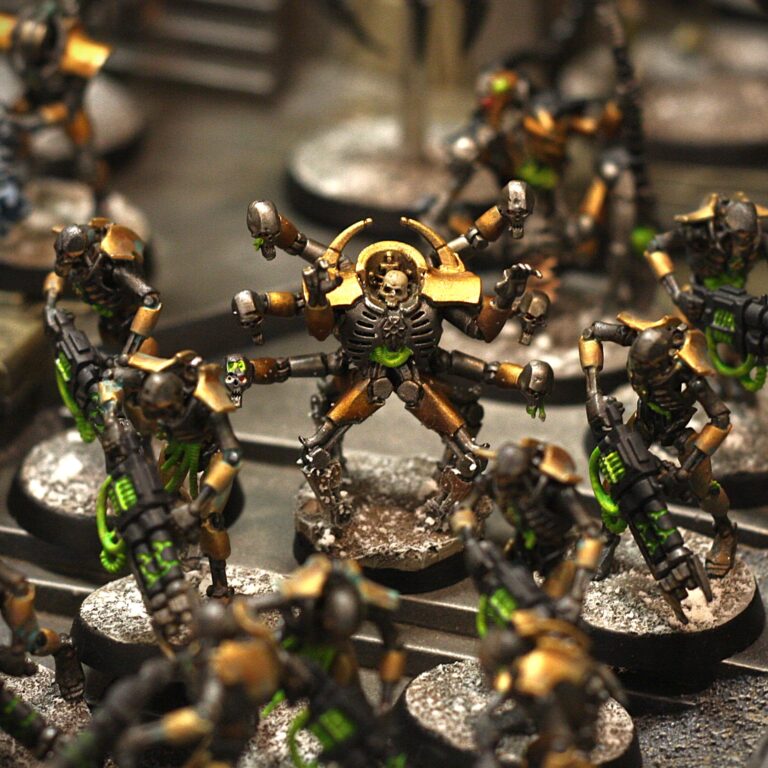
Introductory novels
GW’s publishing arm is called the Black Library and two of my favourite authors are Dan Abnett and Aaron Demksi-Bowden: you can’t go wrong with either of them. Almost all Warhammer books are in audiobook (including on Audible) and ebook formats if you can’t find hard copies or prefer those.
First and Only is the first novel in Dan Abnett’s Gaunt’s Ghosts series and is an ensemble story about a regiment of regular humans facing the horrors of the galaxy. This gives a great ground-level introduction to the wars of 40k.
Xenos is the first book in the Eisenhorn trilogy, Dan Abnett’s first Inquisitor trilogy. It is essentially a detective noir story and gives great insight into the what the Imperium looks like off the battlefield.
Spear of the Emperor by Aaron Demski-Bowden focuses on two Space Marine chapters fighting on the dark side of the galaxy and is a fantastic introduction to 40k’s protagonists as well the “modern” state of 40k where the Imperium has been sundered in half.
Lore on YouTube
Arbitor Ian (a different Ian) is my favourite lore channel, and the below video is a great overview of 40k lore:
https://youtu.be/05YRMHWtv1Y?si=F56ZGBYByftLWQ_K
Painting on YouTube
Duncan Rhodes is a former GW painting presenter and is a cornerstone of the hobby, with lots of great introductory videos:
https://www.youtube.com/playlist?list=PLq_4hrcy0wbQ_8rCZJ_7R8Xr20KR_vpF7
Games Workshop also has their own YouTube channel with lots and lots of videos:
Buying
Goonhammer (a gaming site that focuses on competitive play) released a series of great gift guides in 2024 for varying levels of hobbyists:
Goonhammer Gift Guide 2024: Best Gifts for Hobby Beginners
Goonhammer Gift Guide 2024: Best Gifts for Intermediate Hobbyists
Goonhammer Gift Guide 2024: Best Gifts for Experienced Hobbyist
Learn to play
Tabletop Tactics is one of my favourite battle report channels on YouTube and they have learn to play videos:
How to Play Warhammer 40K 10th Edition
How To Play Warhammer Age of Sigmar 4th Edition
GW also has learn to play videos on their YouTube channel:
Getting Started with Warhammer 40,000
Official Websites
There are a series of official Games Workshops you can find below.
Warhammer Community (a great place to get news on Warhammer)
The Independent Characters Podcast
The ICs Podcast is a great positive look at 40k, and their episodes are usually both timeless and very accessible.