Using Crusade Rules like RPG Supplements
By Ian
Introduced in 9th edition, Crusade was and continues to be the predominant way to play narratively. Codicies and campaign supplements have Crusade rules which are, in essence, progression systems to level up your units and track injuries. Each book also has campaign mechanics unique to that setting or army: hunting monsters, capturing planets through negotiation or conquest, and looting Blackstone, to name a few. These rules are pretty cool, even though they vary in quality and complexity.
But there is an issue: they don’t always gel with your narrative.

Why not me?
Over December 2024, we saw a slew of new detachments released for every faction. This was great to see, with gaps in various armies being filled, and lots of very evocative army rules. A great new detachment, for example, is the Space Marine Librarius Conclave, where your psykers get access to a host of abilities with names familiar to anyone who used previous editions’ psychic disciplines.
But at least one person wasn’t too pleased: my friend Jacen, whose Grey Knights were explicitly (and, he argued, bewilderingly) excluded from the detachment.
There is a case for this. A detachment dedicated to psykers should be accessible by the army that is all psykers. Currently, the detachment essentially requires the player to attach librarians or inquisitors to most units to get any benefit.
I told Jacen I’d be fine with him running the detachment with his Grey Knights, but it didn’t mollify him as far as I could tell. And I get it: it sucks to have to house rule something when it seems such an obvious fit for your army.
Sharing Crusades
Then there was the Custodes vehicle detachment. In a different chat, there was a discussion about putting an injured Custodes into a dreadnought. This you can’t do with the Custodes Crusade rules, but would be simple enough to port over from the Marines book with the Campaign Master’s/Game Master’s (GM’s) permission.
And there it is: just use rules from other books.
I’ve GMed games of Fantasy Flight Games’ Star Wars roleplaying system (Edge of the Empire, Age of Rebellion, and Force and Destiny, depending on your flavour), and when that game was live, regular supplements came out. Guess what: my droid Heavy player didn’t limit himself to the Hired Gun book for new weapons and gear. No, he took whatever looked good. There’s no restrictions in those books limiting gear to certain classes, it’s just up to the GM if they give players access to that gear. Necromunda, from my limited experience, is the same: you get whatever gear and campaign mechanics your Arbitrator decides to implement.
So why not 40k?
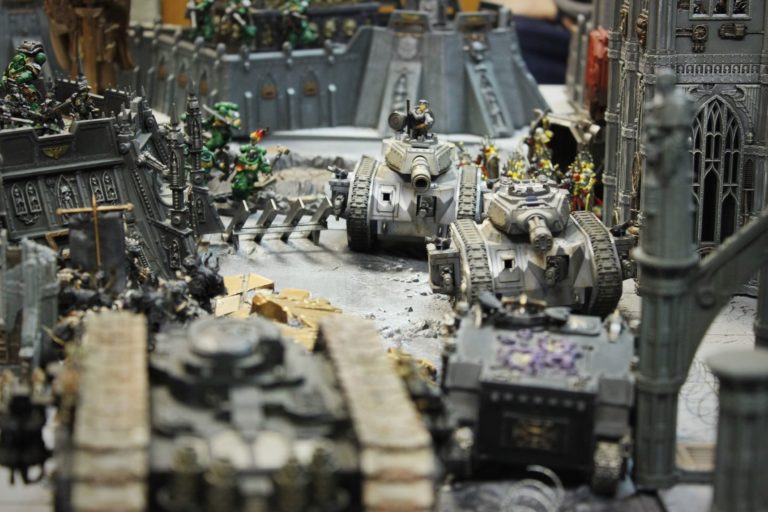
Endless Possibilities
Maybe your Genestealer Cults player has based their army around the criminal underworld rather than infiltrating factories and political offices: in that case, the Drukhari rules for expanding territory might be more appropriate (though we’ll see if they show up in 10th edition). Running a fleet-based Astartes chapter? Look at Chaos Space Marine rules for warfleet glory. Want to summon the T’au’va? The 9th edition Aeldari Codex had rules for summoning Avatars.
For anyone not familiar with the concept, reskinning something in wargaming or RPGs is taking a game mechanic, stripping away the lore or story attached to it, and adapting it to suit your needs. For example, you might take a D&D scenario about exploring a tomb and use it for your Star Wars smugglers hunting for Jedi artifacts.
The same can be done for Crusade rules. To use the above example, if your Genestealer Cults player is using the Drukhari monopoly/collect-them-all rules, you could change each location name to be different parts of an Imperial Underhive. You don’t even need to reinvent the wheel: you could take the names from Necromunda campaign locations, and the various Crusade rewards could be copy and pasted from the Ascension Rewards in the current Genestealer Cults codex, or tweak them to be similar to the Drukhari rewards. Really, the only limit is your imagination and the narrative itself.
Outside of porting rules for different armies, there are a lot of other useful rules in codicies for budding GMs. For example, the T’au codex has a system generator, which could be used to randomly generate any Imperial system, not just one for a T’au crusade.
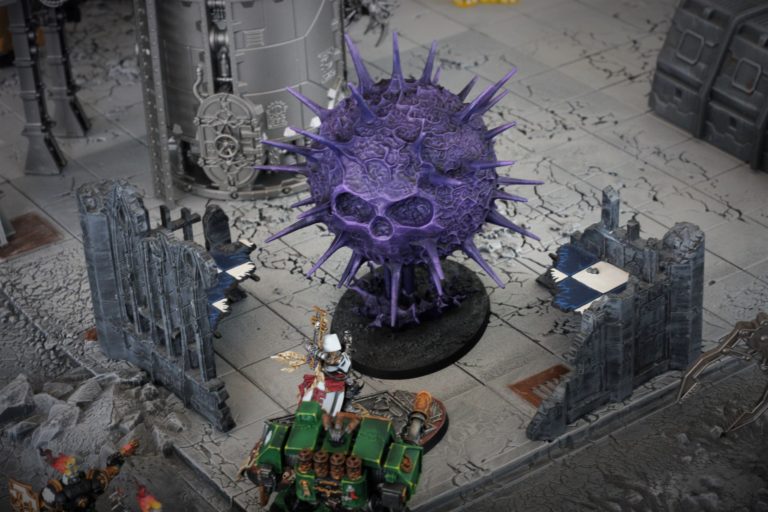
Other uses
Aside from porting over different mechanics to new armies, there’s a lot of depth in the Crusade rules from a GM/campaign organizer/event coordinator standpoint. If you look at the sheer volume of narrative content that GW has published since Crusade was introduced in 9th edition, you could make the argument that narrative play has never been better supported. But Crusade supplements often only have bare bones campaign mechanics, relying on players to carve their own narrative within their factions Crusade framework, which, as mentioned below, can cause some dissonance between players.
But if you look at Crusade mechanics as tools that can be applied to an entire campaign or event, they become much more helpful. The best example is the T’au system generator: this could be used to generate a whole sub-sector or more for your narrative. But other ones could also be applied. Ork waaagh-bosses (from 9th edition) fighting for supremacy could be applied to army champions across multiple factions. Imperial Guard logistics points could be tracked for every player (the Astra Militarum isn’t the only army that needs to maintain supply lines). And Imperial Agents Shadow Operations could be interwoven for every team involved, creating a competing web of intrigue.
When you start looking at the campaign mechanics in this way, they have much more value than a simple unit levelling up mechanic and can be valuable for all GMs (and sorry if I just convinced you to go out and buy random codicies).
Pitfalls
Crusade is kind of weird: it’s really a one-sided system designed for disconnected, pick-up games where each player is running their own campaign independent of their opponents’. Outside of the result of the game and affecting agendas, your opponent doesn’t really interact with your Crusade mini-game. For example, what happens when a T’au player battles a Tyranids player? One is trying to negotiate with a world, one is trying to eat it. Those can be tough narratives to reconcile.
Regardless of the story dissonance, the “pick-up game” nature of Crusade doesn’t really jive with what I’m selling: that is to say, if you want to house rule Crusade books to become RPG supplements, you really have to trust the people you’re playing with. You can have a GM running the campaign to adjudicate on everything, but that is a ton of work: more likely, if someone is going out of their way to break the game, they should probably be asked nicely to find a more like-minded group.
Let me give an example of how crossing the streams broke down. I ran an Old Republic Star Wars Force and Destiny (a system based around Force-users) campaign with my old RPG crew where everyone was a Jedi, except our one friend who wanted to be a Sith-hunter. Fine, he can be a specialized Republic soldier, and I let him spec into any specialization from the other non-Force-user game systems: Age of Rebellion and Edge of the Empire. In each system, there is a talent called “True Aim” which is extremely powerful: so powerful, there are only six instances of the talent across all three game systems (though at the time I believe only four were published, two each in two systems). My player managed to gain four instances of it, which made him more powerful than any Jedi in the game and soon he was easily one-shotting bosses. Not what I would call ideal from a GM standpoint.
To go back to the example of Jacen running his Grey Knights with the Librarius Conclave detachment, I trust him to be a good sport about it and to ease off if the army/detachment combo is too strong or broken so that we can have a close game. If he sees a broken combo while building his list, I trust him not to bring it, since those two things were never designed to go together in the first place. I do not trust someone I meet for the first time at a game store or public event to do the same.
Power gaming and stranger danger aside, this sort of thing is way harder to work with in the context of 40k than an RPG. Roleplaying is a co-operative adventure: if the Sith-hunter is too powerful, he’s not nuking the other players at the table and they’re still having a good time (though probably not as good of a time as they could be having if the local power gamer had a talk with his GM first–I’m not bitter, I swear!). If one player in a 40k match is bringing something broken to the table, it disproportionately affects the enjoyment of the game for the other player.
Though I think balance should take a backseat in narrative gaming, it should still be in the car. Mixing and reskinning various detachments and Crusade rules can 100% unbalance a game that is already very unbalanced in so many ways. Having a conversation with your opponent or GM ahead of the game becomes that much more important.
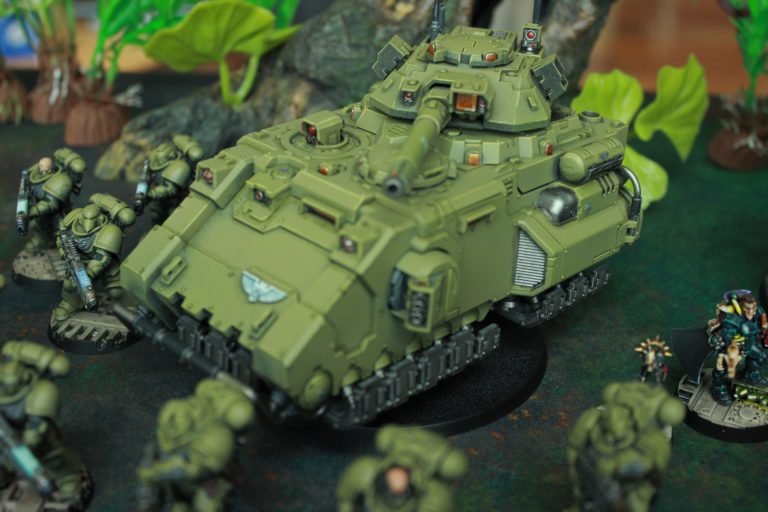
The Great Unknown
After saying all that, I think it’s worth the risk of a one-sided game, ‘cause at the end of the day that’s all you’re really risking. Maybe you spend an afternoon rolling dice when you realize that there’s no coming back for your little plastic aliens. You can’t get that afternoon back, but there are worse ways to spend it. Either you learn your opponent is someone you won’t be playing experimental rules with again, or you have a conversation with them about your next game.
The sheer amount of opportunity that exists in this mode of play (let’s call it “experimental narrative play”) is nearly limitless and worth exploring. I know in my next campaign I’ll be talking to my opponent about using it, and you should too!
Have you tried some “experimental narrative play”? Have your own horror story of an RPG gone wrong? Think I’m a complete idiot? Drop us a line at contactus@wrongsideofthemaelstrom.com and let us know how you really feel!
This article came out of discussions from various group chats: thanks to Jacen, Alys and Recusant who collectively helped with brainstorming!
Desecrated statue on the cover image by Mathias.