The Storm Guard: Chapter Focus, Part 1 - Collecting and Painting
By Ian
Welcome to the Chapter Focus of my own homebrew chapter: the Storm Guard! In this two part series, I’ll start by looking at how I collected the army and my standard paint scheme. Next month, I’ll explore the lore for the Chapter and introduce a few key characters that show up on the table.
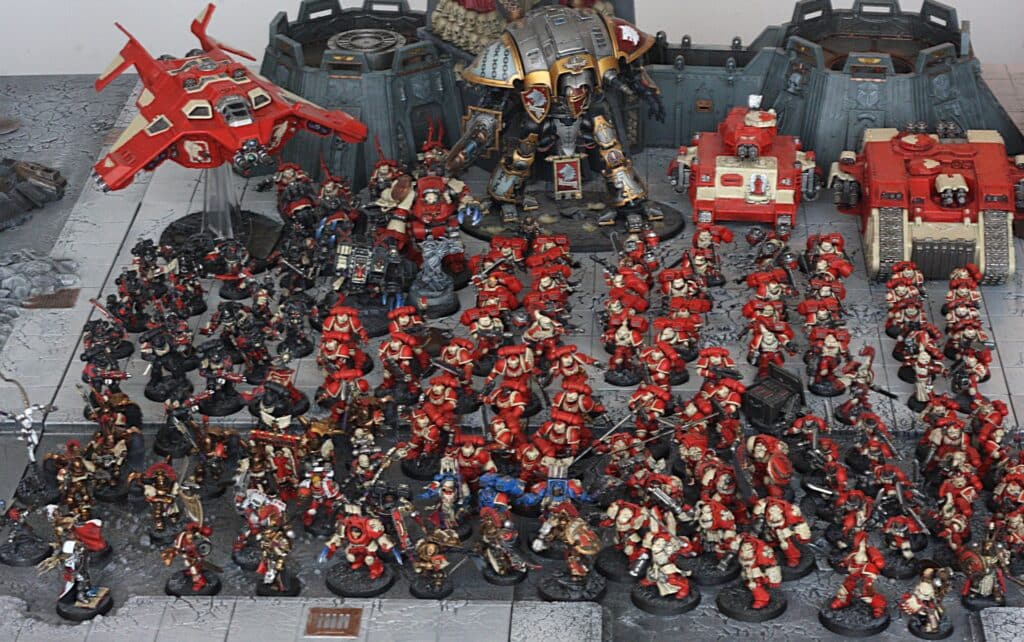
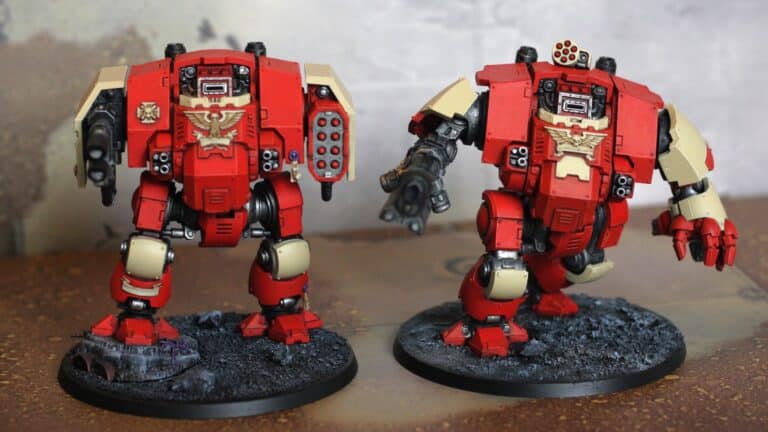
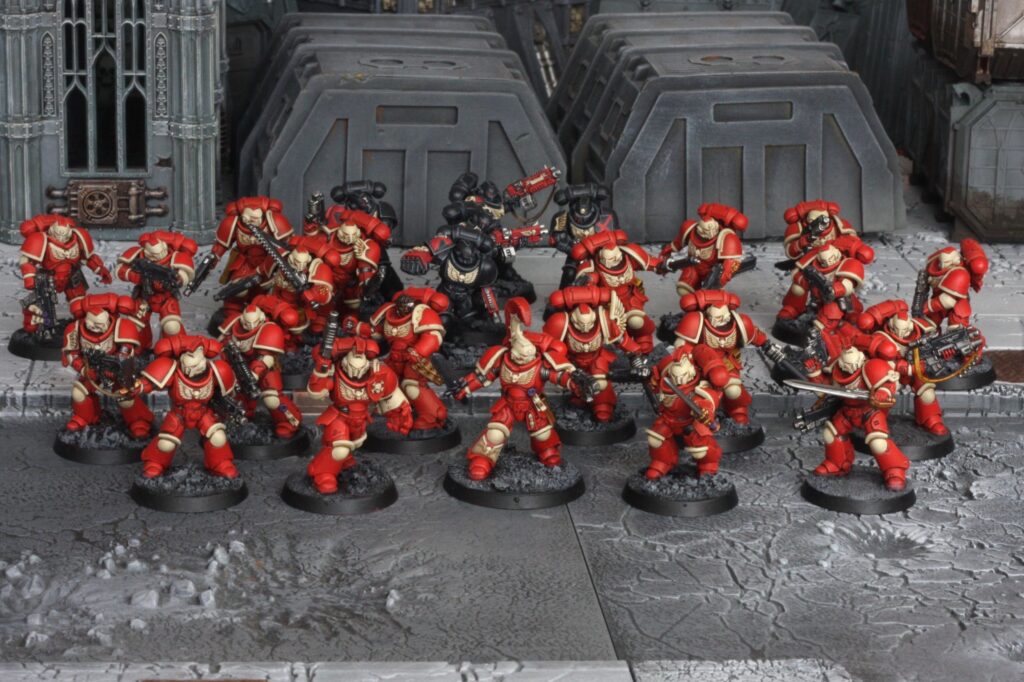
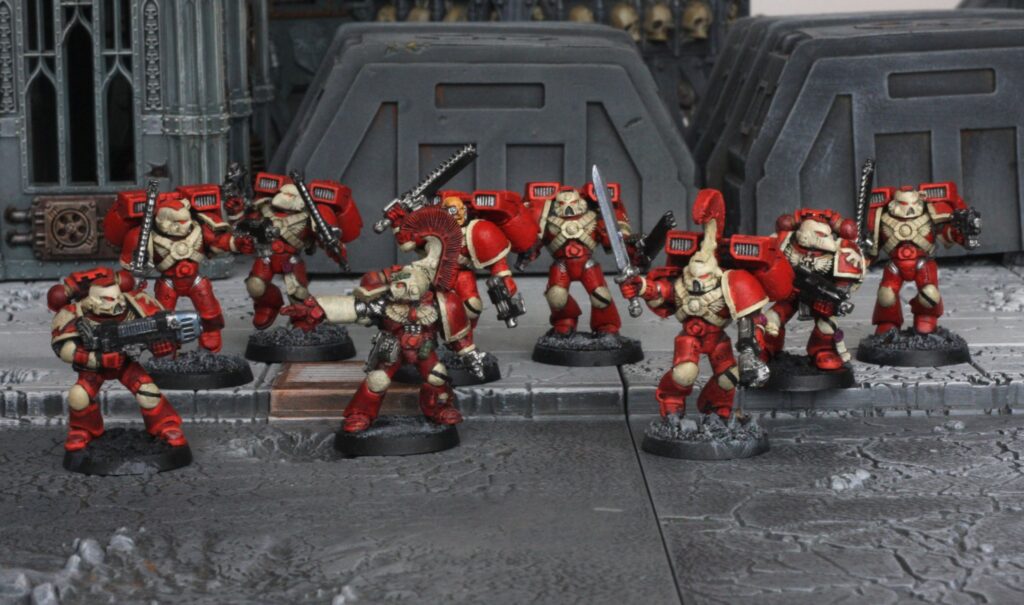
All the painted minis, circa 2023. Canis Rex painted by Erik, everything else by Ian.
How it Started
My first army was 3rd Edition Dark Eldar and I played those through much of my kiddy years, skipping fourth edition while I was in high school and doing my undergrad, and returning to the scene at the start of 5th edition. Somewhere in late 5th or early 6th, I wanted a new project, something uniquely my own. Enter the Storm Guard.
The drive to start a Space Marine army came from the desire to have a unique and original force. Space Marines have by the utmost widest of margins the largest collection of miniatures, even more so when you consider the Horus Heresy support now (not to mention a well developed line of Forgeworld miniatures at the time this project began). Choosing Marines gave me many, many options to choose from for custom characters.
But which Chapter? I think within the existing Chapters, there is room to put your own personal spin on a force: for example, choosing a relatively unknown Company allows a lot of narrative space to build the character and story of your army. But at the time, I wanted a blank canvas and that meant a homebrew chapter.
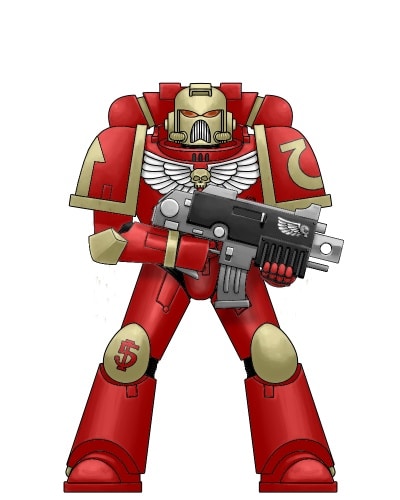
Early colour scheme mock-up.
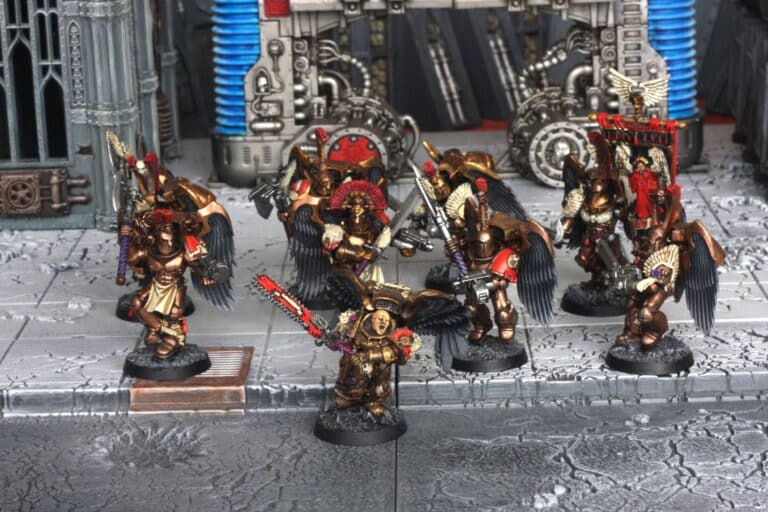
I don’t recall if the name came first or the progenitor legion, but I do remember wanting an assault focussed army with unique, elite troops. Space Wolves were a front-runner (their emphasis on larger-than-life heroes was a real draw), or a codex-compliant chapter with a unit or two of Vanguard Veterans. But I settled on Blood Angels, mainly because Sanguinary Guard were too cool to pass up.
The name Storm Guard isn’t very bloody or angelic (in hindsight, it would have worked great with a Space Wolves, tempest-focussed successor), but I liked it too much and stuck with it. Next was a colour scheme. This was eventually stolen from a forum post somewhere: bone armour with lots of red accents and greco-roman-style helmet plumes. I reversed it and reserved the helmet plumes for sergeants and up. Thank you forgotten forum poster: you inspired a massive army!
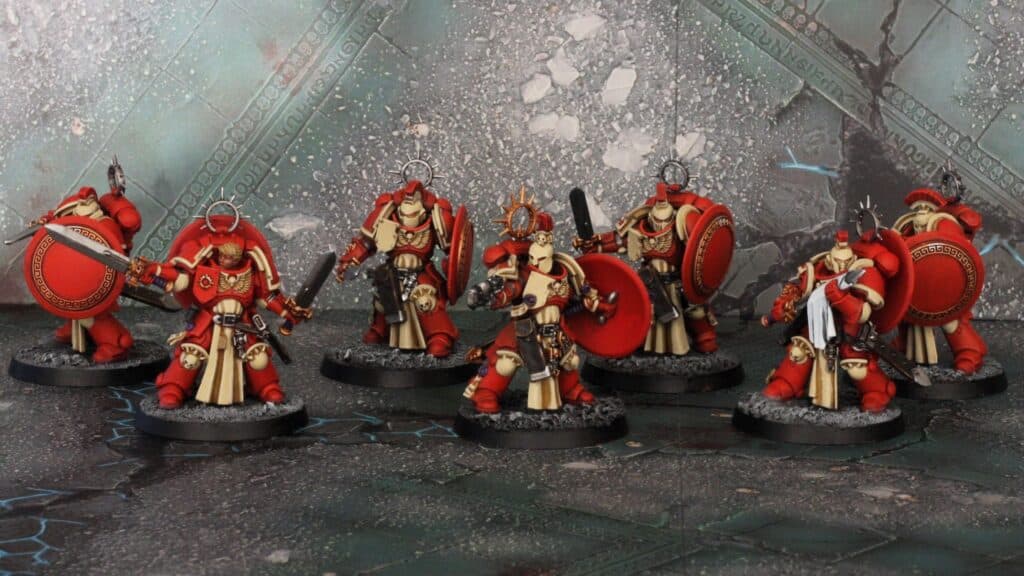
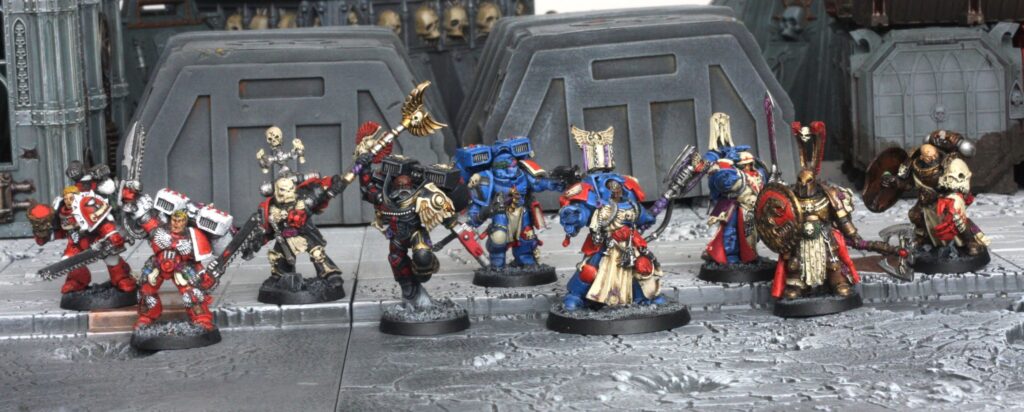
Now I had a progenitor legion, a colour scheme, and a theme: Romans! At one point I thought that doing a macabre Ultramarines successor would have been interesting, but by then I had already painted a unit of Sanguinary Guard with helmet swaps, so there was no going back. These are some of my favourite models in the army: they stand out with their bronze armour and 3rd party helmets from Maxmini. I recently added more models to bring the squad up to seven (now eight with the banner in 10th), though now I have an awkward number, as they’re fielded in units of three or six. Guess I gotta paint another one…
This comes to an interesting point with my army: I don’t care that there is variation in painting. Some models in the army I painted over ten years ago, and it shows. Even the techniques I use have changed (though the paints are mostly consistent). The difference between a 2012 Tactical Marine and a 2022 Intercessor is pretty stark, but I kind of like being able to point out the difference on the table. And, to be honest, at three feet away, it’s just nice to have a painted army, even if some of it isn’t up to scratch.
Key Units
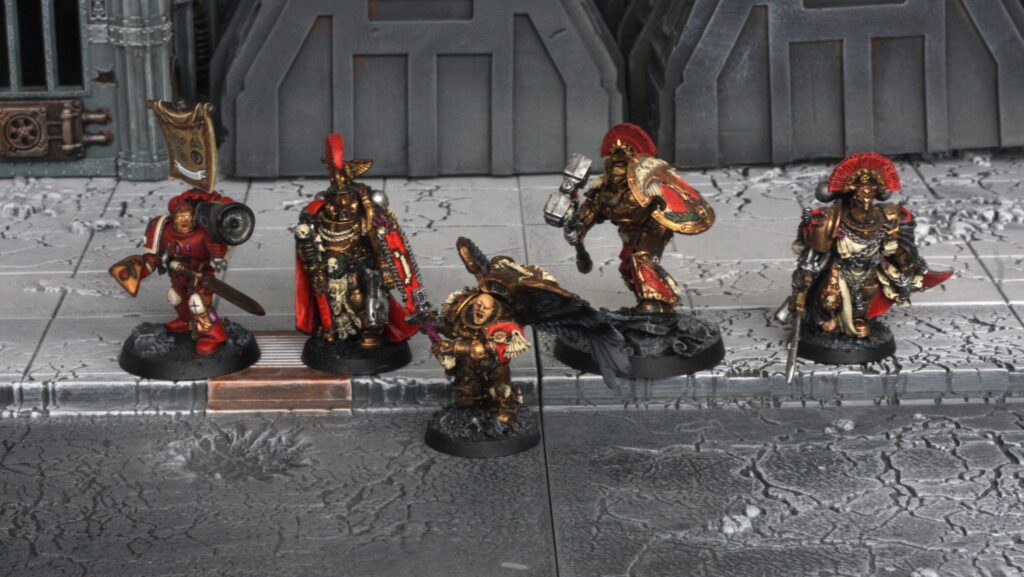
I’ve already mentioned the Sanguinary Guard as a standout unit in the army, but there are a few others. The collection isn’t large enough to encompass the entire chapter, but there’s about a company (in number, if not exactly the codex compliant number of intercessor units). I do have captain models to represent every company, however (though some are sitting in my painting backlog far, far to the rear).
Gideon Red, centre. Left-hand captain painted by Jacen, others by Ian.
The first character of note is Gideon Red, formerly Praetor of the 5th Company and now acting Imperator (Chapter Master). He was a simple conversion, adding Astorath’s jump pack to Gabriel Seth’s miniature. As you’ll read in the lore section, Red has become a pivotal character in the story of the Chapter. He’s the first character I intend to send across the rubicon primaris, which will be a fun hobby project.
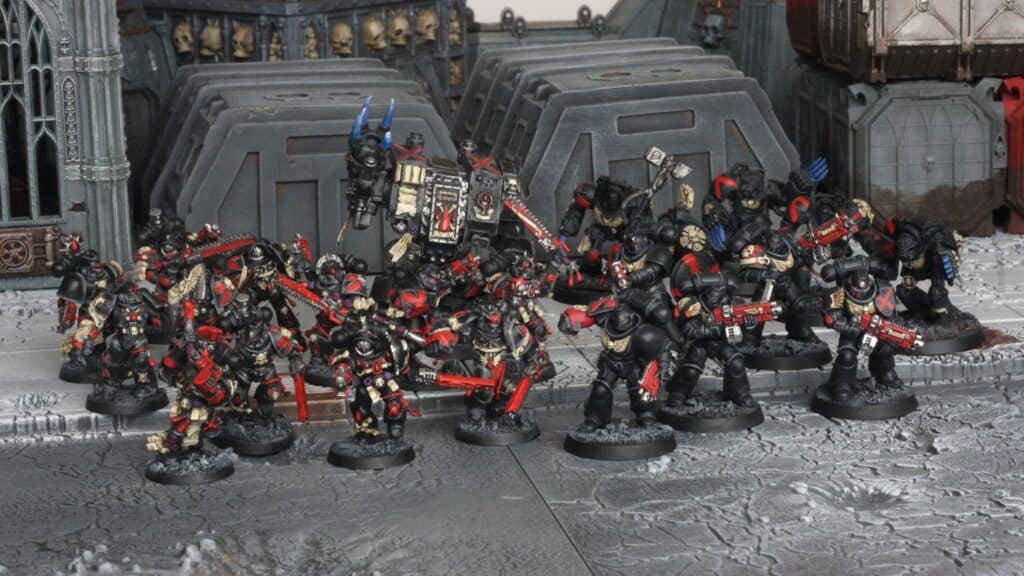
Death Company are a key part of the army’s lore, as the chapter’s geneseed is failing and more and more marines fall to the Black Rage. As such, I always try to include at least one Death Company unit in the army. For primaris, I only have five Death Company Intercessors, which have been showing up in almost all my lists with their accompanying Chaplain.
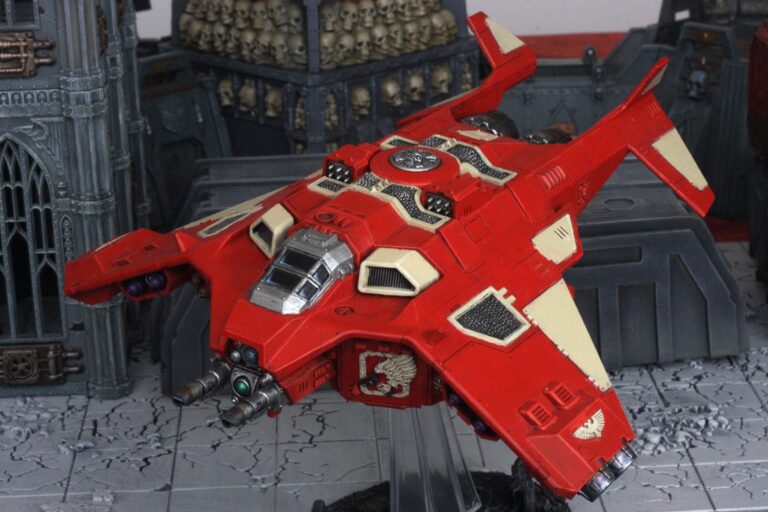
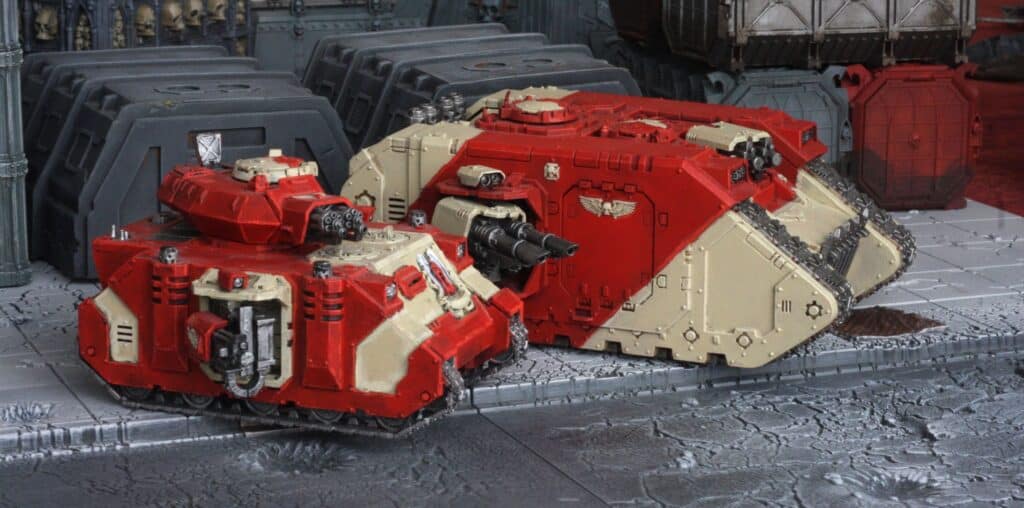
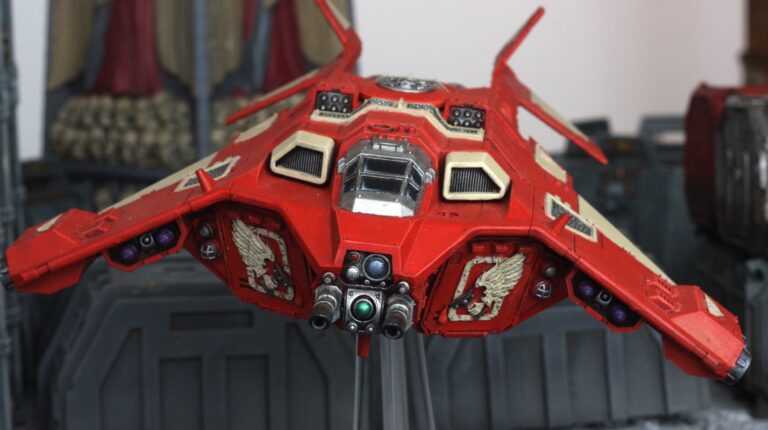
I never liked the Stormraven model, so I used a Corvus Blackstar model with some minor conversions to make the weapon loadout match the datasheet. A much, much more painful conversion was carefully cutting out the Deathwatch doors and replacing them with Blood Angels doors. I was really happy with this and my Land Raider (painted around the same time): they represented a big step in my painting skill.
Paint Scheme
The colours in my scheme have stayed pretty consistent over the years, though the techniques and steps have changed. When I first started this project, I barely thinned my paints and only did one coat (though layered up the different colours). The steps were chosen so that one colour could cover the mistakes of the previous, switching between red and bone layers until the model was finished.
These days my brush control has gotten somewhat better, and I tend to go back and fix any errors before moving onto the next colour. Below is the current recipe.
Prime the whole model Mephiston Red. This is your base coat.
Paint the armour joint recesses Abaddon Black (can skip this, as it’s just to do a different underpaint). Then base with Leadbelcher and wash with Nuln Oil or Two Thin Coats Oblivion Black Wash (I’m not a fan of the gloss finish of the current GW washes, though I still have a few bottles of the old formula). This is done ahead of other metal bits, as it’s far in the recesses. And, yes, I realise these are not normally metal, but that’s how I started and how I still do it. I don’t highlight this metal later: it’s so recessed no one will see it.
Clean up any red areas where you got silver or black.
Wash all over the model Carroburg Crimson, except the silver recesses. You can avoid some areas you’re going to paint bone or black, but at this stage I’m just messy and paint the whole thing except the metal recesses so nothing is missed.
Drybrush the red areas (basically the whole model except the helmet, other areas are too small to miss) Evil Suns Scarlet, avoiding the metal above. You can go fairly heavy here, and I usually do two coats. This replaced old school layering and it saves a lot of time.
Base the bone areas Zandri Dust: this includes the helmet, shoulder trim, wristbands, elbow pads, chest Aquila, knee pads, parchment, and any skulls. Usually takes a few layers to get a smooth coat.
Recess shade the bone parts with Seraphim Sepia. Avoid flat areas where you just got that nice smooth coat.
Layer the bone with Ushabti Bone, avoiding the recesses. Again, this can take a few layers, especially on any big expansive flat areas.
Paint the gun cases and any bits that will be metal Corvus Black.
Paint the metal Leadbelcher.
Wash the black and metal with Nuln Oil/Oblivion Black Wash.
Edge highlight the black with Dawnstone and, if you want to take it a step further, highlight the highest edges and corners with Vallejo Pale Grey Blue or Administratum Grey.
Highlight the metal with Vallejo Aluminium and, again, if you want to take it a step further, highlight the sharpest points/highest edges with Scale 75 Speed Metal.
Edge highlight the bone with Screaming Skull.
Edge highlight the red with Wild Rider Red. Paint the eye lenses with the same.
Clean up any mistakes.
For bases, I typically do a city rubble, doing a base coat of Corvus Black, and Agrax Earshade or Two Thin Coats Battle Mud Wash, then dry brush Dawnstone and Vallejo Pale Grey Blue. Base rims are painted Abandon Black to complete the model.
Sanguinary Priests, Chaplains, Librarians, and Artificer Armoured Officers are nice palette cleansers from painting the usual red.
Next time
That wraps up part one of my Chapter Focus. Tune in next month for a look at the lore and the spirit of the chapter.
Have ideas on what makes a great homebrew project or want to share pictures of your own custom force? Drop us a line at contactus@wrongsideofthemaelstrom.com.