Redefining Narrative 40k
Narrative gaming is one of the hardest things to define. Everyone has a specific definition, whether it’s how close to the lore you adhere, how strong your list is, or what type of mission you need to play. When we first started this blog, we posted our definition in a piece aptly titled “Defining Narrative Play”, which you can find here.
But that was two years ago. Narrative gaming hasn’t changed that much, but I’ve written a lot more on the subject and I think it’s a good time to look at this again.
The Golden Rule
Our previous definition is as follows:
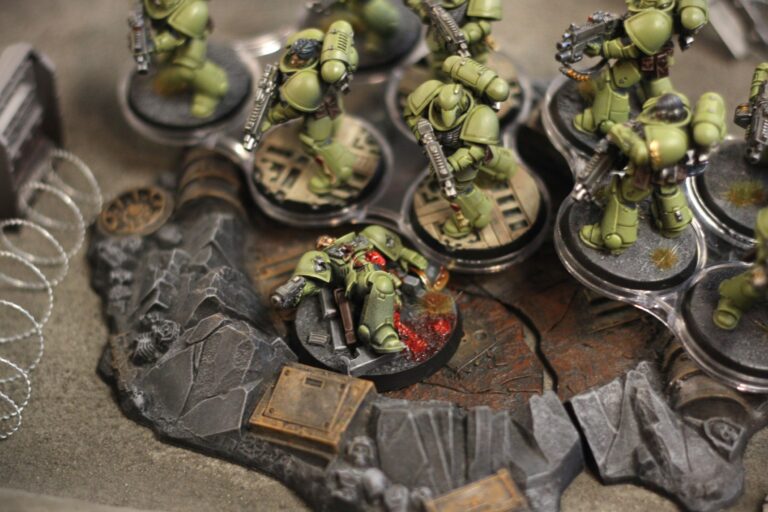
You are responsible for your opponent’s fun. The story comes first in every instance, unless it makes the game unfun.
I think this is still a really good mindset: have fun and always be narrative (Narrativing? Narrathriving?). But this is pretty vague, and though you can extrapolate a lot from this, drilling down would be helpful.
What does “in every instance” mean? It starts before the game and continues even after you finish. Building your list? Adhere to the lore. Setting up the table? Use thematic terrain. Choosing a mission? Make it story-driven. Deciding how to move some Khorne Berzerkers? For the Blood God, baby!
So what does a non-narrative game look like? Building a list that spams the best, most efficient units (especially when it’s at the expense of thematic choices). Setting up terrain that breaks the immersion (i.e. setting up a building in the middle of a street on a city mat). Choosing a mission that doesn’t compliment the terrain or has a very abstract goal. Keeping your Khorne Berzerkers back on an objective when there are skulls to claim.
GW’s definitions
Though narrative gaming has been part of 40k since its inception, Narrative 40k wasn’t really carved out as a specific, distinct mode of play until 8th edition, when GW introduced the “three ways to play”: Open, Narrative, and Matched. The definition of Narrative Play from the 8th edition rulebook is the following:
Narrative play is based around the stories embedded in the background of Warhammer 40,000, either those in our books or those you write yourself. You’ll often find that reading up on the history of a particular Faction, hero or battle is all the inspiration you need to set up a game and play it.
Perhaps you enjoyed the story of a bitter rivalry between two characters in the background, whether it be the ongoing feud between Commissar Yarrick and Ghazghkull Thraka or Wolf Lord Logan Grimnar’s quest for revenge upon the Daemon Primarch Magnus the Red. Maybe tales of strategy and massed battle bring you inspiration, stories of sudden ambushes, sweeping flank attacks and meat-grinder offensives through the smoke and fire of no man’s land. Whatever the case, narrative play provides guidelines and structured scenarios that allow you to recreate your favourite war stories on the table… (8th Edition Core Rulebook 172)
Though this definition does a great job of putting storytelling and narrative front and center, it doesn’t create a clear distinction about how Narrative Play differs from other formats. My Matched Play game can feature Yarrick and Ghazghkull, does that make it narrative?
I was surprised by how difficult it was to find a current definition of narrative play for 40k. Rather than the three ways previously, GW seems to have changed Narrative Play to now focus on Crusade exclusively, and Open getting quietly dropped. The best official definition for narrative gaming I could find is from the Leviathan rulebook:
Crusade is a form of narrative play, a style of Warhammer 40,000 gaming focused on the ongoing storyline of your army and its battles. Collecting and playing with Crusade armies turns your collection into a richly themed force whose skills, traits and battle honours develop with every victory or defeat. As units amass sufficient experience they unlock new abilities, special upgrades and other exciting benefits to use in future battles. Equally, taking severe casualties can leave your units with lasting battle scars to contend with… (10th Edition Core Rulebook 13)
This definition touches on key aspects of narrative play though: having a storyline for games, having themed armies, and linking battles. It focuses on Crusade for the most part, which makes sense as it’s GW’s current narrative product. Still, narrative 40k feels like it could be fleshed out more.
A better definition
The next definition I’d like to look at comes from the Plastic Pressgang Podcast, a historical gaming podcast. The discussion the hosts are having is around the Middle Earth Strategy Battles Game and how it is a quasi-historical game, but I’d like to present it as a good definition for narrative gaming:
…you should have a nice board, your stuff should be painted, this mission should be narrative, no, it doesn’t matter that hobbits are garbage, you should take hobbits… ’cause hobbits are cool as hell. (Episode 9, 2:45).
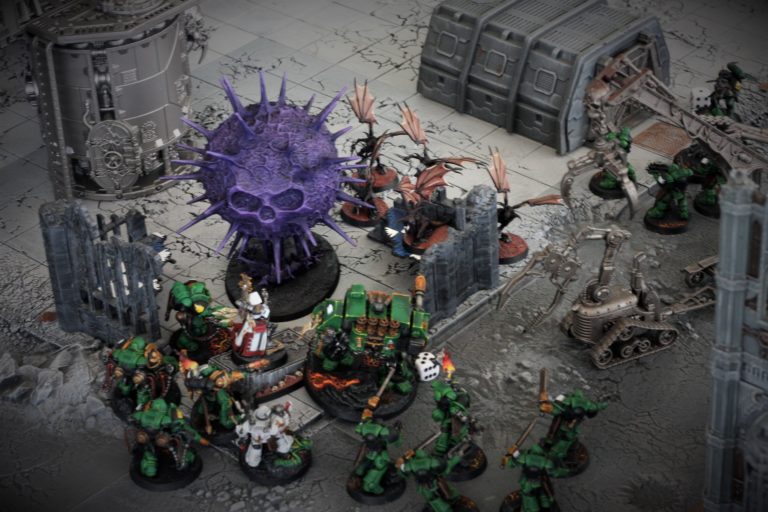
So let’s break that definition down: nicely painted boards and models are there to draw people into the game and build the world (or battlefield). A narrative mission to drive the story and guide players. Finally, taking thematic units and adhering to the lore.
I really like this definition because it ticks all the boxes for me: build the immersion of your game by having it fully painted, the mission tells a story, and the armies fit in the background of the universe. You don’t need a definition saying narrative gaming is about telling a story—the word “narrative” is already in the title—this tells you what you need to tell the story.
The full hobby
A while back, the Independent Characters podcast did a great episode on narrative gaming where Jody, one of the hosts, said the following about it:
Narrative gaming, for me, is the purest expression of the full hobby. It represents the hobby in its best possible light and it is, if there is a “right way” to play 40k, it is narrative gaming. It is embracing the story, it is embracing the craft, it is embracing the rules, and bringing them all together in one place at one time. (Episode 202, 1:14:25)
If the Plastic Pressgang tells us how to play narratively, this is telling us what it is or why it’s great. But the ICs go on to discuss how hard narrative gaming can be, and I can relate to that.
I think narrative gaming is often seen as an “easy” or more casual way to play because narrative players aren’t playing as competitively as tournament players. But a tournament player is focussing on playing the game almost to the exclusion of everything else (though they may very well be a great painter and well versed in the lore). Conversely, a narrative gamer, as Jody put it, is bringing everything together. They’re not only playing, but they’re also painting, they’re telling a story, and they’re leaning into the lore and making sure their army fits right into it.
Accessibility and inspiration
I’ve written before about immersion becoming central to my idea of narrative gaming, and these ideas of fully painted models, thematic armies and missions, and a 40k game encompassing the whole hobby really supports that. However, all of that takes a boatload of time to paint or develop.
If I was a new player reading about how I have to have some fantastic table and collection of painted miniatures as a starting point before I could get a narrative game going, I’d probably be pretty discouraged (and, not gonna lie, pretty pissed off too). The bottom line is that you don’t need to hit all these notes to have a narrative game: at the end of the day, the story of your little toy soldiers is central to narrative gaming. I’ve been playing narrative games long before I started thinking about immersion in 40k, and I play plenty of story driven missions without everything on the table being painted.
With all that being said, immersion supports the narrative in an important way, and fully painted models, gorgeous terrain, and thematic armies and missions all build a foundation to having a great narrative game. Maybe you’re just starting out with your first combat patrol and still trying to decide what colours to paint it: that’s okay, get your story on and roll dice! If you like narrative play, use these ideas as goals for what your games can ultimately be.
Wrapping it up
This time around, I don’t have an all encompassing, two line definition of narrative gaming, though I think the original one still encapsulates the ideas here. Rather than a hard and fast equation (say: painted terrain and models + thematic mission + lore-driven armies = narrative game) where you define a narrative game by ticking boxes, I think these should be what we as narrative players shoot for when setting up and playing games.
Finally, I’ve found the online discourse around narrative 40k tends to be centered on Crusade. Though Crusade can be a great system, it’s just one aspect of narrative gaming and I think the idea of narrative play as a whole goes much further than just Crusade rules. Hopefully this article has helped explore that.
Have your own definition of narrative gaming? What about some great resources for narrative 40k? Have pictures of your narrative games? I’d love to hear from you: email us at contactus@wrongsideofthemaelstrom.com