Bringing back the Force Organization Chart

By Ian


Ever felt 10th edition army rules aren’t restrictive enough? Ever wanted a little more guidance on what a “standard” 40k army should look like? Miss the little grey boxes with cool symbols?


Well, I do, so I wrote some rules to ease my pained soul!

The “Force Org” chart


The Force Organization chart was a restriction and guide for building 40k armies: it had required selections and optional choices. From 3rd edition through 9th, every unit in the game had a Battlefield Role, such as “Headquarters”, “Elites”, or “Heavy Support”.
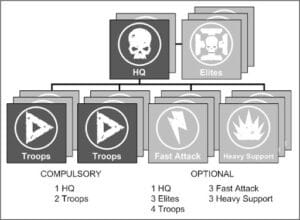


As the game got more and more complicated, the standard Force Organization chart became just one “detachment” available to players: soon they were able to take allied detachments, Lords of War detachments, fortification detachments, and so forth.
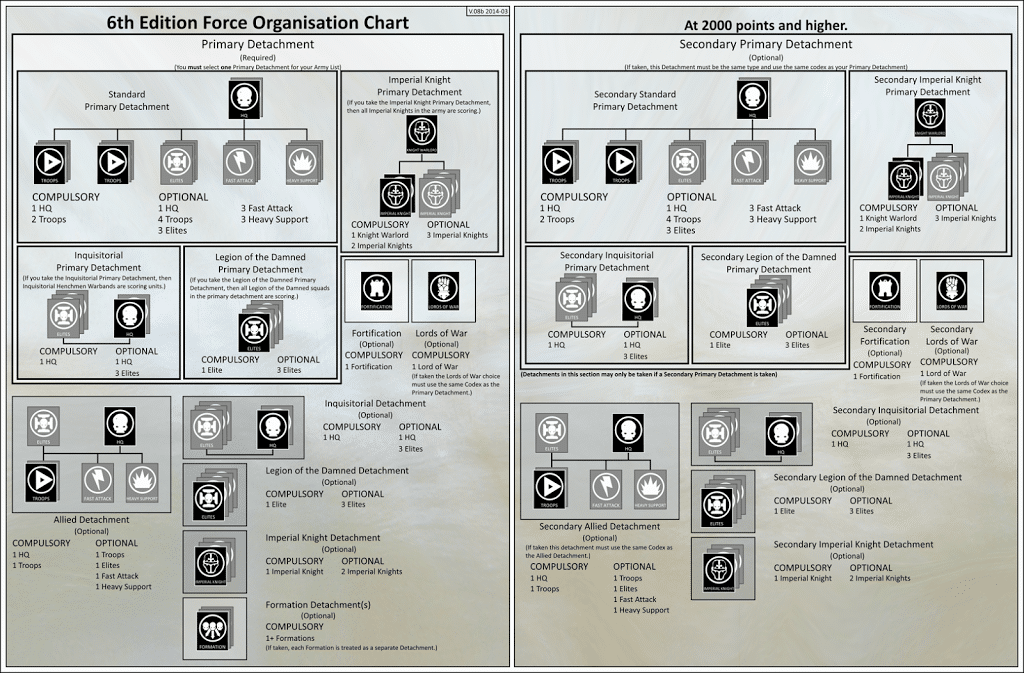
If the above image is making you sweat, then, congratulations, you survived 6th and 7th edition 40k.


The good old days?


Looking at the above, it’s easy to understand why GW went to a much more simplified army building structure. But there is something to be said about restrictions, and I really believe that your army on the table should resemble an army in the lore.


With that in mind, I’ve written rules to emulate the original 3rd edition Force Org chart using 10th edition keywords.

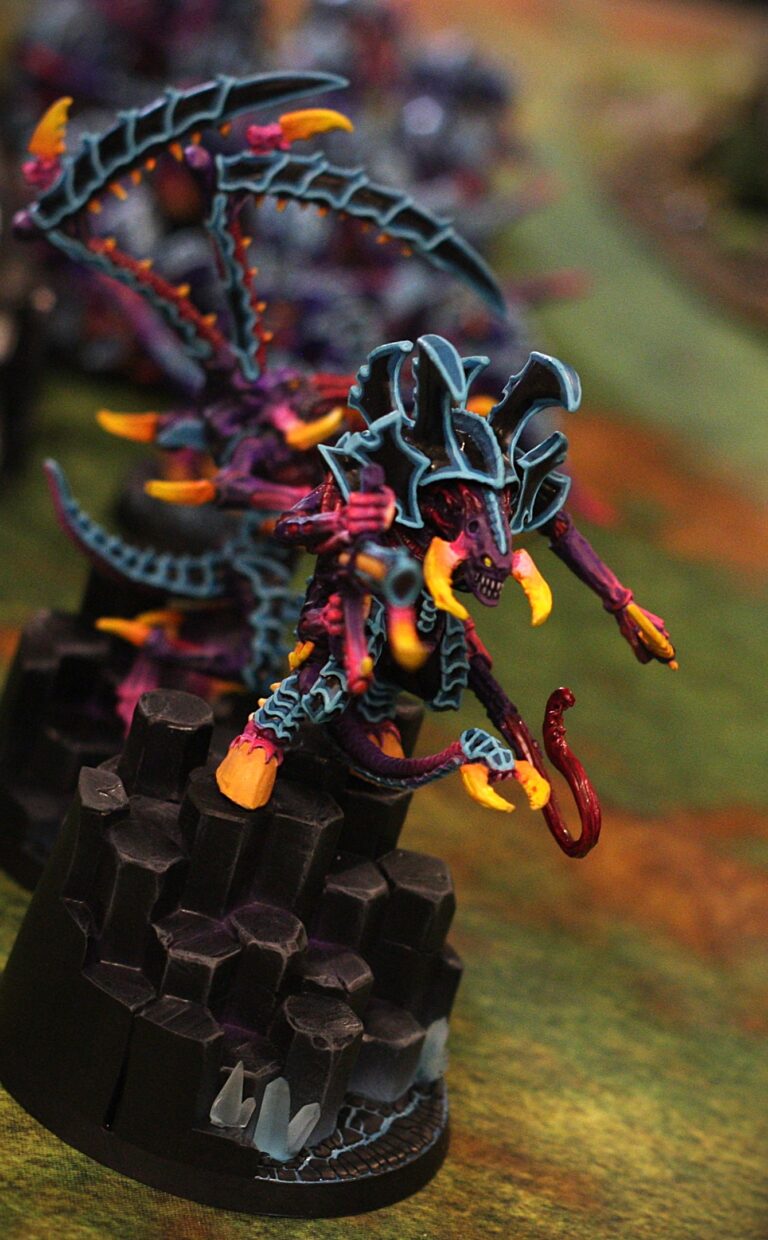
Tyranids Retro Hive Tyrant
Hive Tyrant by Kelly

How the rules work


The rules are simple: when building your army, adhere to the restrictions outlined in the rules.


These are specifically designed for a “classic” 40k army, which is to say one balanced with infantry, fast-moving outriders, and tanks. It will not work for a Jetbike wing list, a Terminator Assault Force, or any of the many, many formations that exist within the lore of the game: to write rules to cover all of those would take a long time. And, frankly, if you know what those are and want to build an army around one of those concepts, you don’t need these rules: just use the 10th edition rules and self-impose certain restrictions for that theme.


But there is a subset of the community that wants to hearken back to a different era of gaming: I’m one of them. As 40k has changed over the years, the size of the games have grown larger: where you may have put 50 models on the table, you’re now putting 75. As such, I think these rules will work best for armies of about 1,500 points: if you’re going down to 1,000 or up to 2,000, you may want to decrease or increase each category by 1.


Unlike the other house rules presented this month, these force organization rules have had zero playtesting and are much more in the conceptual phase. Feel free to tweak them for your own games, and let us know your thoughts!


10th Edition 40k Force Organization

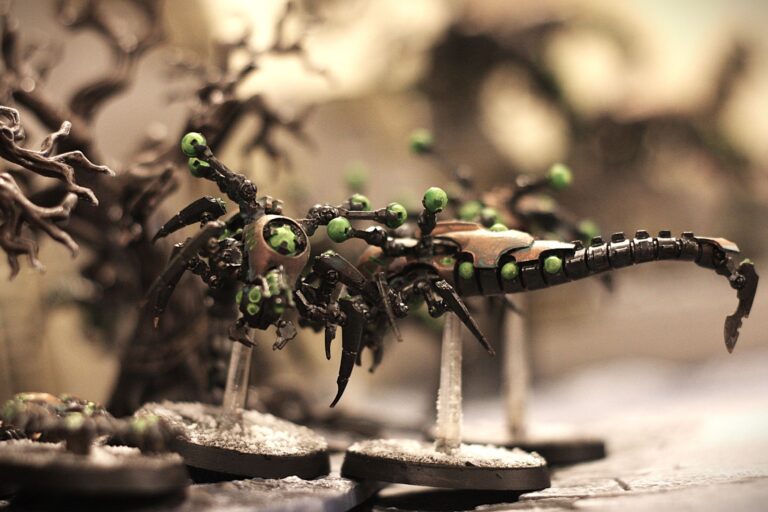
Necron Ancanthrites
Models by Phonsy

Kicking it old school


I think having restrictions on army building adds a lot to the complexity and fun of crafting a list. Force Organization charts are far from perfect, but for a retro-style event, these rules would be great!


If you like these rules or have some comments on them, why not drop us a line at contactus@wrongsideofthemaelstrom.com.