The Battle for Exitus - ICI VI
By Ian
Earlier this year, Jacen and I ran the sixth Inquisitorial Conclave Invitational (ICI) event, our marquee narrative extravaganza. We scaled back the event though: one game, less participants, a single day. But that one game…it was a doozy.
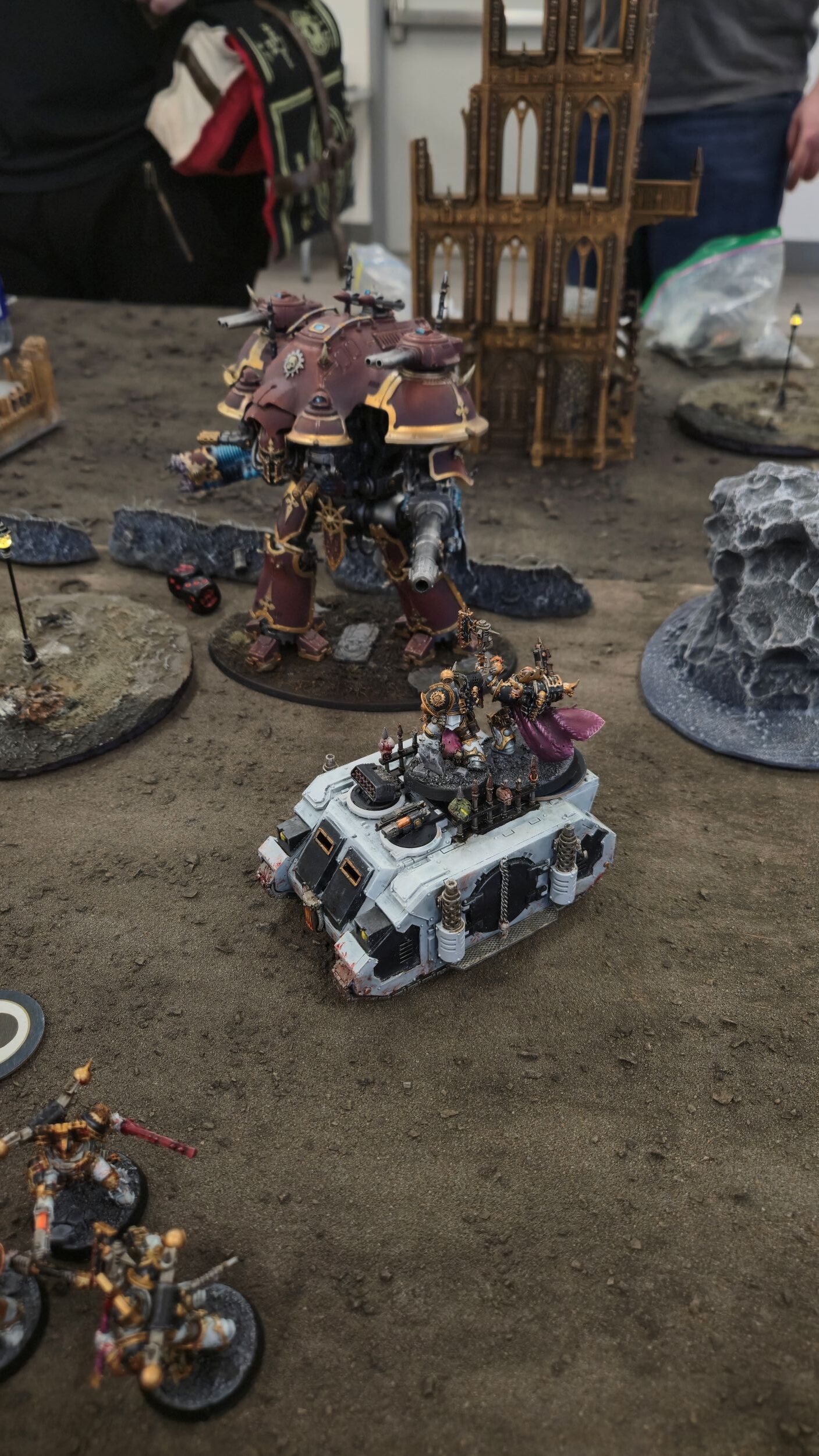
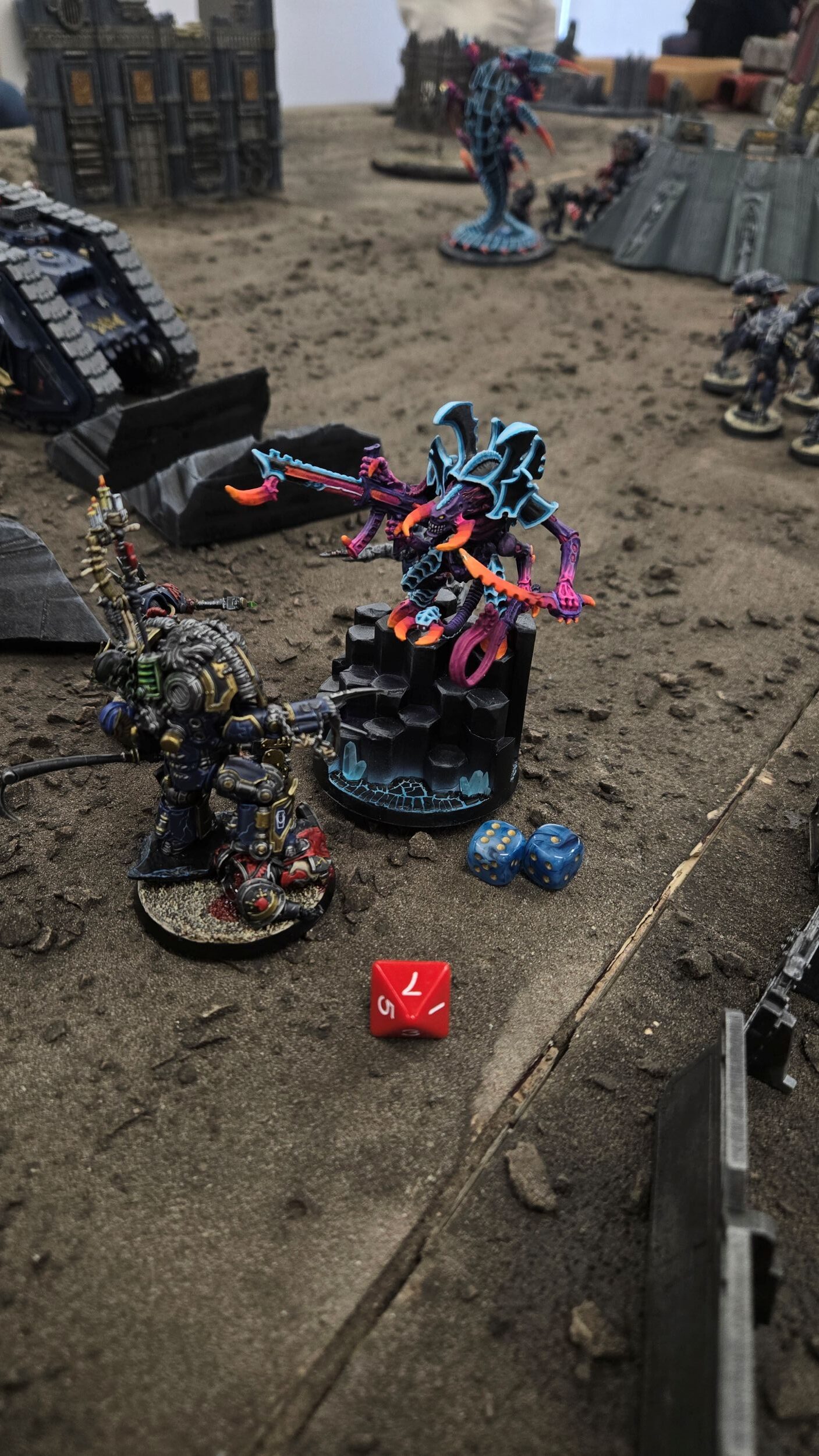
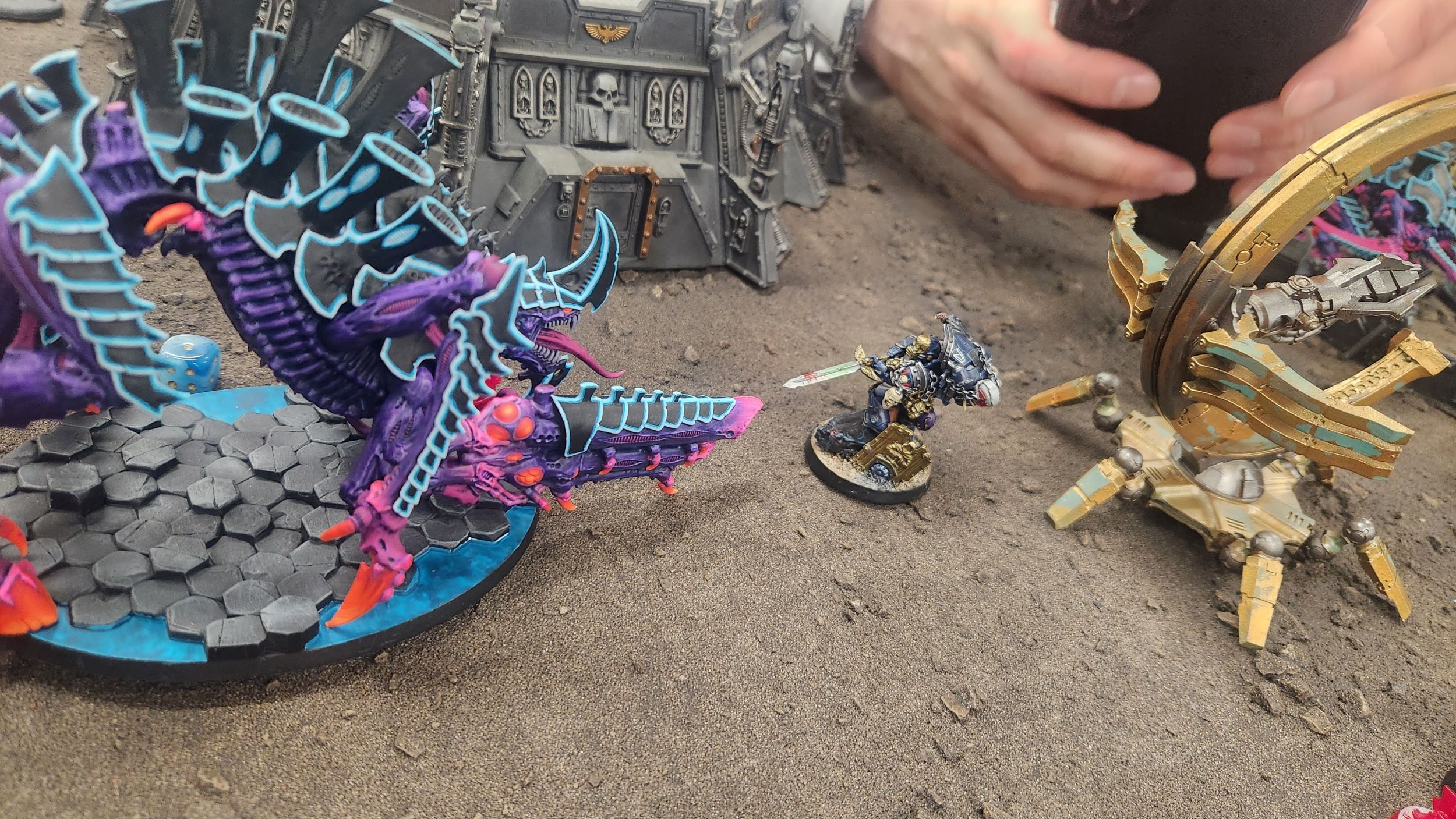
Photos by Jeff
Previous ICIs
For the ICI V, I wrote a thesis-length piece on the planning and execution (part one of which you can read here), but I’m going to try and keep this one to an undergraduate length. There’s lots of background of previous ICIs in the above link, but suffice to say we’ve ran previous narrative events ranging from simple game days to multi-day weekenders. But we’ve never ran a true Apocalypse ICI. There’s been other Apocalypse games and events, but the ICI has now become our gold standard for narrative immersion and show-stopping terrain.
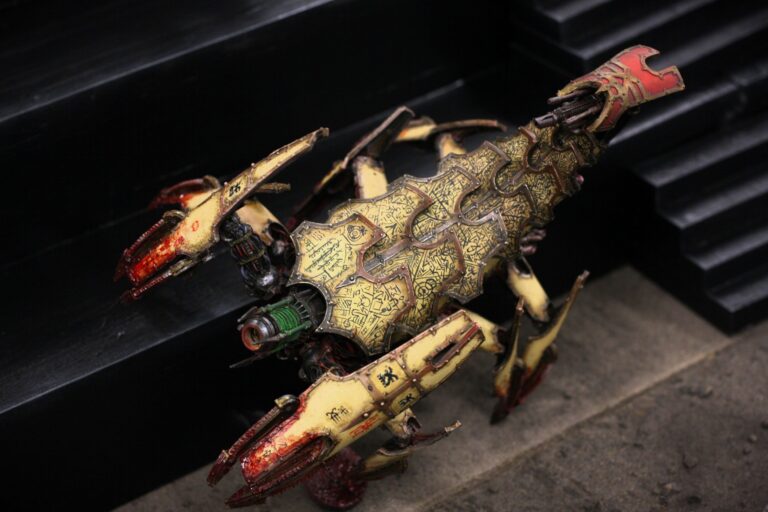
Scaling back
The first goal was to scale down the event, along with the planning stage (previously, we had multiple meetings a month, which wasn’t going to work this time). Jacen and I both have a lot of real life commitments between work and family, and we couldn’t devote entire weekends to preparing for the event. Which meant we had to cut certain things.
The first thing was the event booklet. The ICI V booklet is one of my proudest hobby achievements, but it took somewhere in the realm of 20-40 hours to complete and that was out of the question this time around.
We also enlisted more help with the narrative writing. This wasn’t planned in advance, but Alys and Elton volunteered their talents and we were more than happy to enlist their help. I don’t remember if Recuscant volunteered or we just assumed they’d help with writing again, but, including myself, we had a team of four to flesh out the story for the event.
Originally, we had planned to do all new terrain for the game: new boards, terrain to match, and big necron-y centerpieces. Though we did end up doing the boards and centerpieces, we filled them with terrain from mine, Jacen’s, Jeff’s, and Phonsy’s collections.
Finally, we recycled and refreshed a lot of previous materials: our “What to expect” piece was updated for the event, we used modified Apocalypse house rules we used previously (which you can find here, though I’ll link our event pack below), and Jeff used a similar introductory webpage. That being said, drafting all of that took a lot more time than I anticipated. These tasks I’d written off in terms of time commitment, but they ended up being significant.
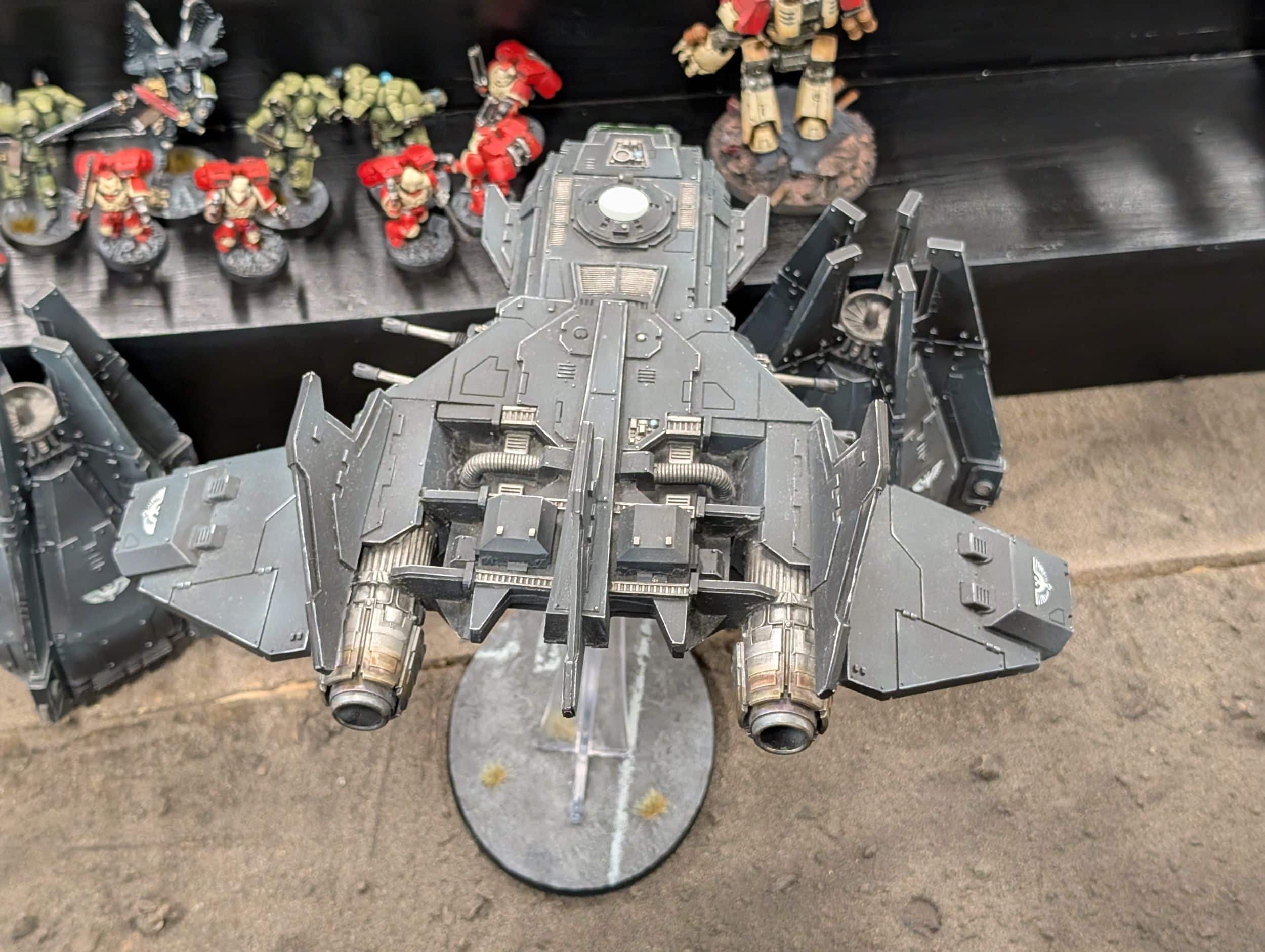
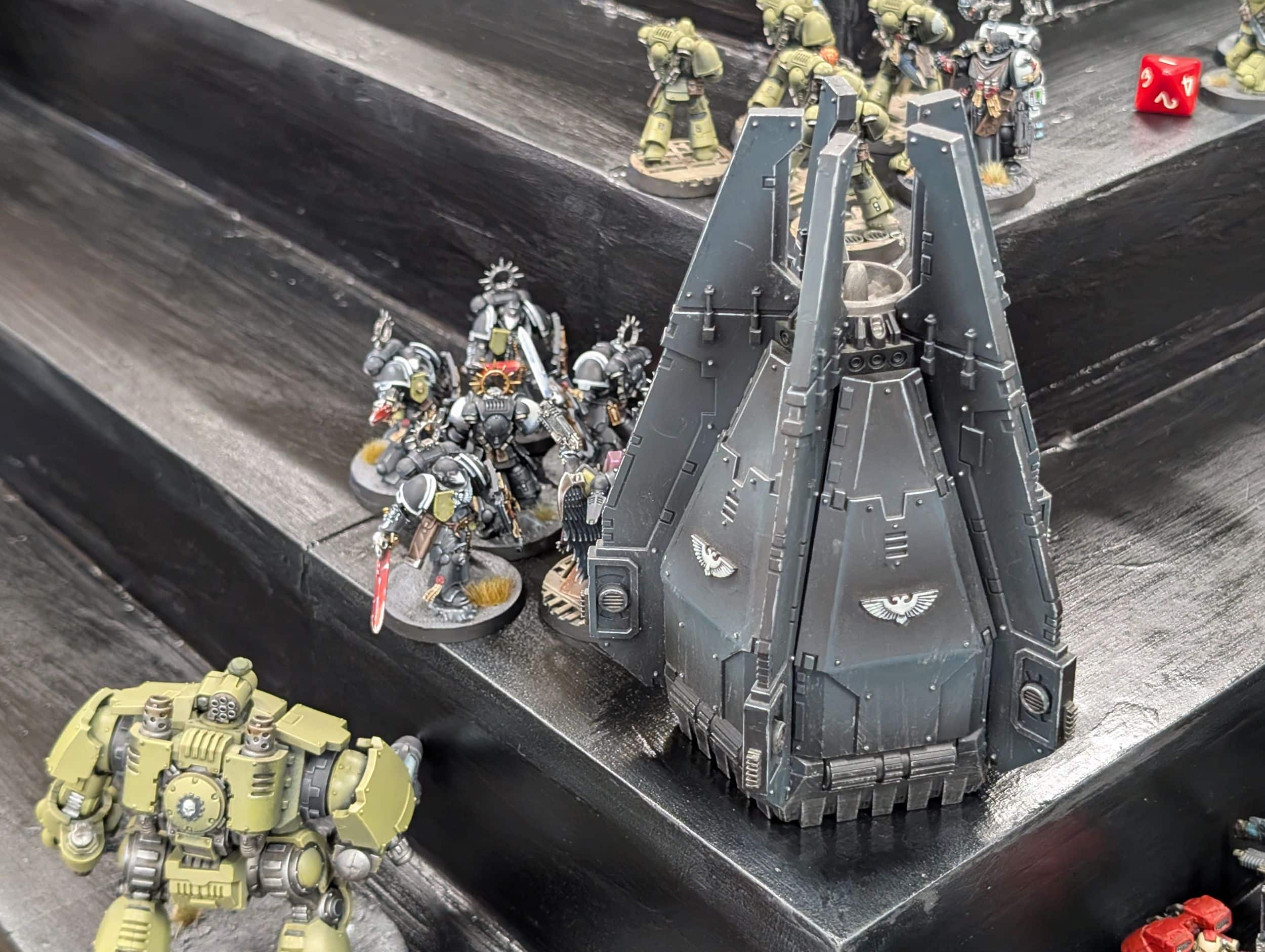
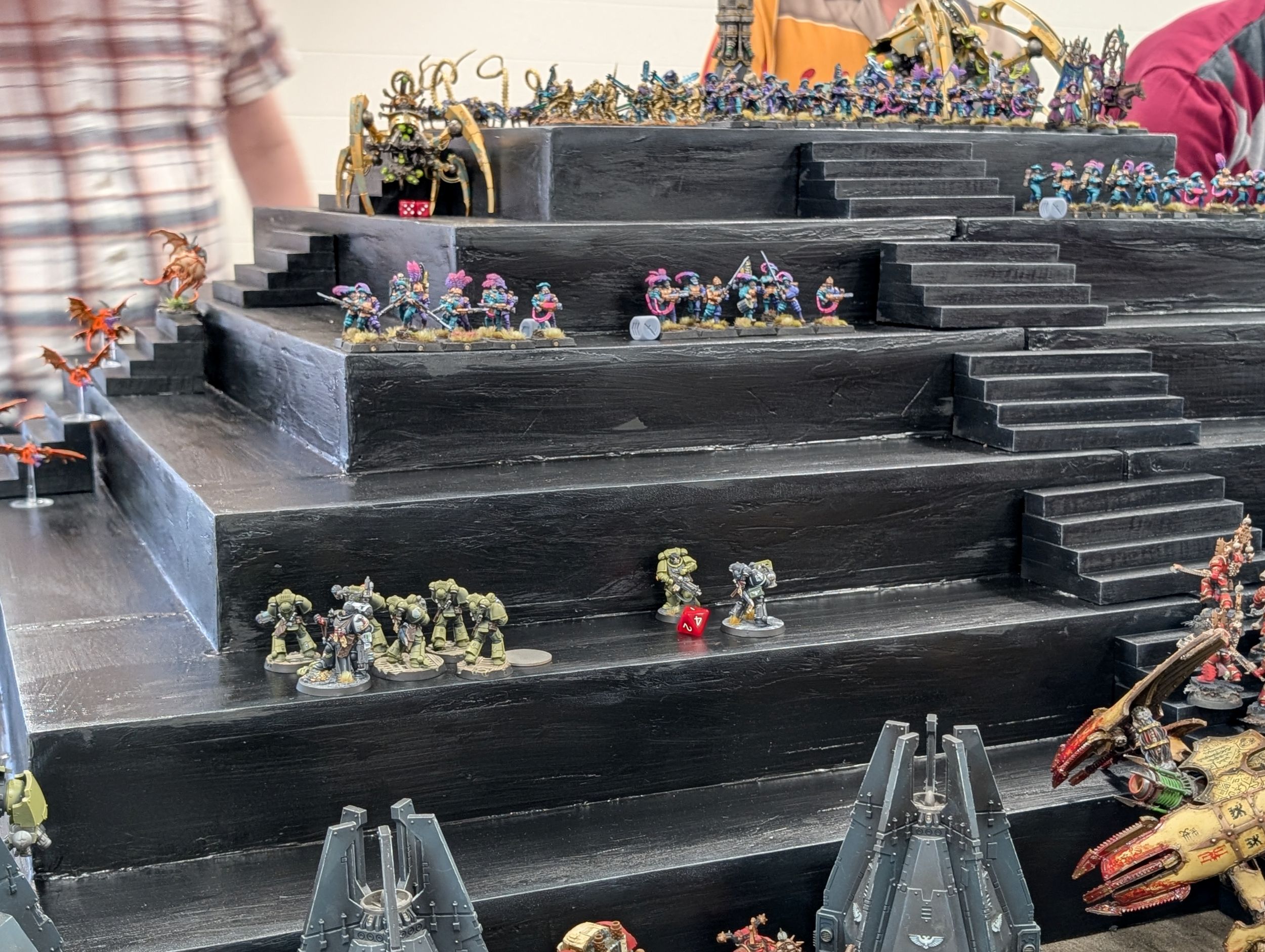
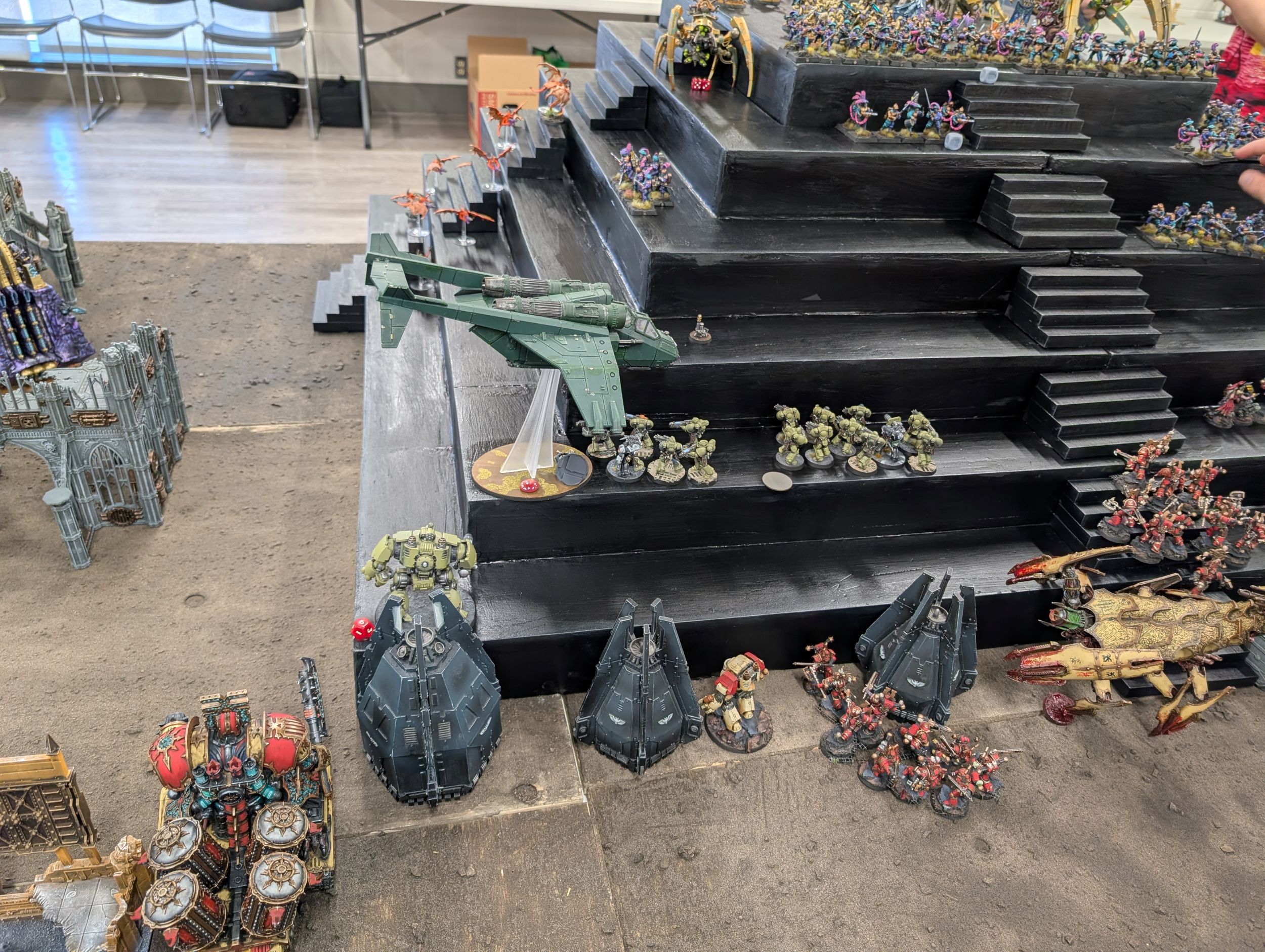
Photos by Alys
Goals
One of the big pieces of feedback we got from the ICI V was to have “more, MORE NARRATIVE!!!” Though we’ve always run narrative events, we intended with this one for the story to be front and centre. The other challenge was to balance Apocalypse. A large issue with Apocalypse is the first turn can be absolutely punishing, with entire armies having the potential to be blown off the table. To that end, we came up with house rules and effects that we could use to tweak the game on the fly: Jacen and I were running the game and as gamemasters (GMs) could change things as we went.
The other goal (and this should be for all Apocalypse games) was to finish on time. We only had the space for a certain amount of time and did our usual timed phases. More on this later…
The point of the game was to wrap up the storyline of the previous ICI, being the discovery and control of the mysterious Apocrypha Engine and the conquering of the planet Exitus, where the Engine was located. At the end of the previous ICI, the Forces of Chaos had firmly gained control of the planet, and the Necron Dynasties had discovered the location of the Engine. This event was to be a capstone to that story.
Lastly, we wanted the narrative and themes to extend beyond the table. Though we never defined what the Apocrypha Engine is, we did decide what it does: the Engine is a psychic device that can mind control creatures. Where does it come from? Does it have other powers? What really is it? Those are for future stories: for this event, we wanted to focus on the mind control. And we wanted to go beyond the table.
Terrain
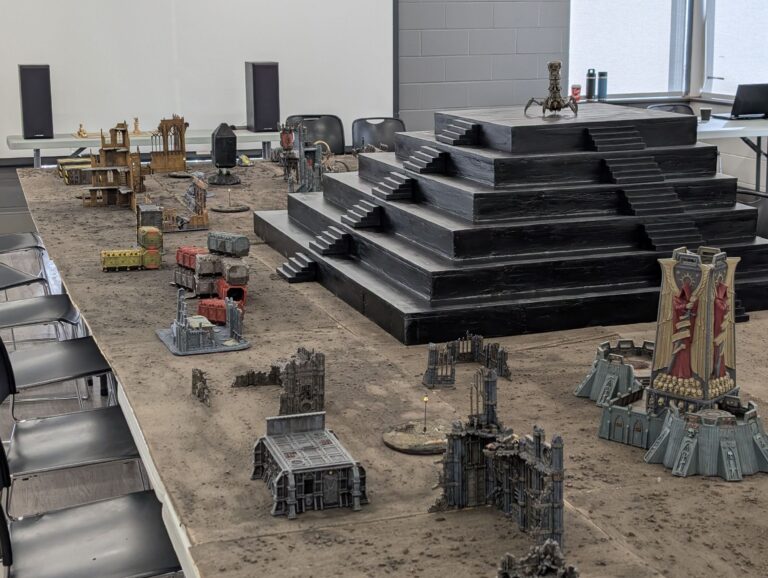
The previous year, I ran a test Apocalypse game to try out a bunch of house rules. This was four players a side and we ran an experimental ruleset that had alternating phases…which didn’t really work. We also ran a custom character creator allowing players to level up characters through crusade rules and paying points…which also didn’t really work (though you can find those rules here). What did work was the table size. We played on a 6’ x 12’ table, so about 3’ lengthwise for each pair of opponents. This felt like a good size, giving enough space for players to maneuver without cramming everything together, as you often see in Apocalypse games. So we applied this formula and decided on a 20’ x 6’ table.
Originally we’d planned two terrain days, one to build, one to paint. Though the boards were originally cut from the planning, I noted that we had a bunch of 2’ x 4’ plywood pieces that could be textured and would only need to buy a few more. On the build day, Jeff and I textured the boards, mixing together sand, grout, PVA glue, water, and paint (five parts brown to one part black), and laid down the texture goop nice and thick.
Too thick, as it turned out. I knew PVA could warp materials, but I didn’t think it would warp plywood. Cue six weeks of me fixing the warp by wetting the plywood boards (on the back, trying to avoid reactivating the PVA) and clamping them down for three to four days at a time.
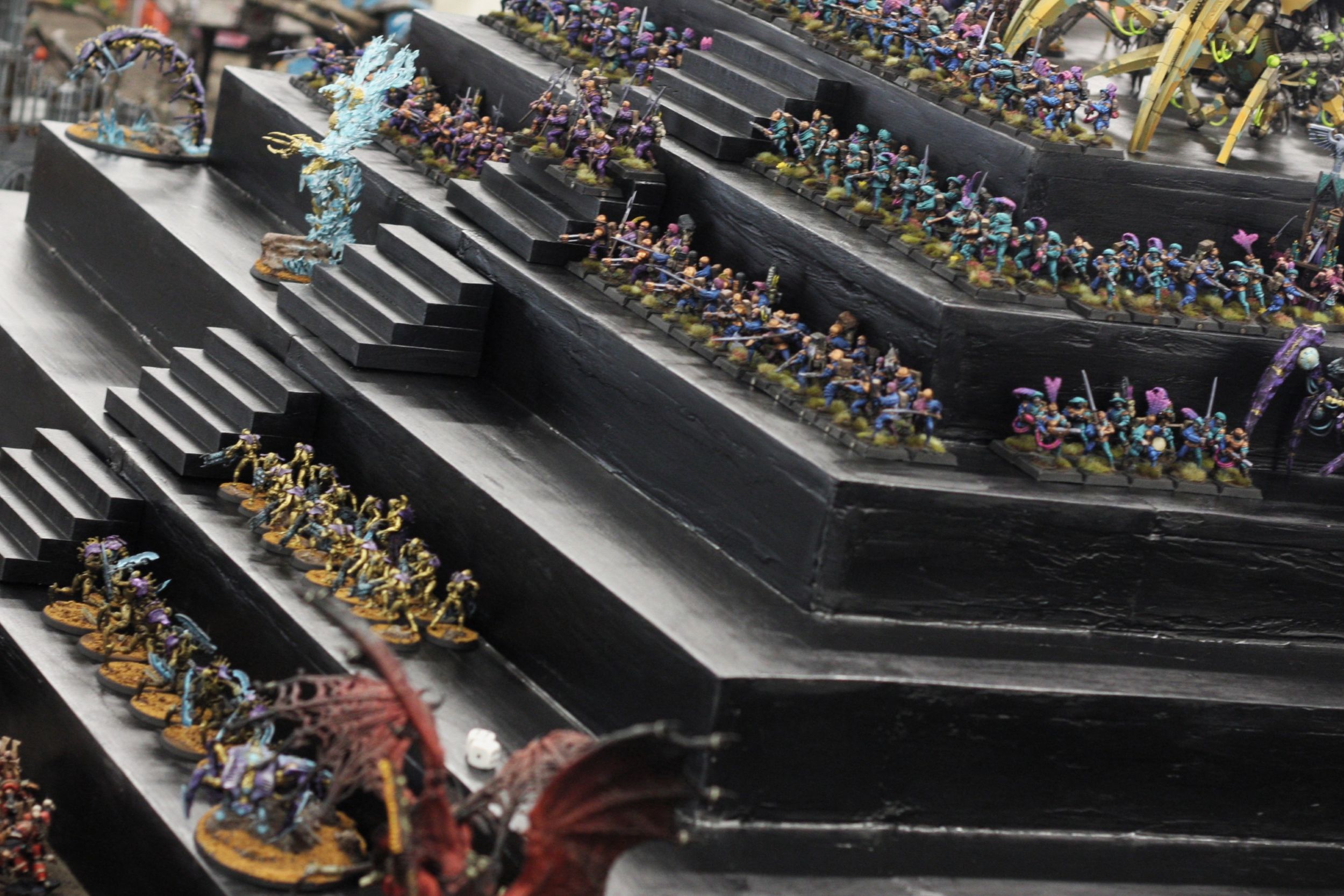
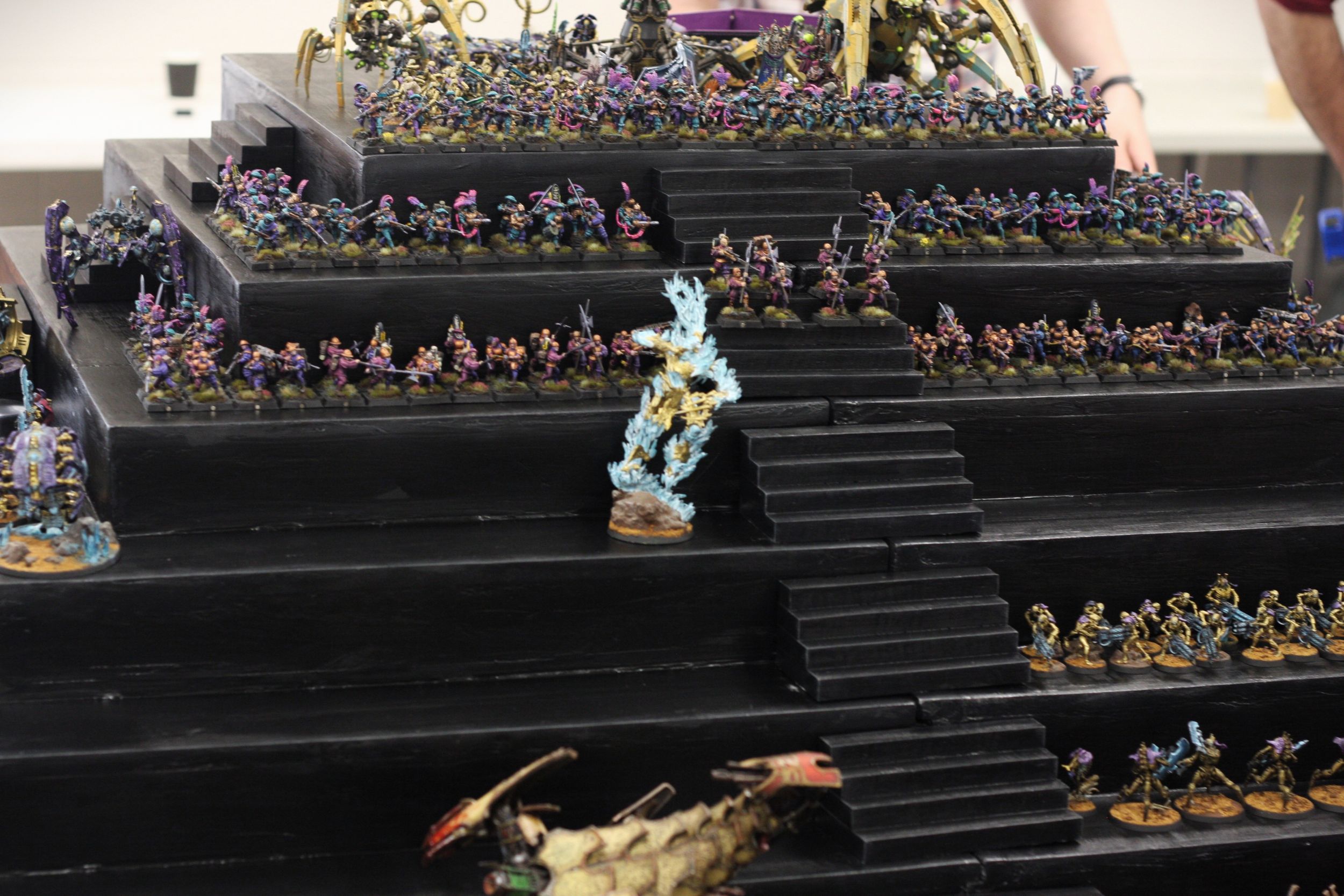
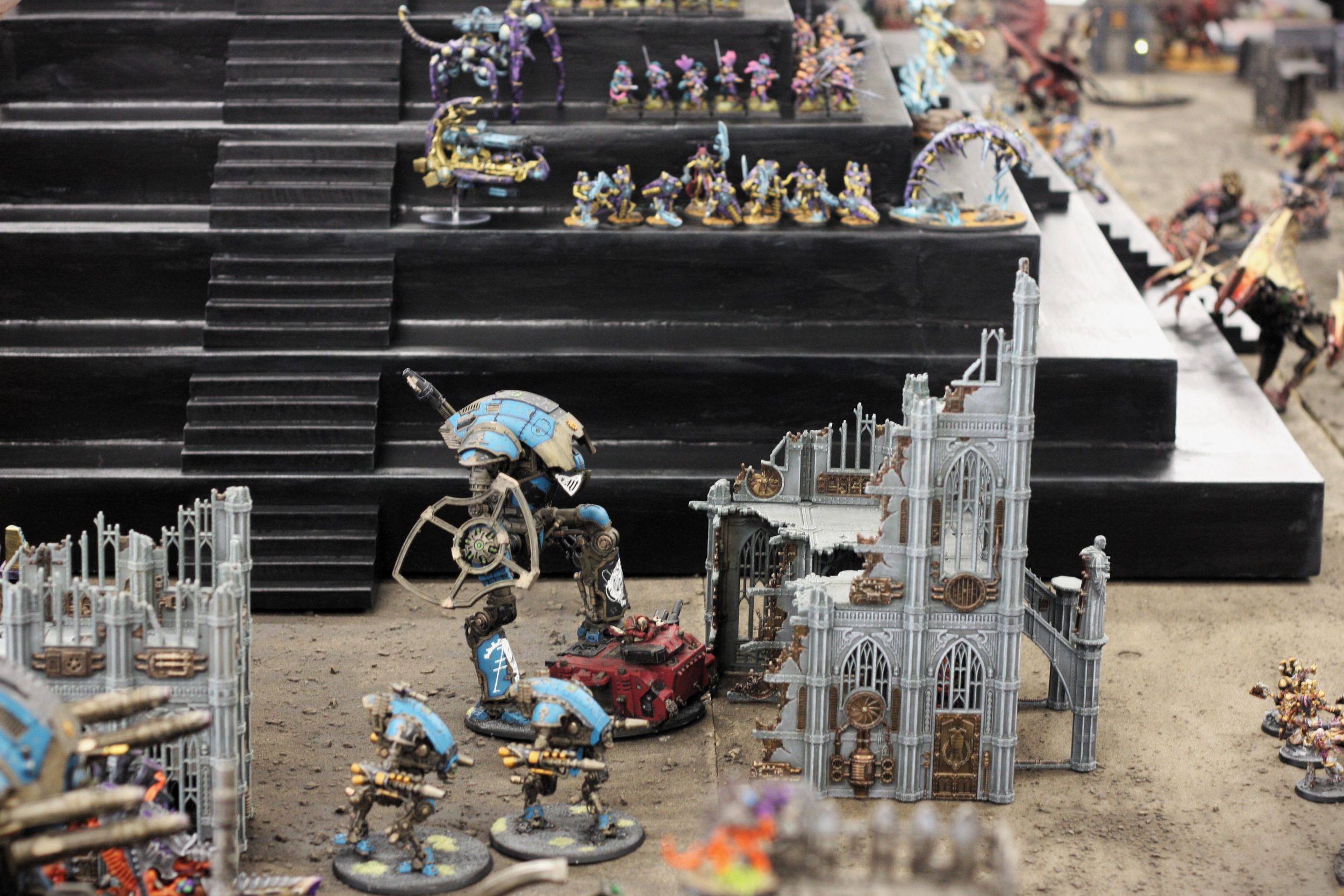
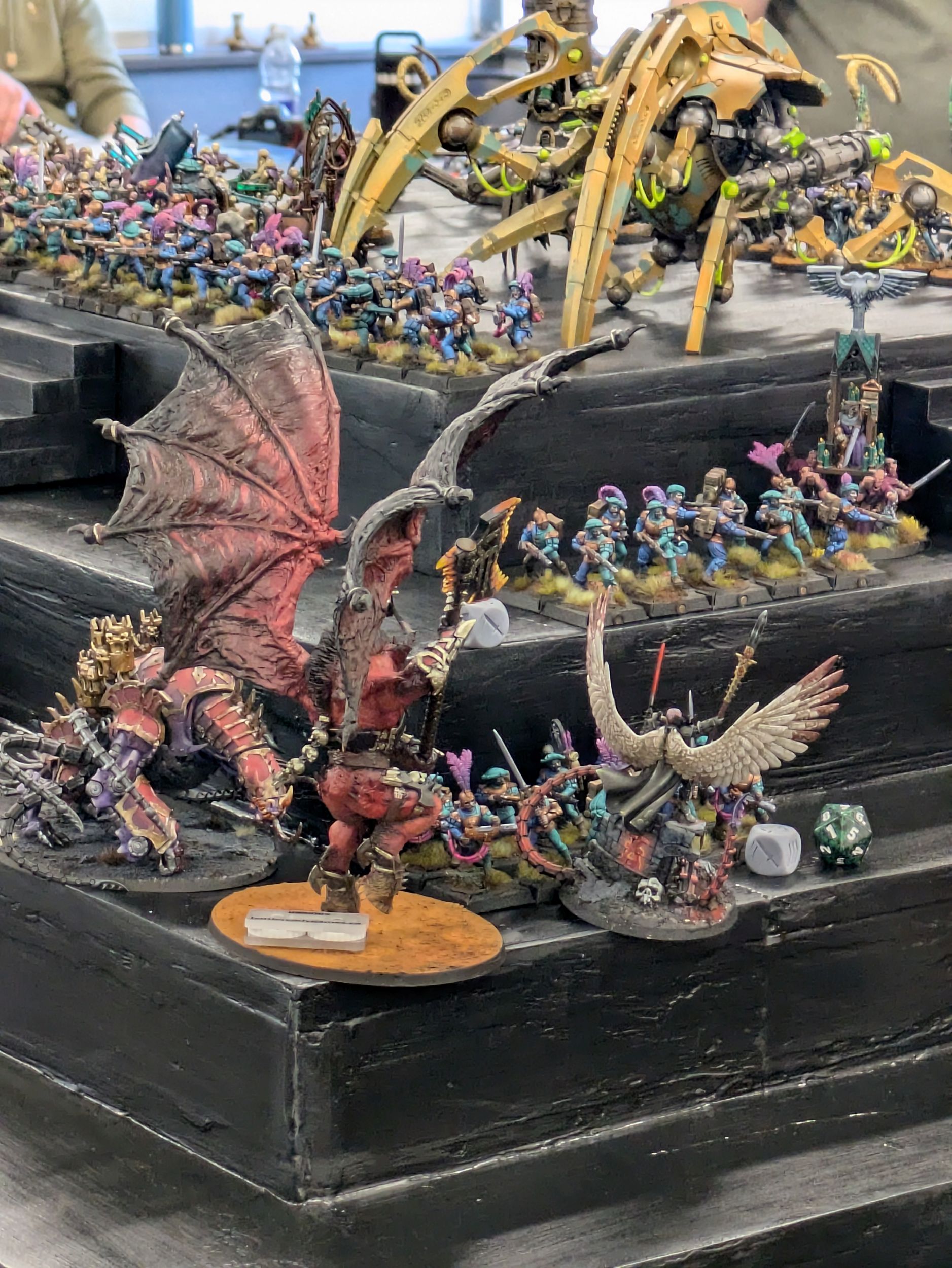
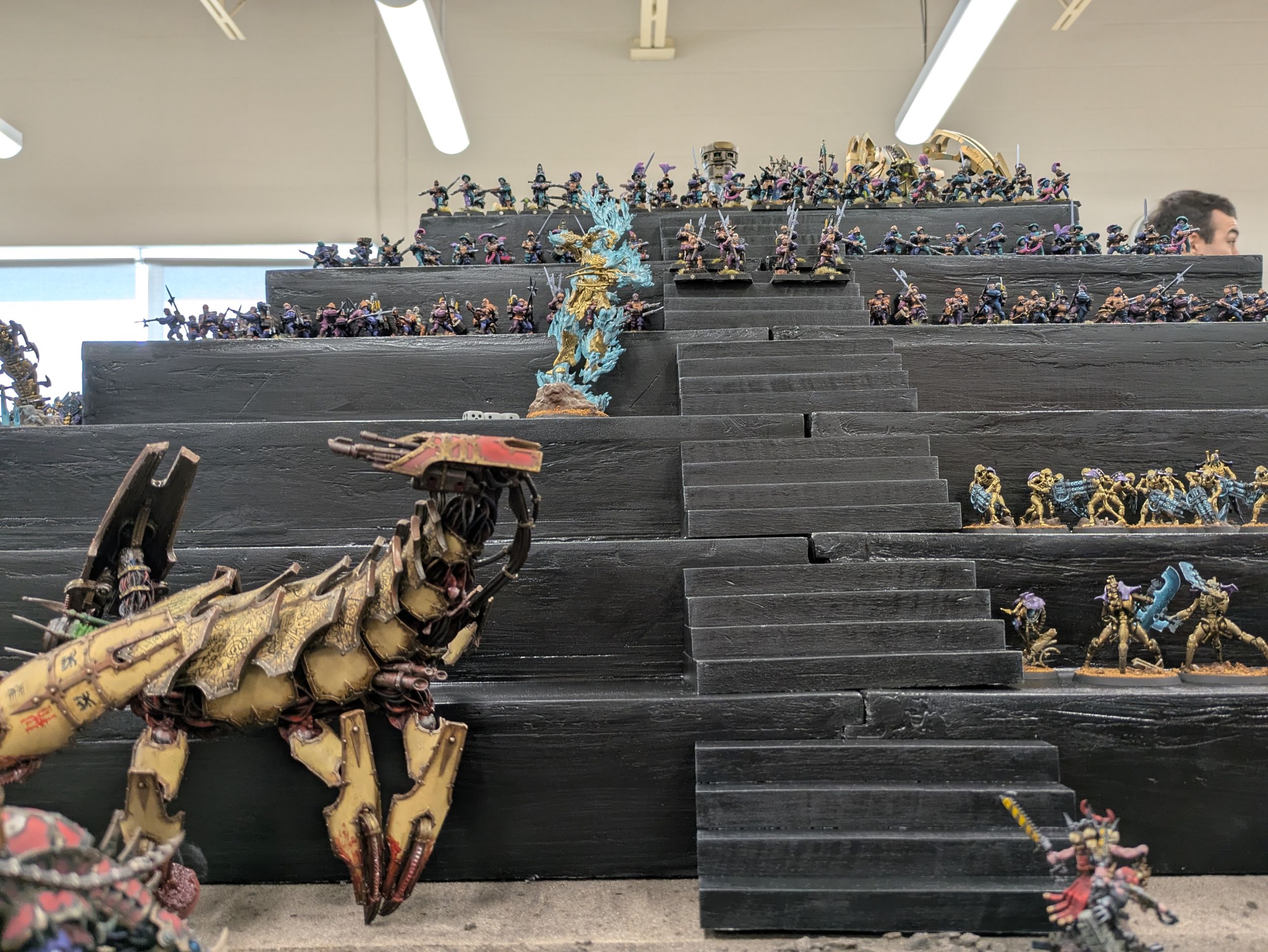
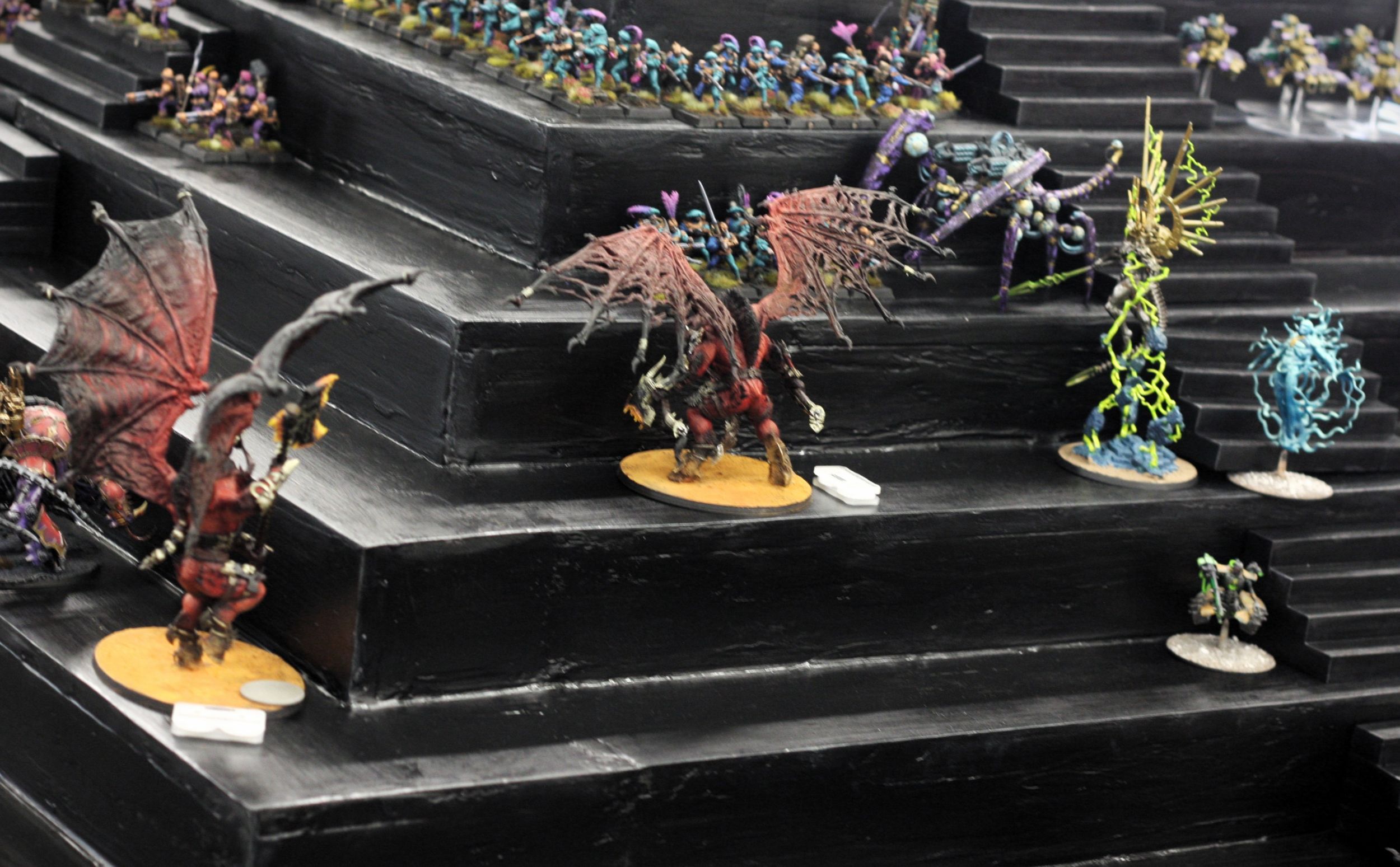
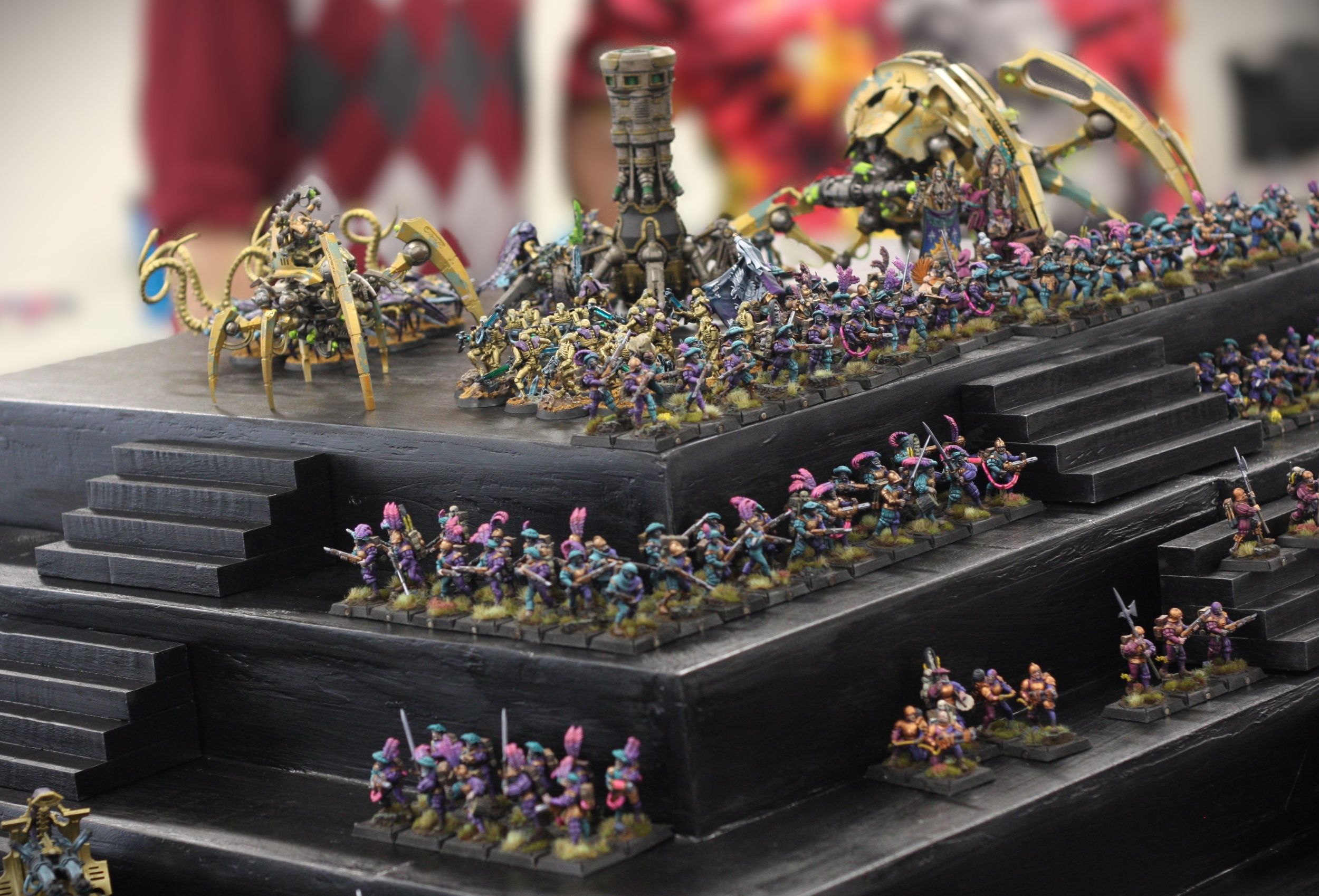
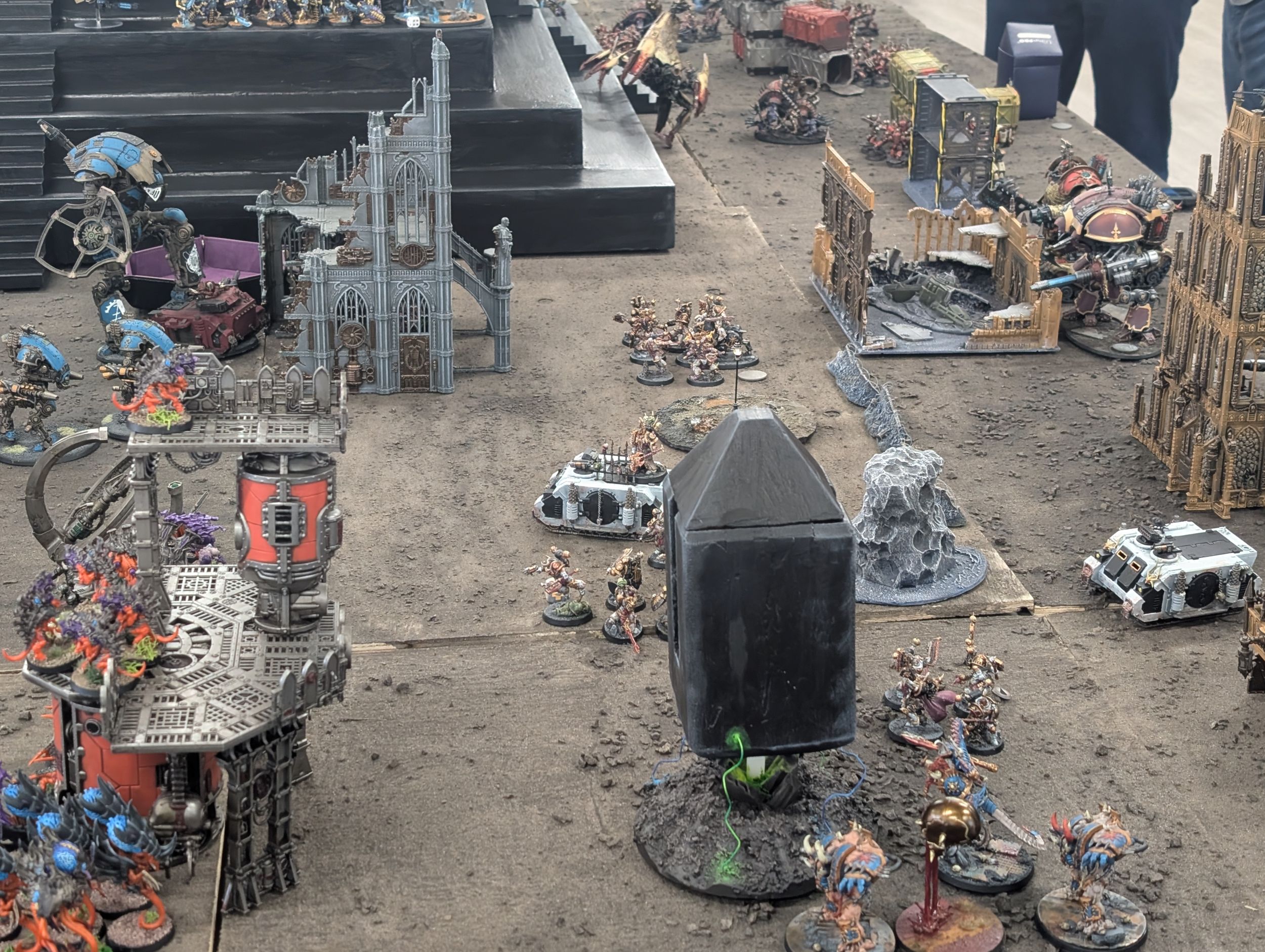
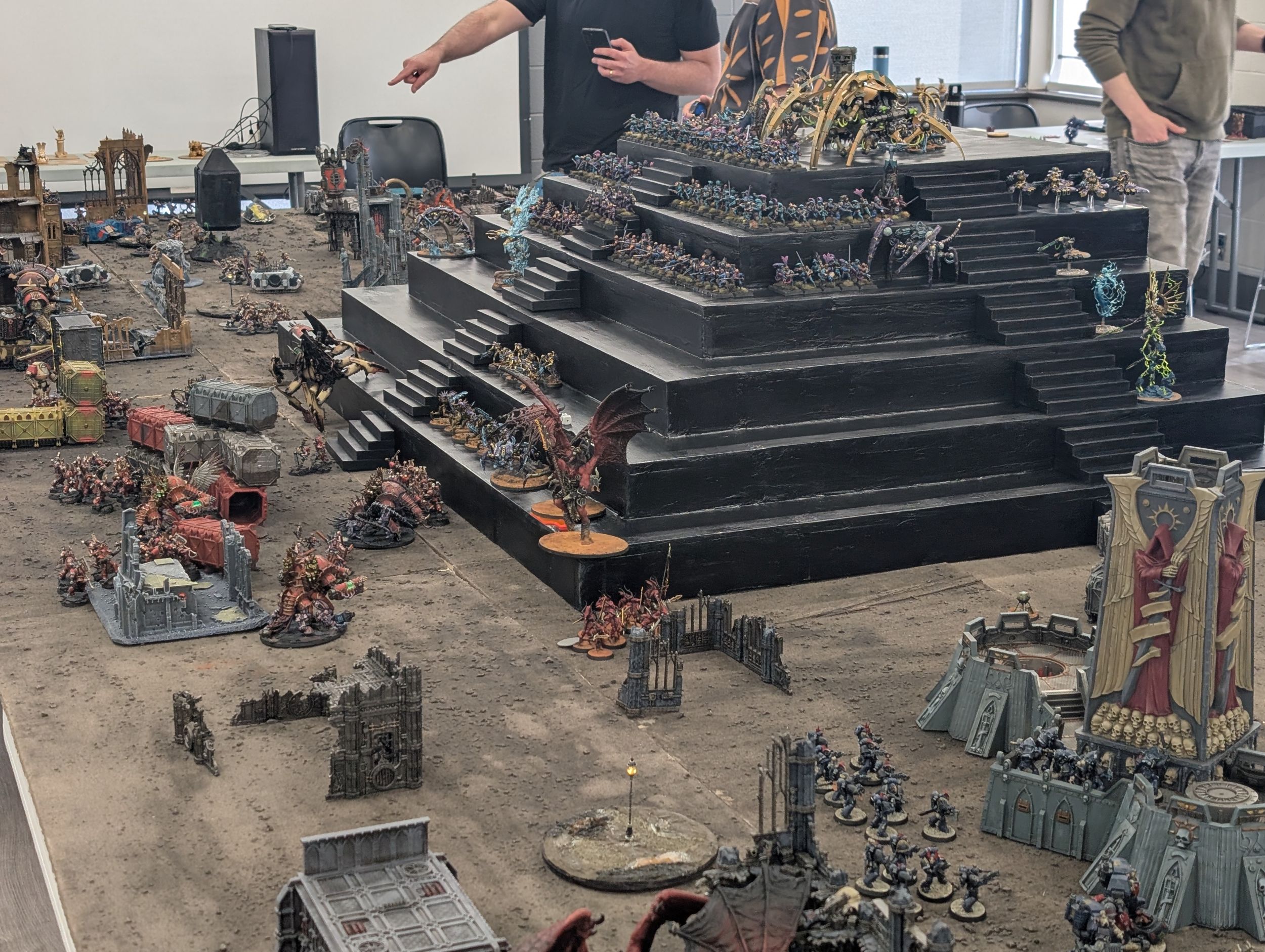
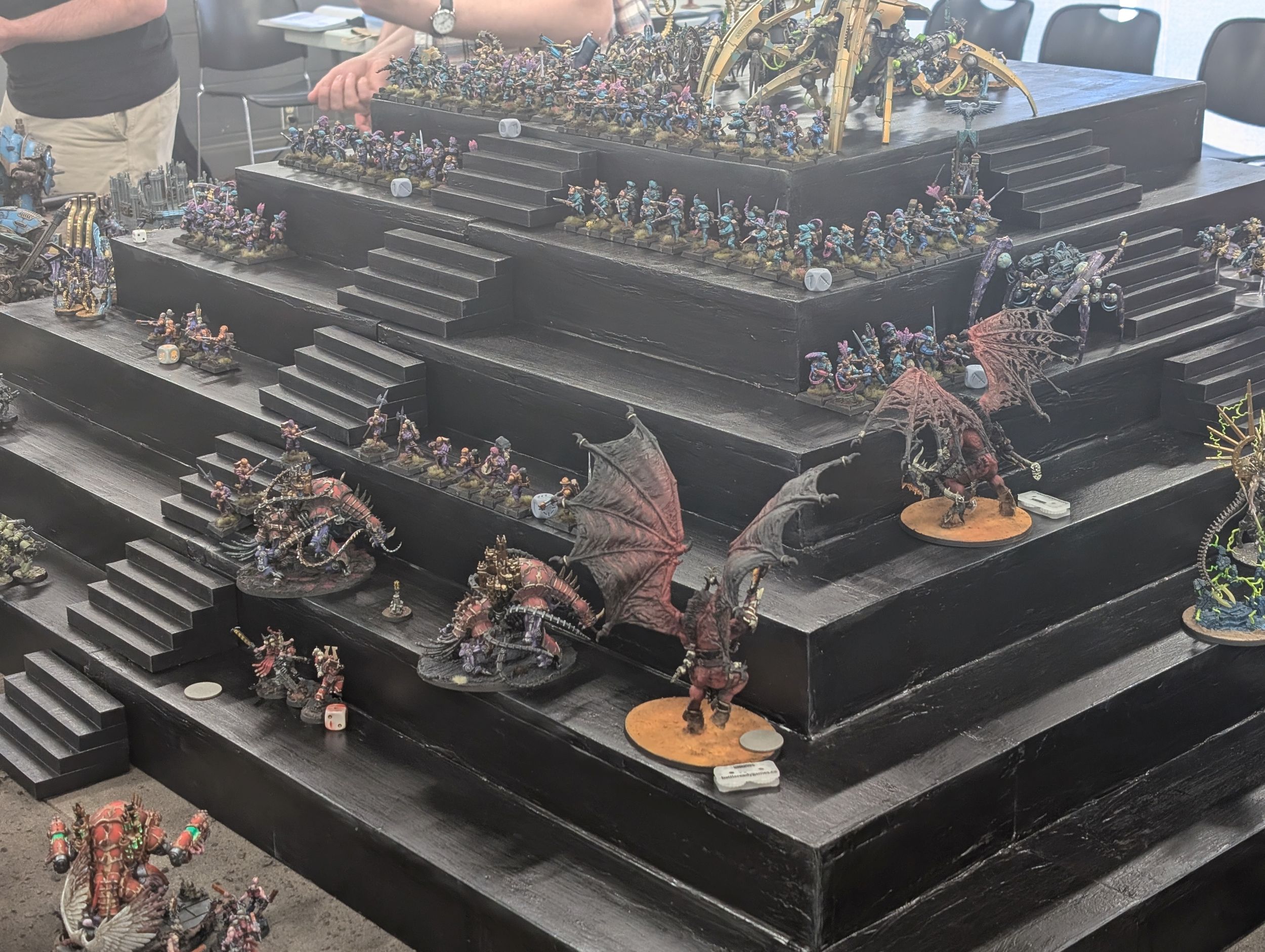
Jacen and Greg spent the build day cutting foam to form the centrepiece: a massive ziggurat.
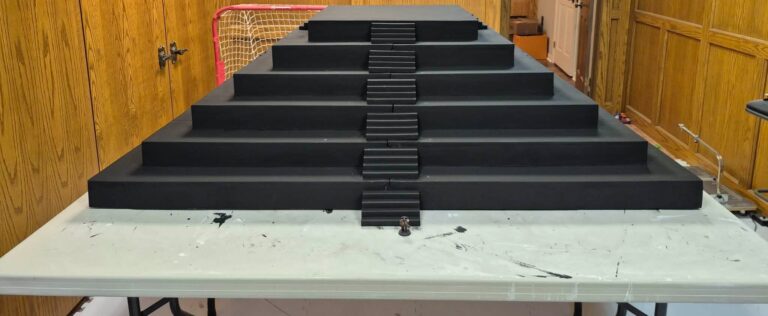
When I say massive, it’s important to remember that it is sitting on a 6’ table: this pyramid is larger than a regulation 40k board.
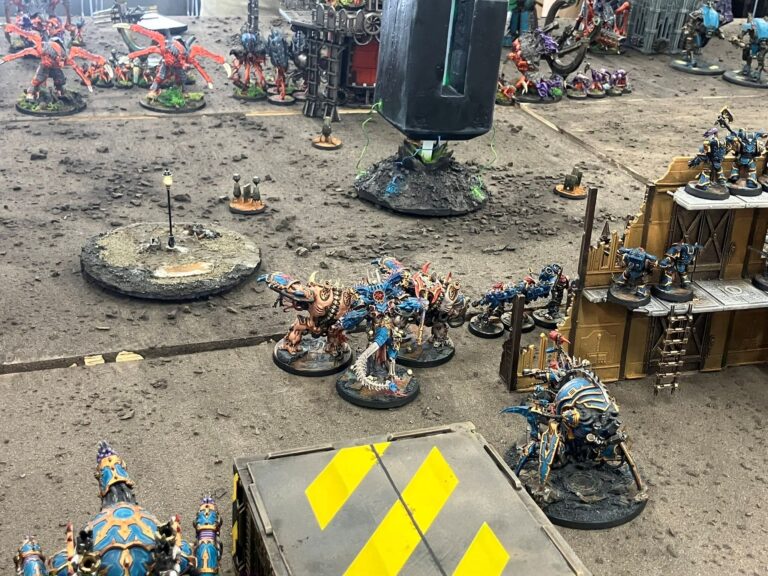
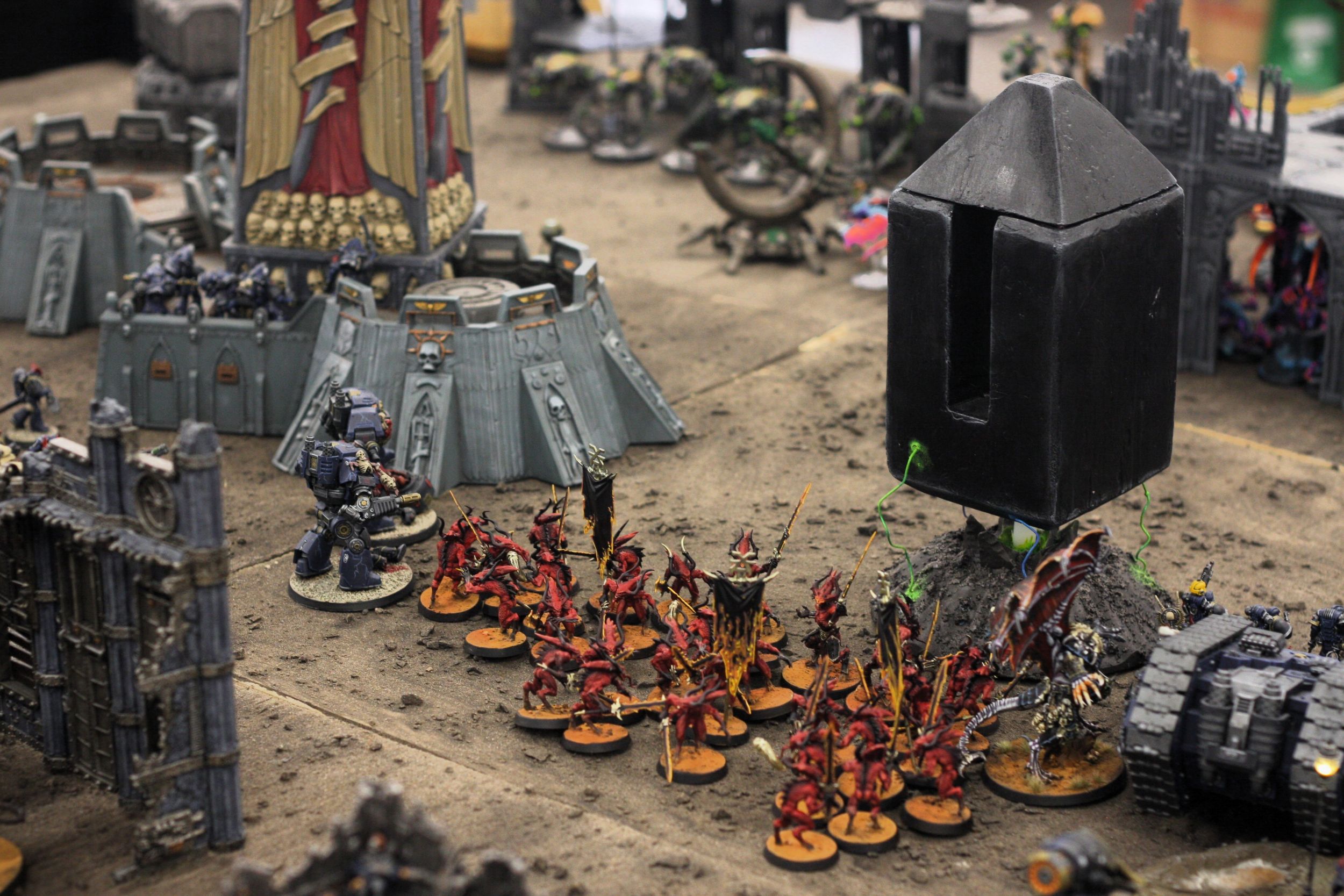
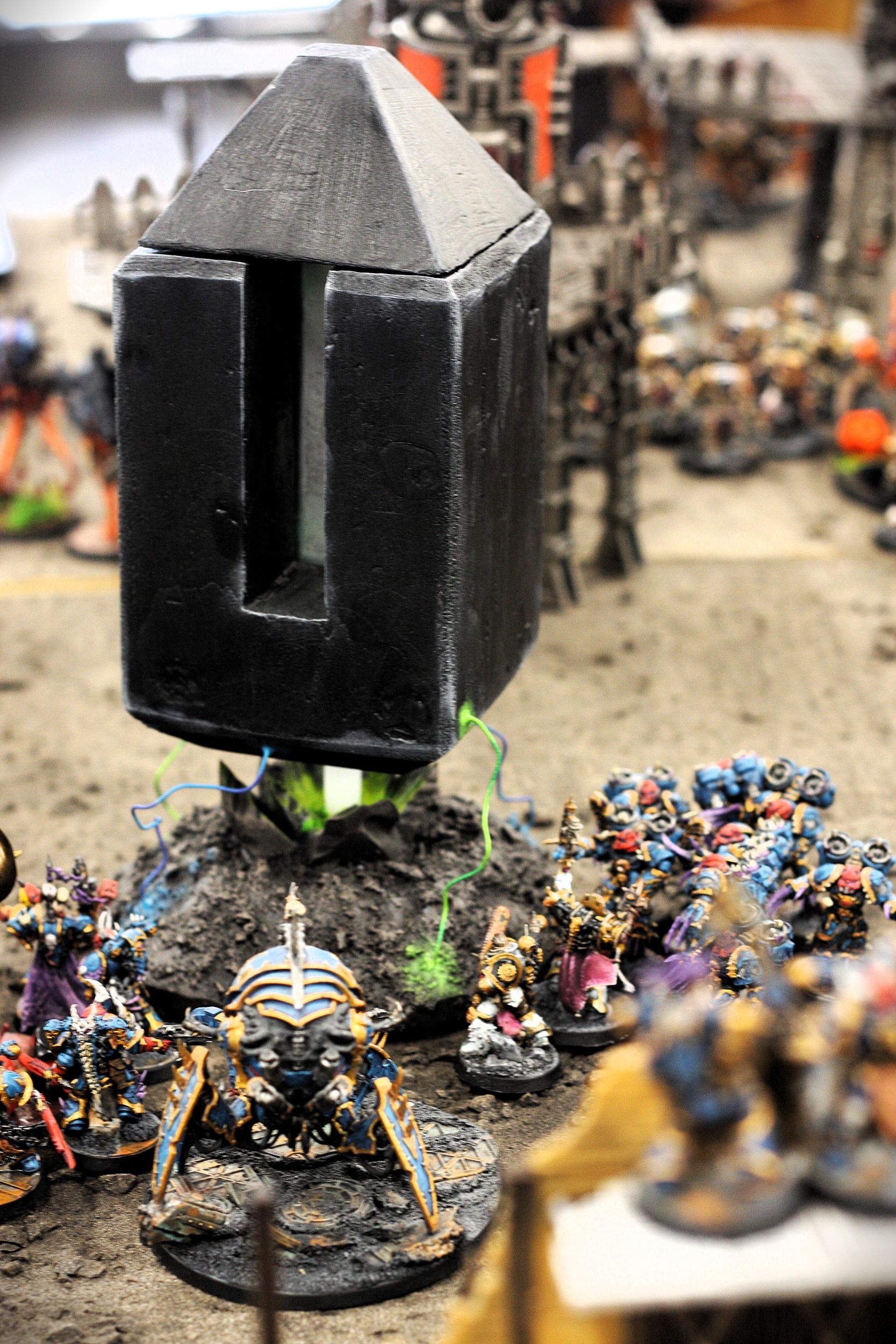
Unfortunately, the planned paint day was cancelled as my household got quite sick. That, combined with Jacen and my busy schedules meant there was no backup date. I didn’t even try to paint the boards on my own and just left them brown. Jacen was able to get the pyramid finished, and Greg built and painted two floating Necron pillars, which were early game objectives.
Planning, Preparation and Mission
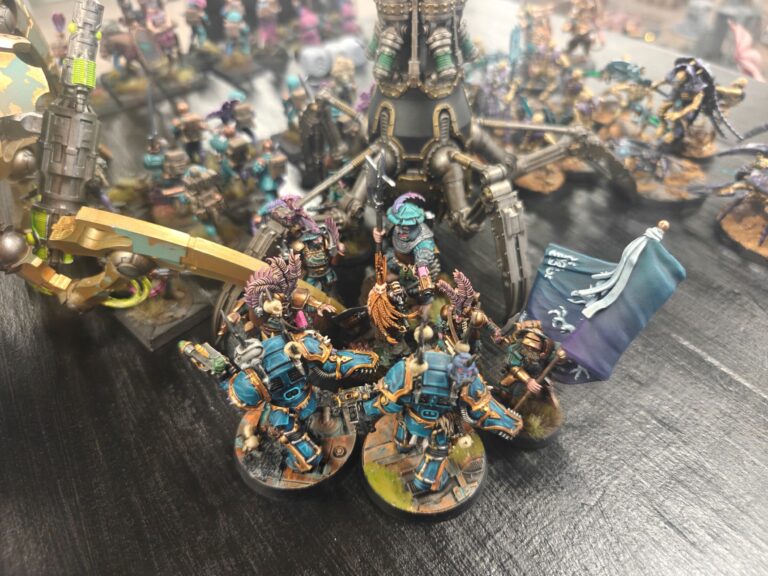
The first decision to be made was which factions would participate. This was mostly decided by the previous ICI, with Chaos and Necrons each winning an objective track. But not all our players have those armies, and, though our group’s collective collections could fill the gaps and lend models, we understood that at least one player wouldn’t have the time to learn a new army for the game and as many as three might be excluded. So we allowed players to bring the same armies from the previous ICI, ending with the Necrons having three mind controlled thrall armies plus a neutral Space Marines army.
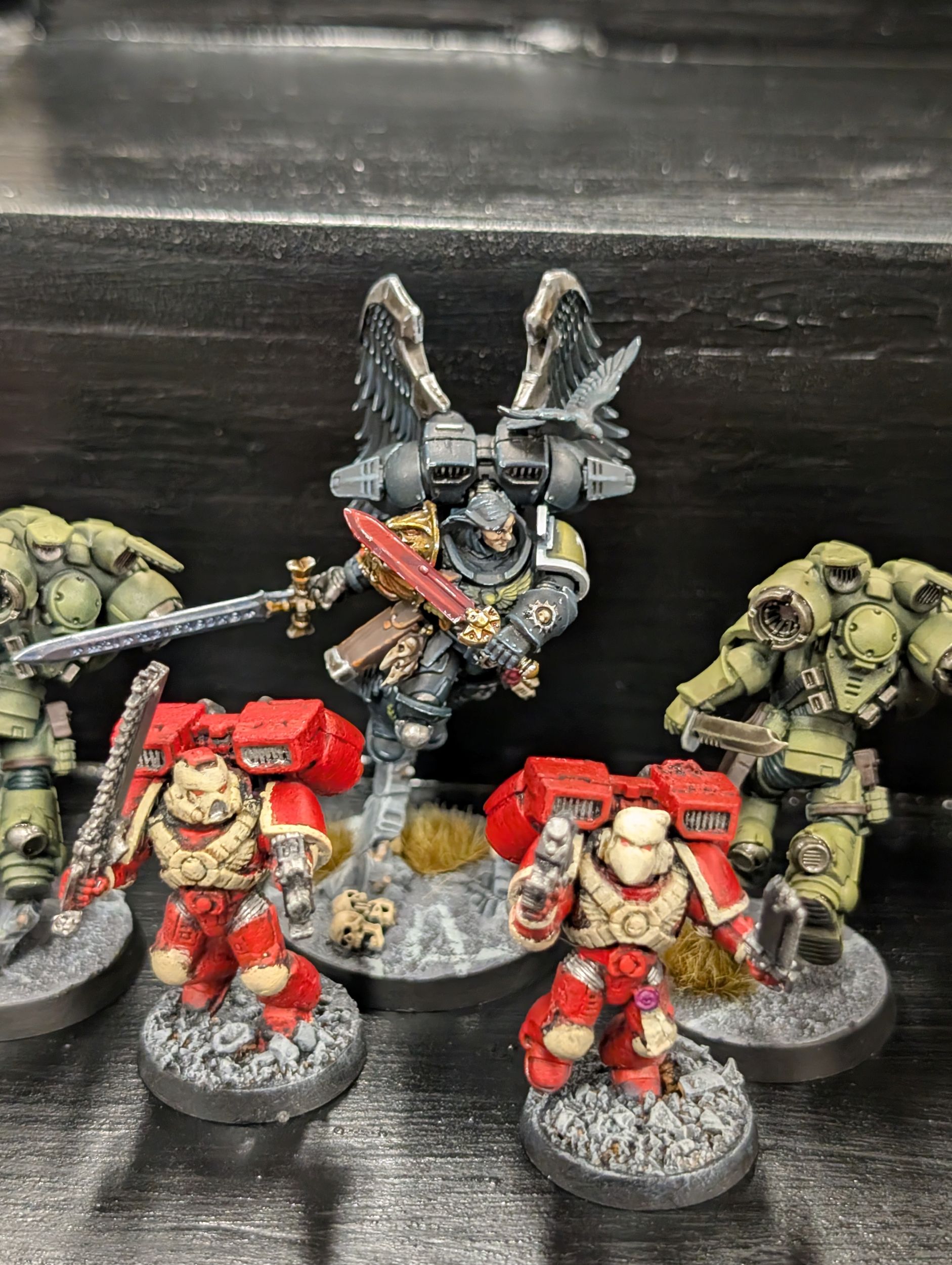
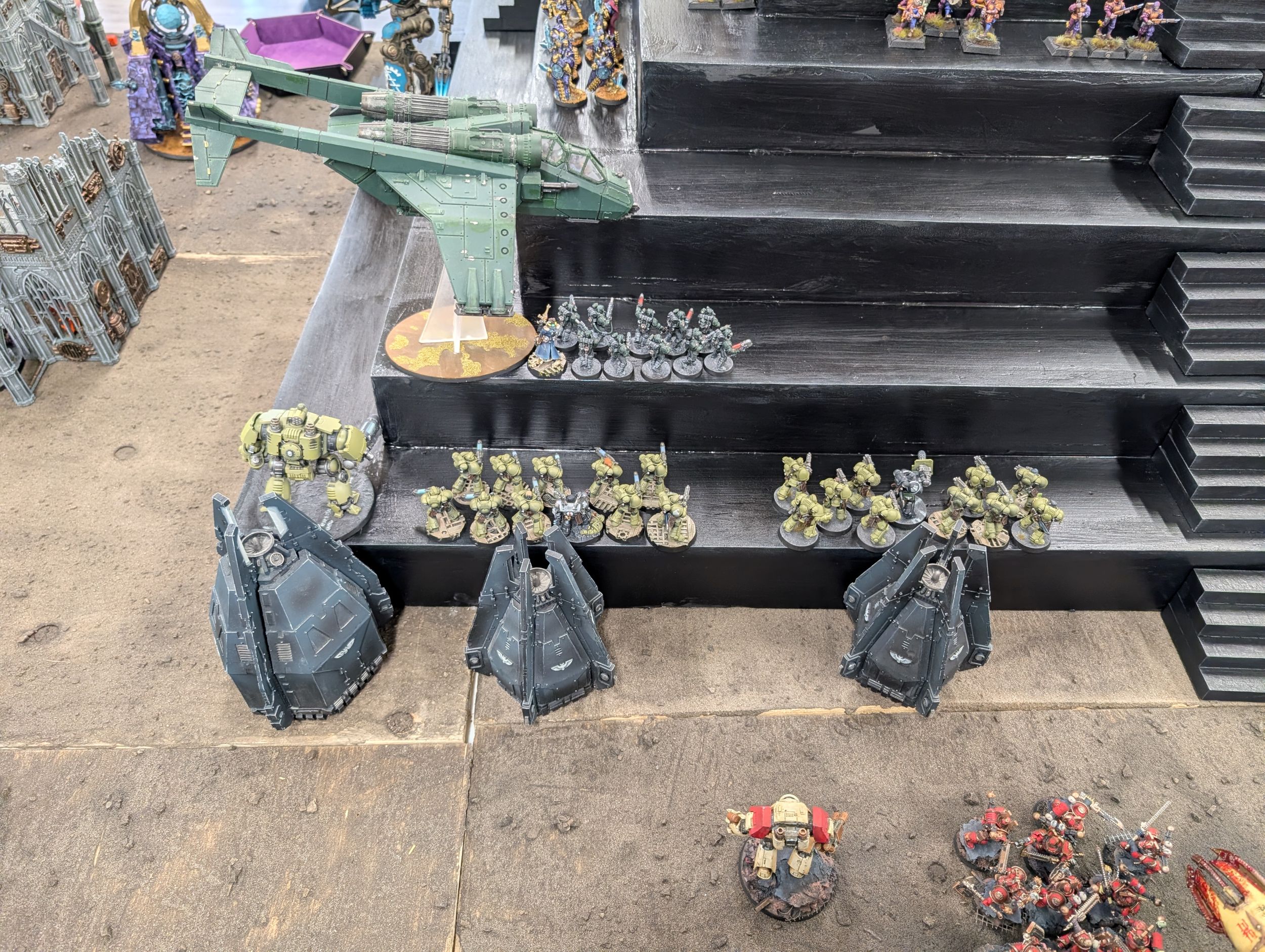
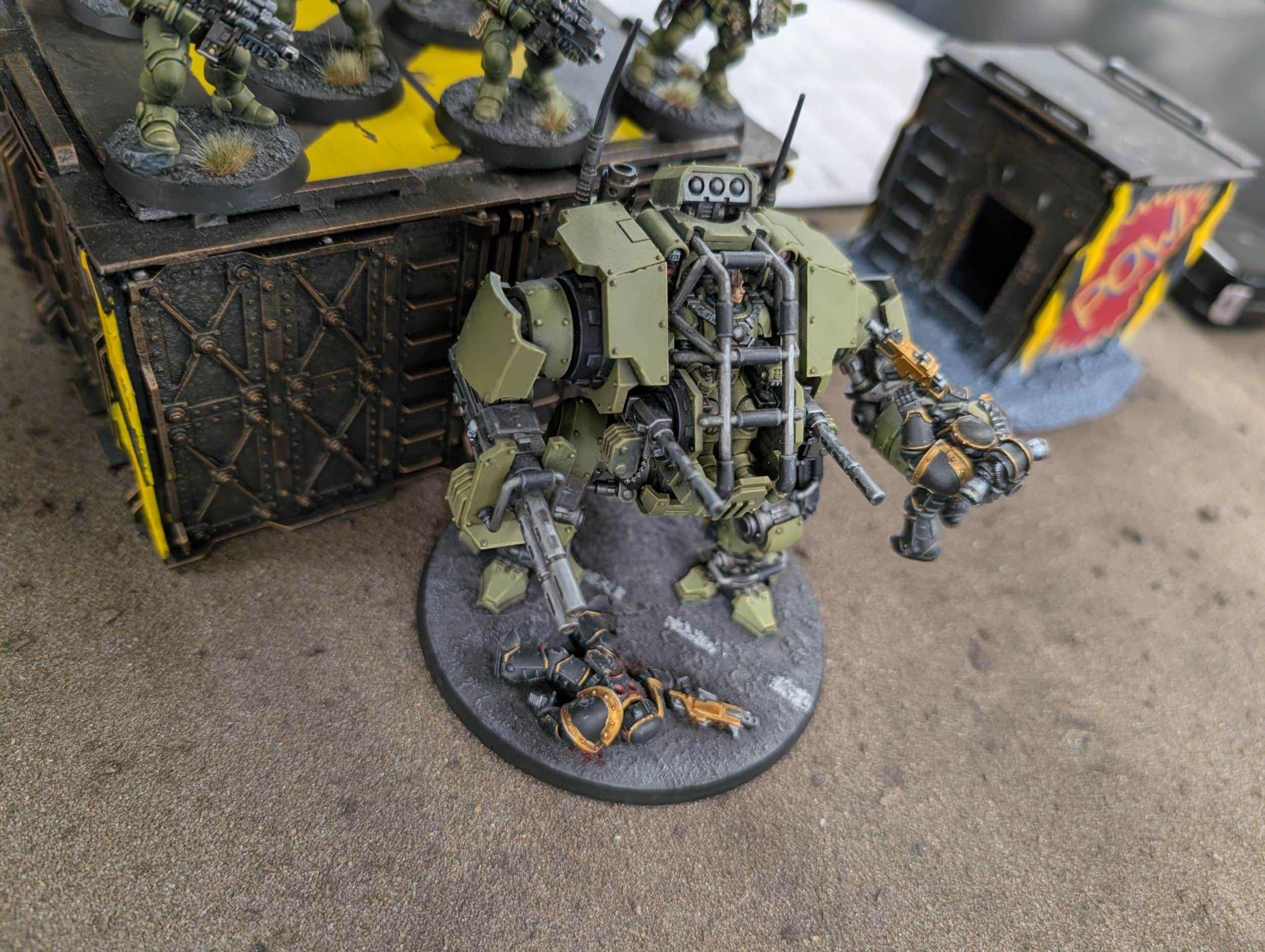
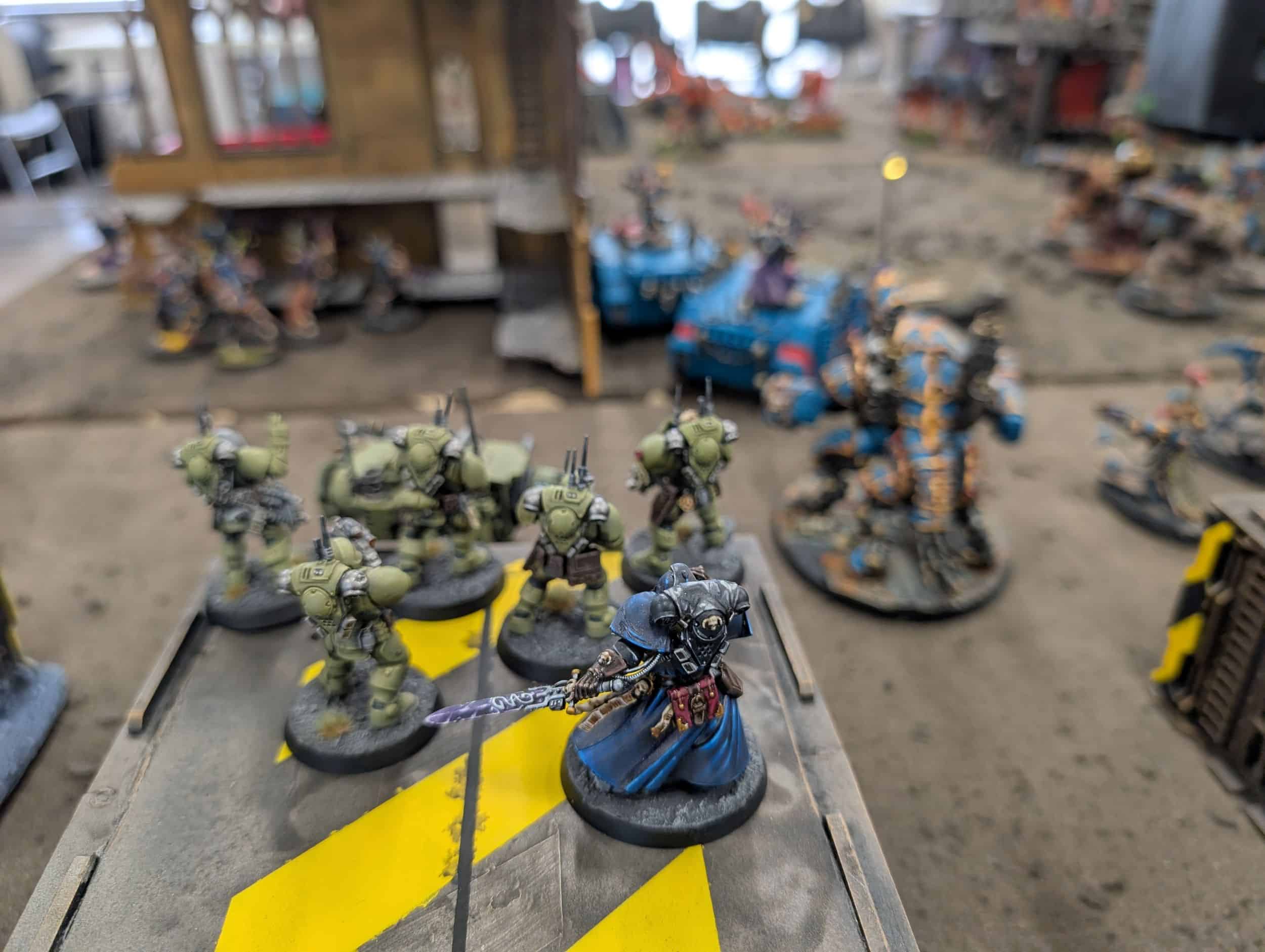
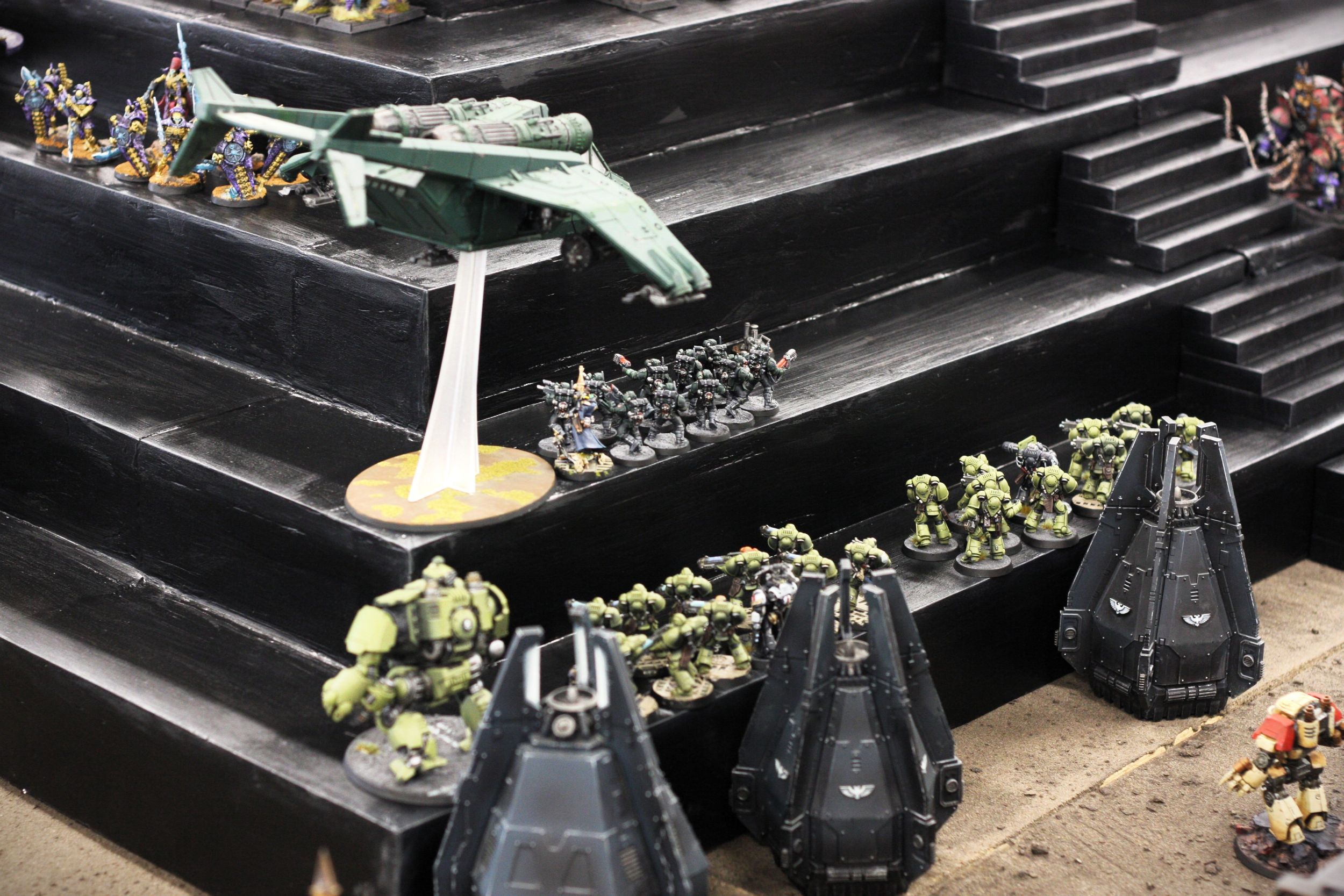
The Space Marines (being Alys’s Raptors, featured previously on the blog) had to be tackled, as adding a third player turn to a game was going to slow everything down. Though the Imperium doesn’t have any love for Xenos or Chaos, we reasoned the Engine was the greater threat and the Raptors would activate on the Chaos turn. However, once the Engine was activated, Alys would be taking Leadership checks for nearly every unit on the table: failure meant they’d switch sides and activate in the Necron turn as the Engine gained control of them.
That was only one scenario consideration. As mentioned above, the first turn advantage in Apocalypse can be huge. We determined it narratively made sense for the Chaos team to have the first turn as they were attacking, and they also deployed all their armies first. This gave the Necrons an opportunity to counter. The end game objectives (being the Apocrypha Engine itself atop the pyramid, plus four orbital cannons on the ground) were also set in the Necron deployment zone, meaning Chaos would have to come to them. Finally, the pyramid, though imposing, did not technically have cover. Therefore, we gave it a quantum shield. While this was up, Chaos forces could not deep strike onto the ziggurat. The two pillars Greg built were the shield’s power sources: when they both were down, the shield would collapse. Additionally, while the shield was up, units on the pyramid had a 3+ invulnerable save, reducing to 5+ after the first pillar came down. Finally, travelling through the shield (i.e. onto the pyramid) conferred a -2”/-1” movement penalty, depending on how many pillars were up.
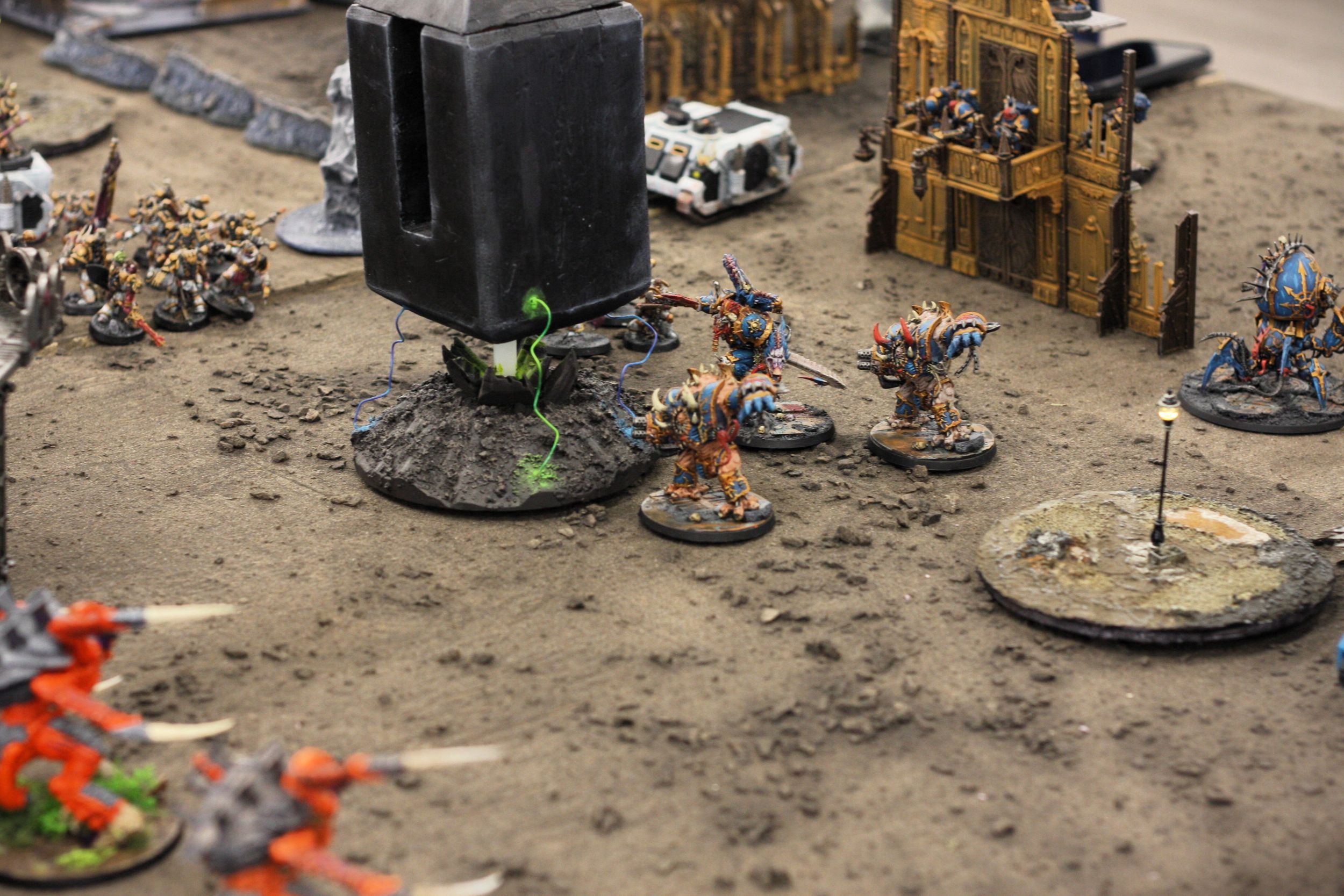
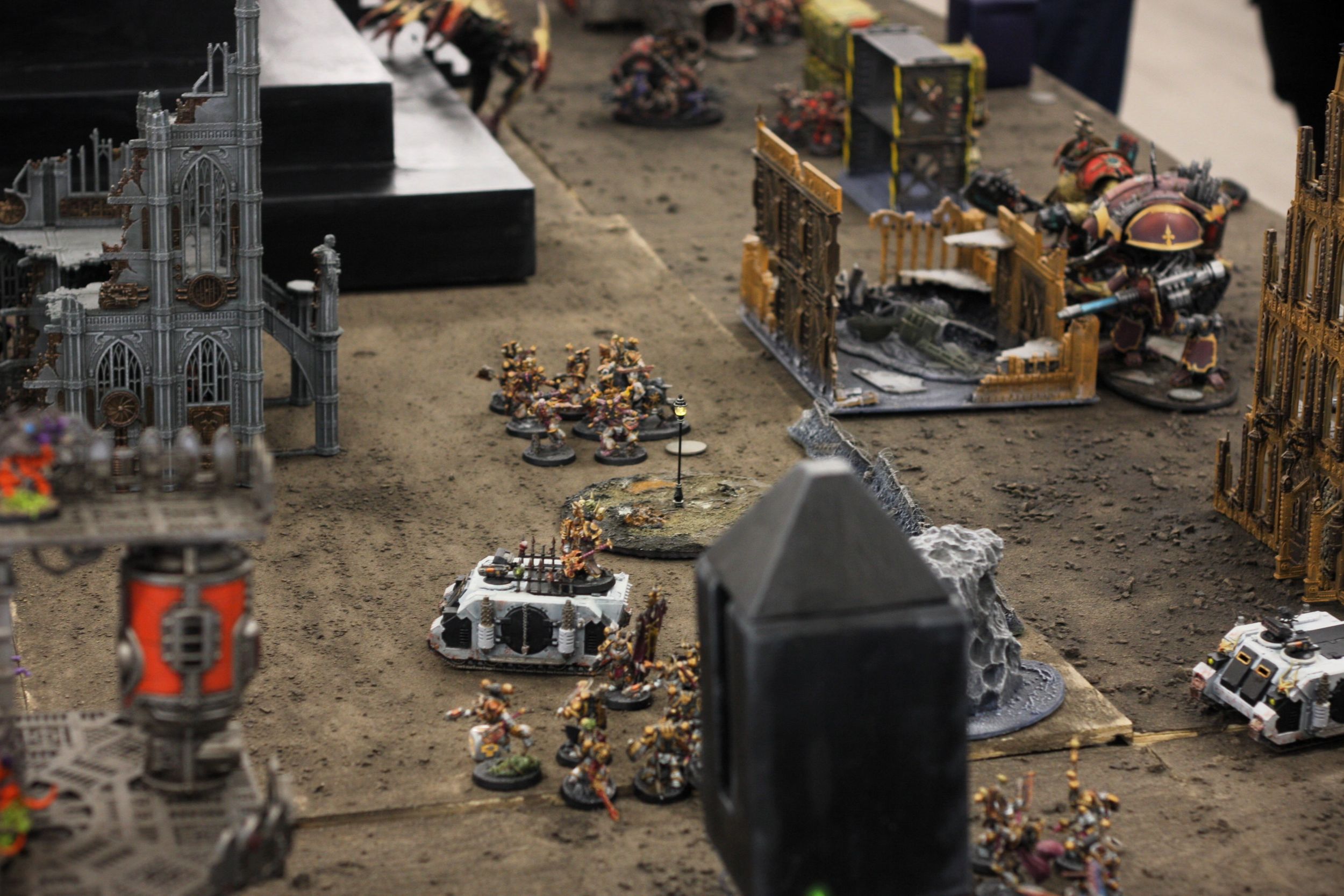
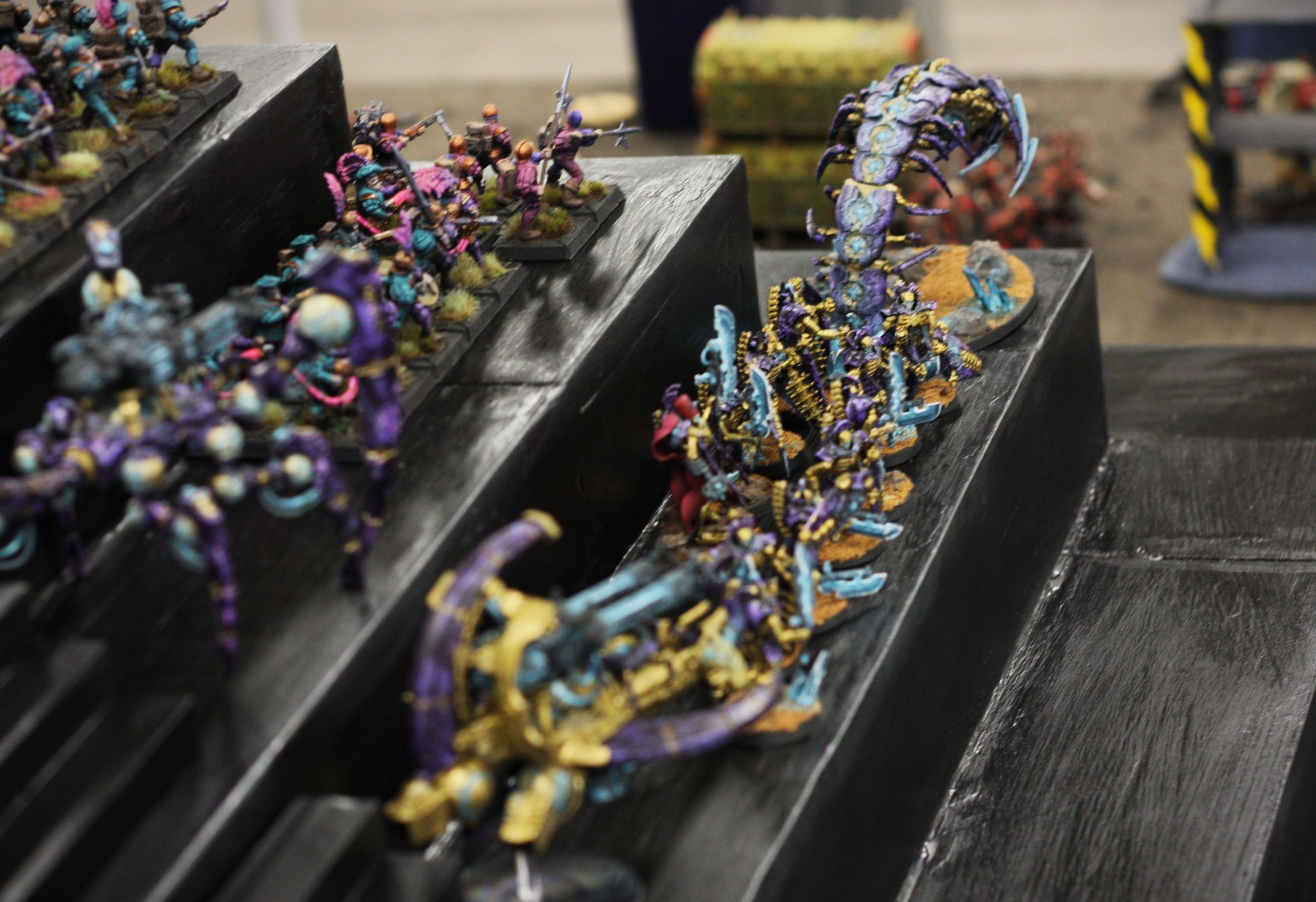
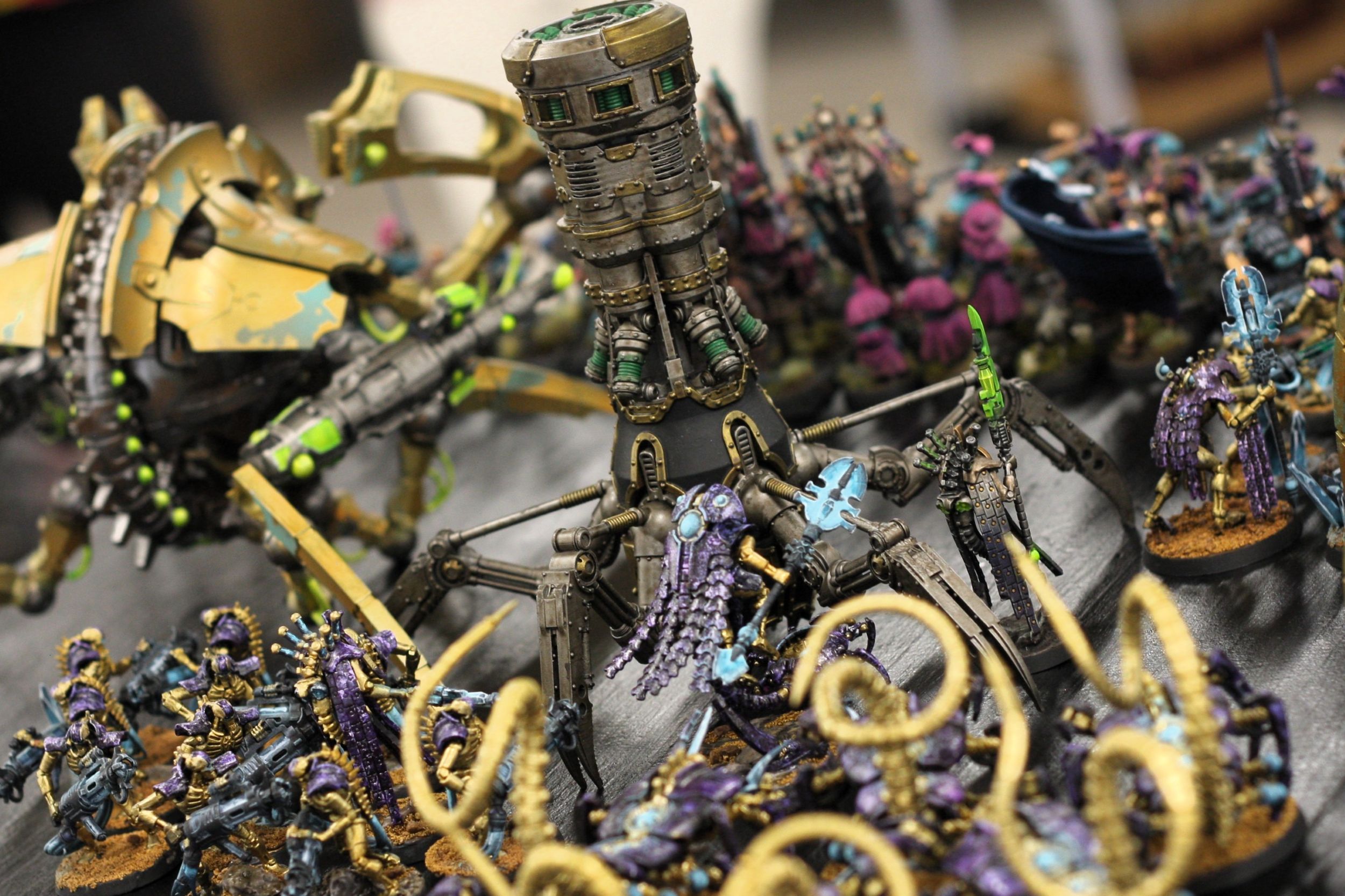
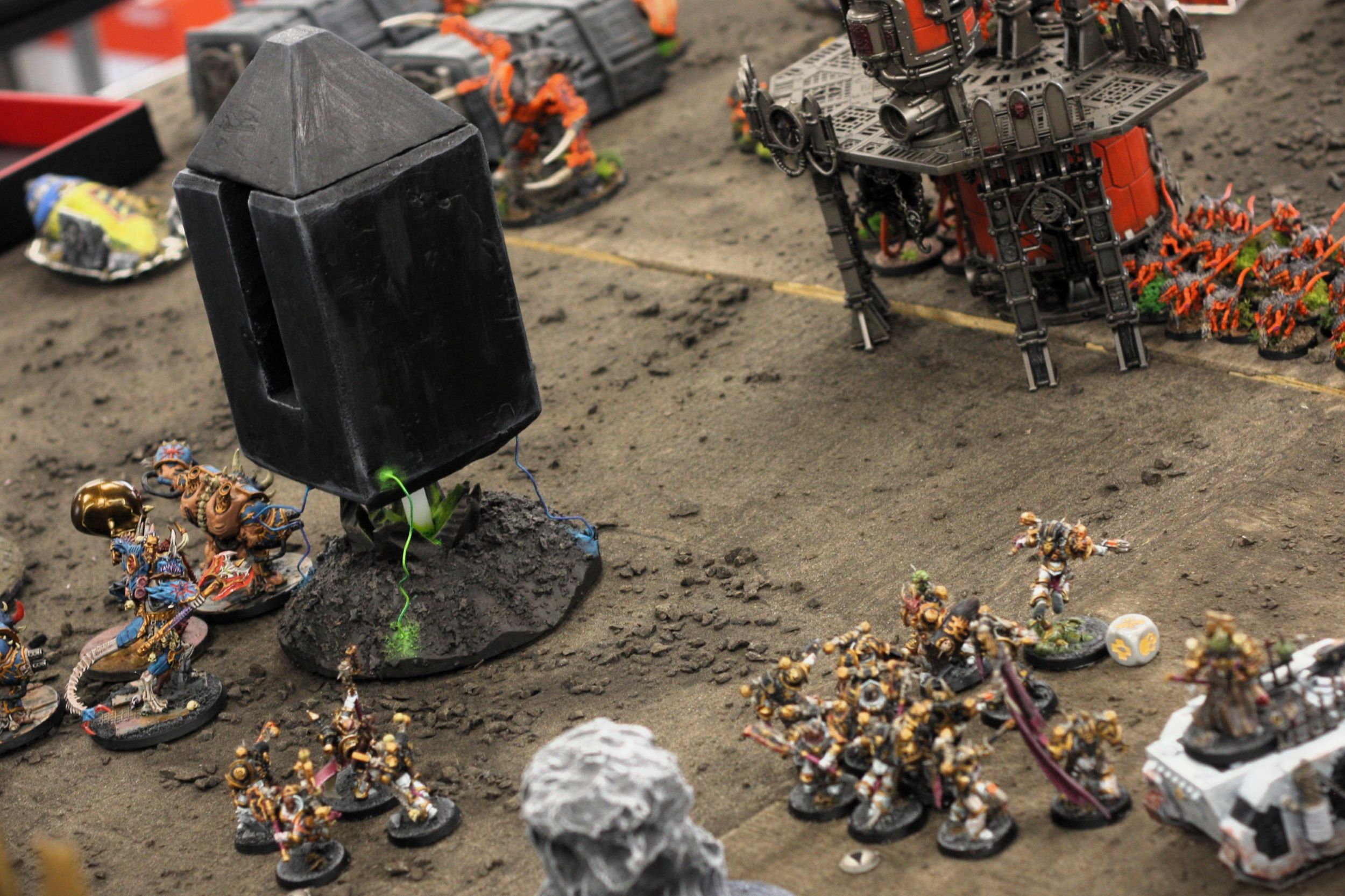
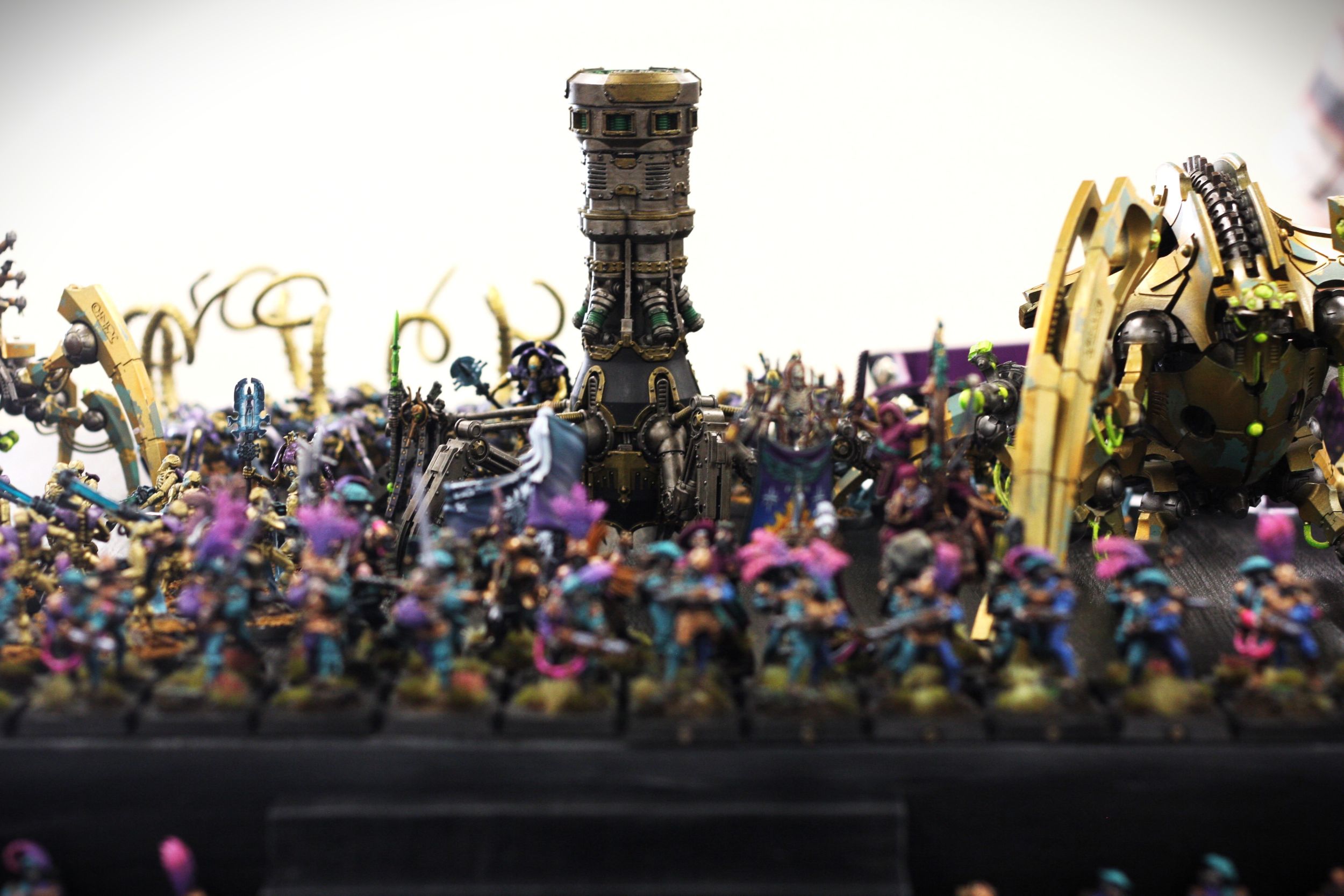
Okay, that’s a lot right? Even if Chaos have first turn, these are huge obstacles to overcome. To that end, we had two additional balancing factors in the mix. The first was Alys’s Raptors, which was an extra 3,000 points on the Chaos side. Even though these units might switch sides, we reasoned with high Space Marine leadership the majority would be fighting on team Chaos. And if she had a turn of catastrophic leadership rolls at the worst possible time, well, that would make for a great story.
The second was the cards. We used a deck of effect cards at the previous ICI where we’d deal these out to players who were lagging behind or needed a boost. The feedback we received, however, was that these were too situational or too underpowered. For this game, I turned to the 6th edition Apocalypse stratagems, many of which were much, much more powerful. We made a small deck for each faction (which Jacen printed using the awesome art from the Arks of Omen campaign series), and would have these ready to put our thumbs on the scale to try to keep the game close. The Engine also had cards associated with it: as the Crypteks pushed their final experiment to activate the Engine, I would read out narrative passages and then we’d pass the Necron team similar cards.
Along with the cards, we had some accoutrement to prepare. For this game we used Crowns to track CP and I made new ICI VI Crowns with the actual event name this time. Usually I leave one side blank so players can add their own embellishment, but I don’t recall ever seeing someone do that in the years we’ve been using them, so I figured it was a safe space to reclaim. I also messed up my stencils and had to fix them somehow.
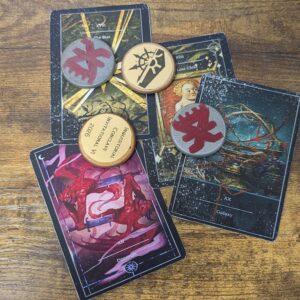
In addition to Crowns, we had Blood Marks, which were exclusively for the Chaos team.
Going past the table
The idea of pushing the theme of mind control past the table and to the players was…bold? Challenging? Manipulative? You decide.
This was done through the Engine cards. The effects varied, but there were a few that were essentially “Pass to a Chaos player and they choose a unit to [lose a turn/take mortal wounds/fire on an ally]”. At the start of the game, we emphasized that one of the themes was victory through sacrifice. For the Necrons, that meant voluntarily feeding Crypteks to the Engine; for Chaos, when a player was handed an Engine card, we told them “Khorne is watching”. If they gave the effect to a throwaway unit like cultists, we’d say “Khorne is disappointed.” If a significant sacrifice was made, we’d say “Khorne is pleased” and pass that player one or more Blood Marks.
The Marks couldn’t be shared amongst the team, and when they were used they were spent. A Mark was used to modify any rolled D6 to an 8 (which counted as a natural 6 for things like Lethal Hits). The idea here was to encourage players to have the Engine cards make a meaningful impact on the game, but also that the Engine wasn’t just affecting the models but the players as well.
Battle commences
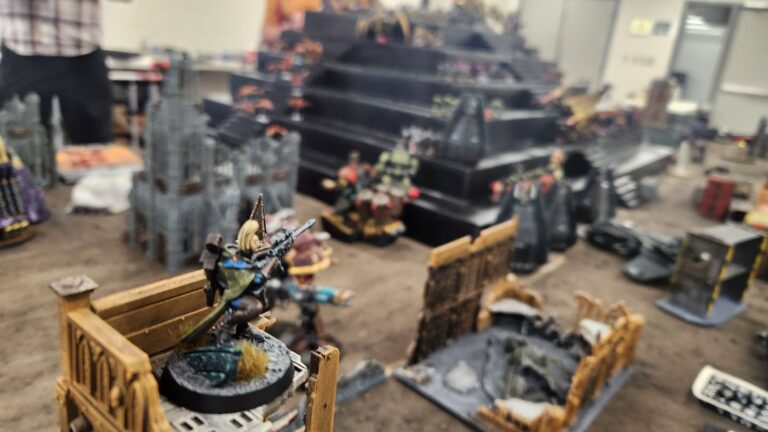
On the day of, Jacen and I were joined by Jeff and Phonsy–who were both lending terrain for the event–as well as Greg–who wasn’t playing–to set up the board. Other players had volunteered, but we limited it to the bare minimum so people could walk in and see the full table in all its glory. Players arrived, grabbed a coffee, and we started on time with each side having 15 minutes to deploy.
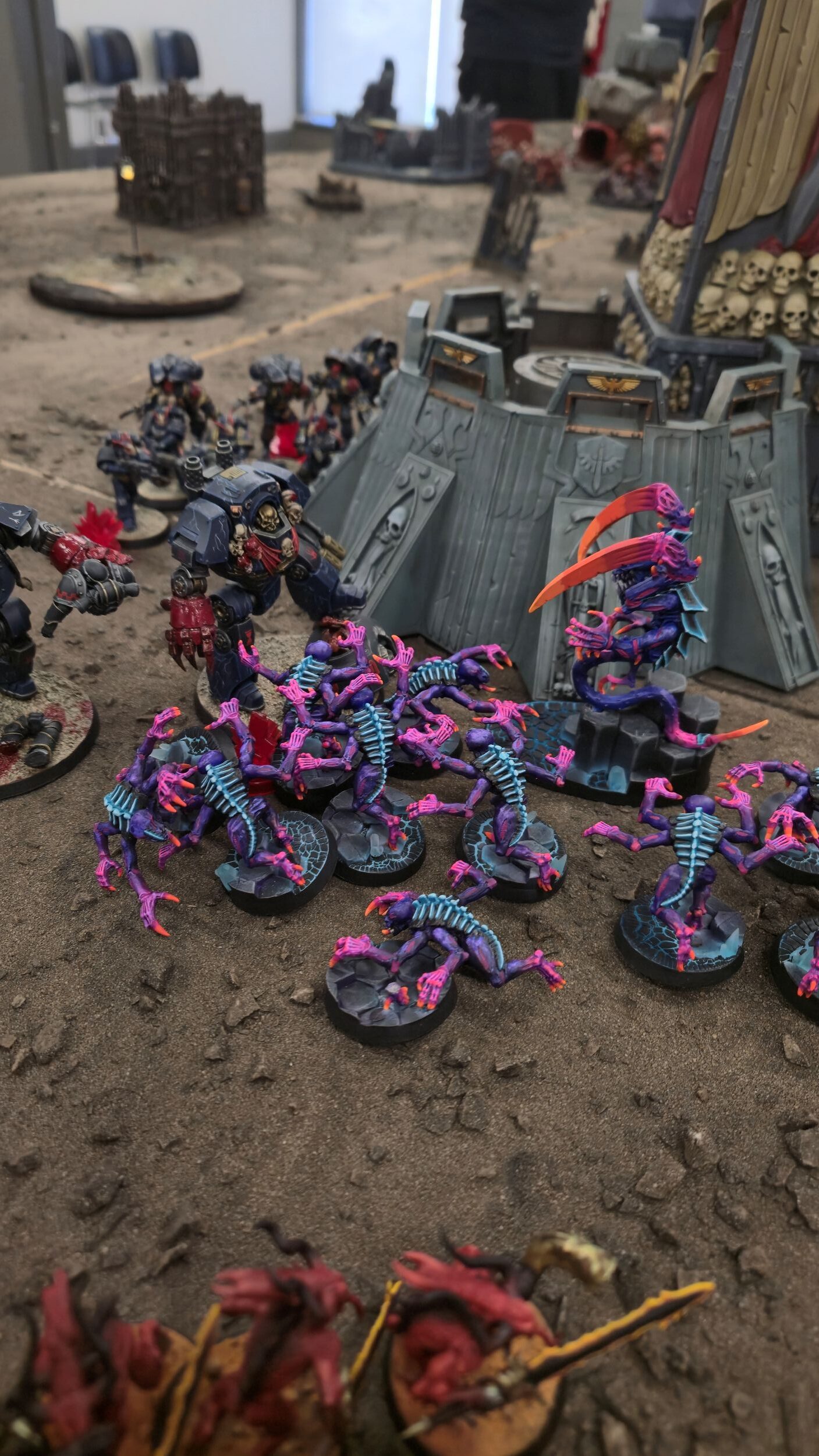
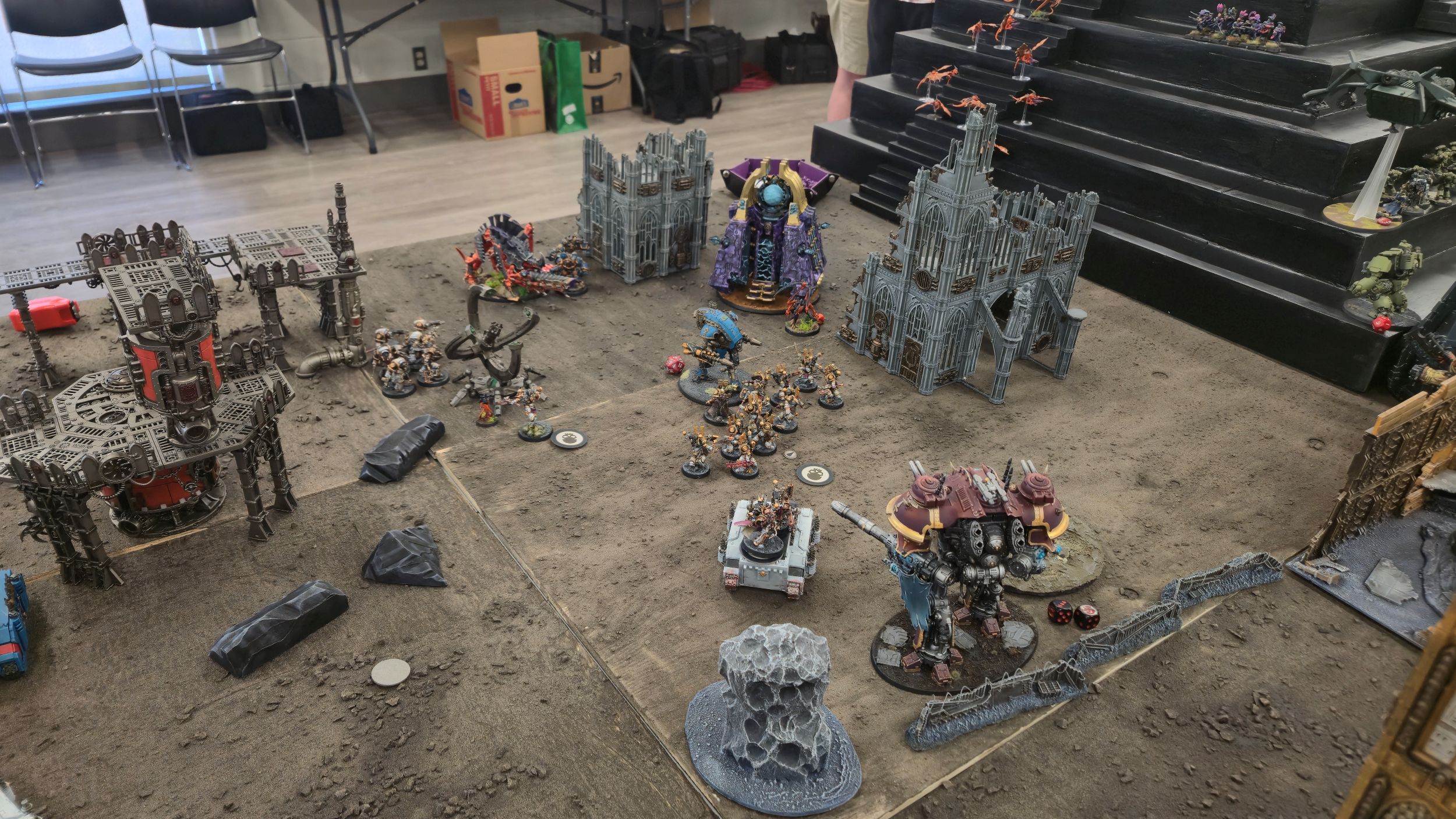
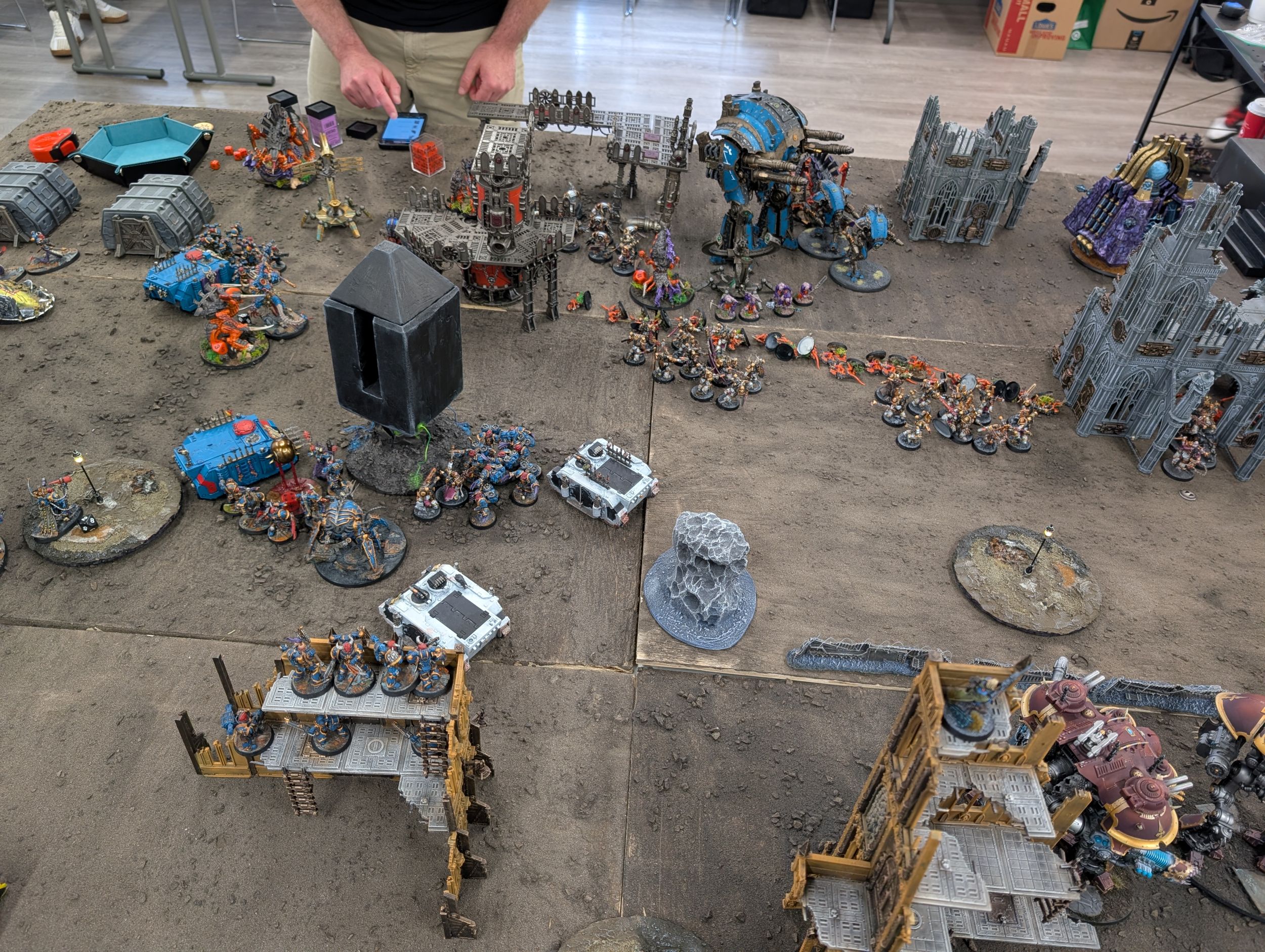
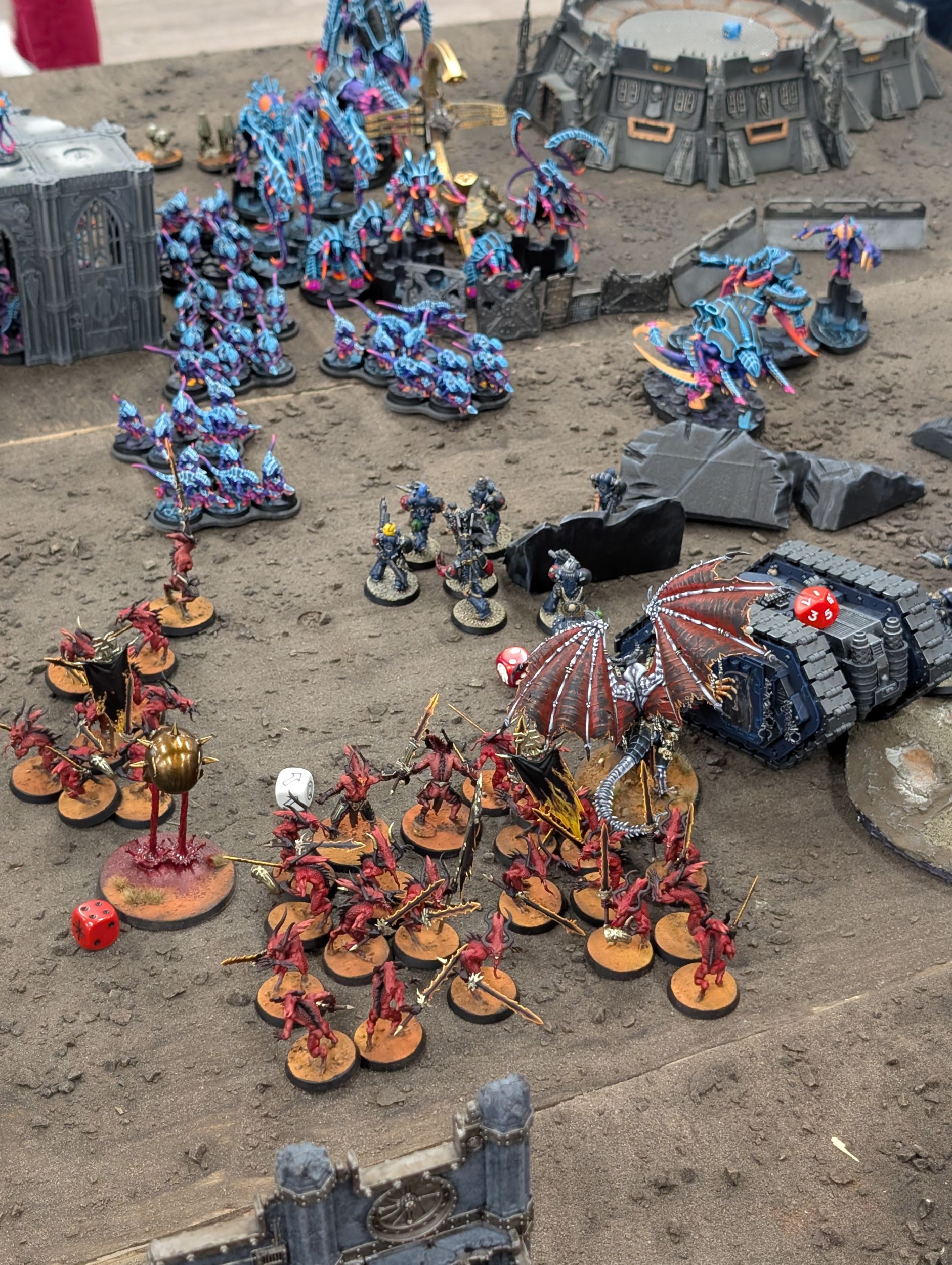
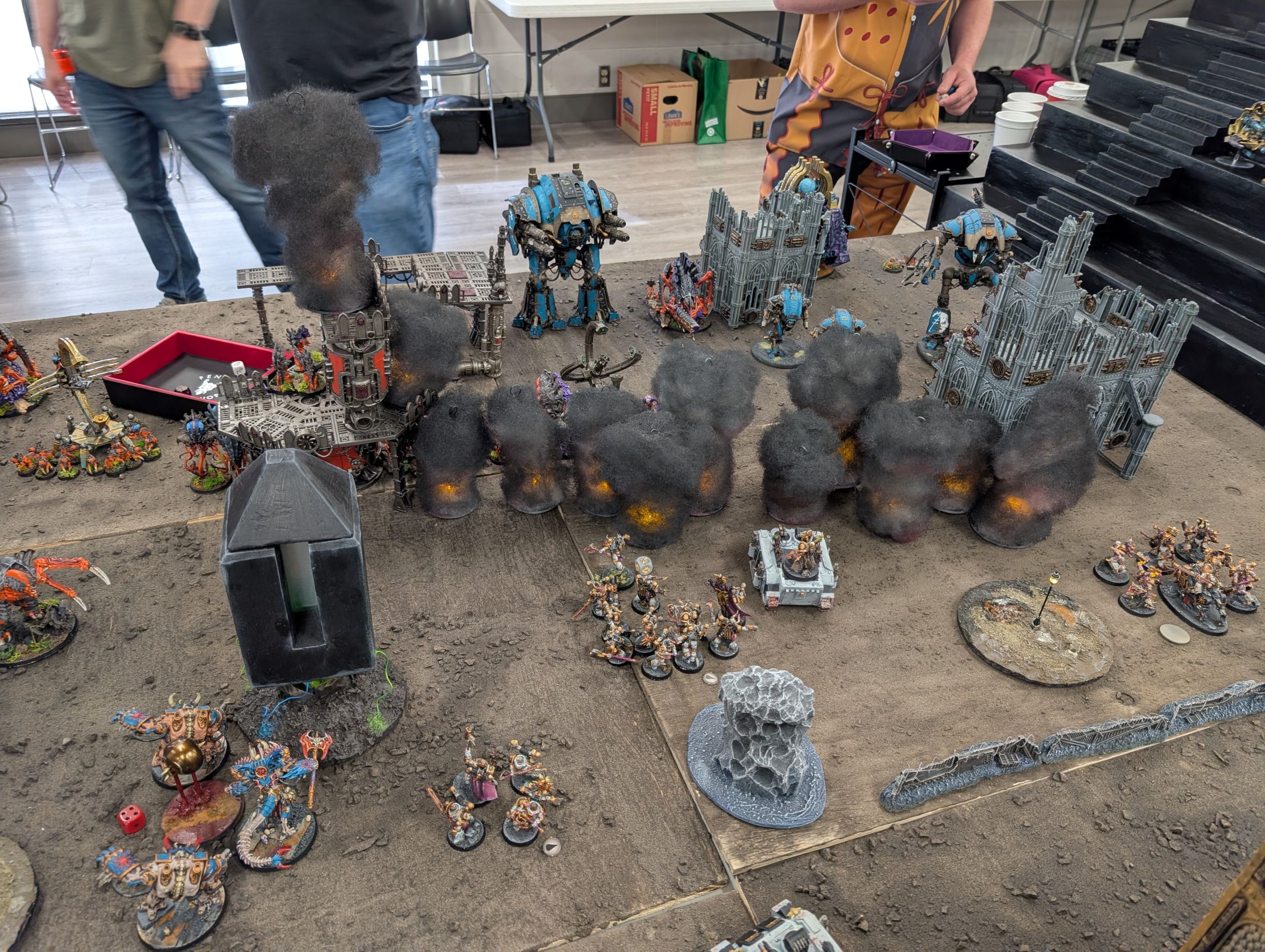
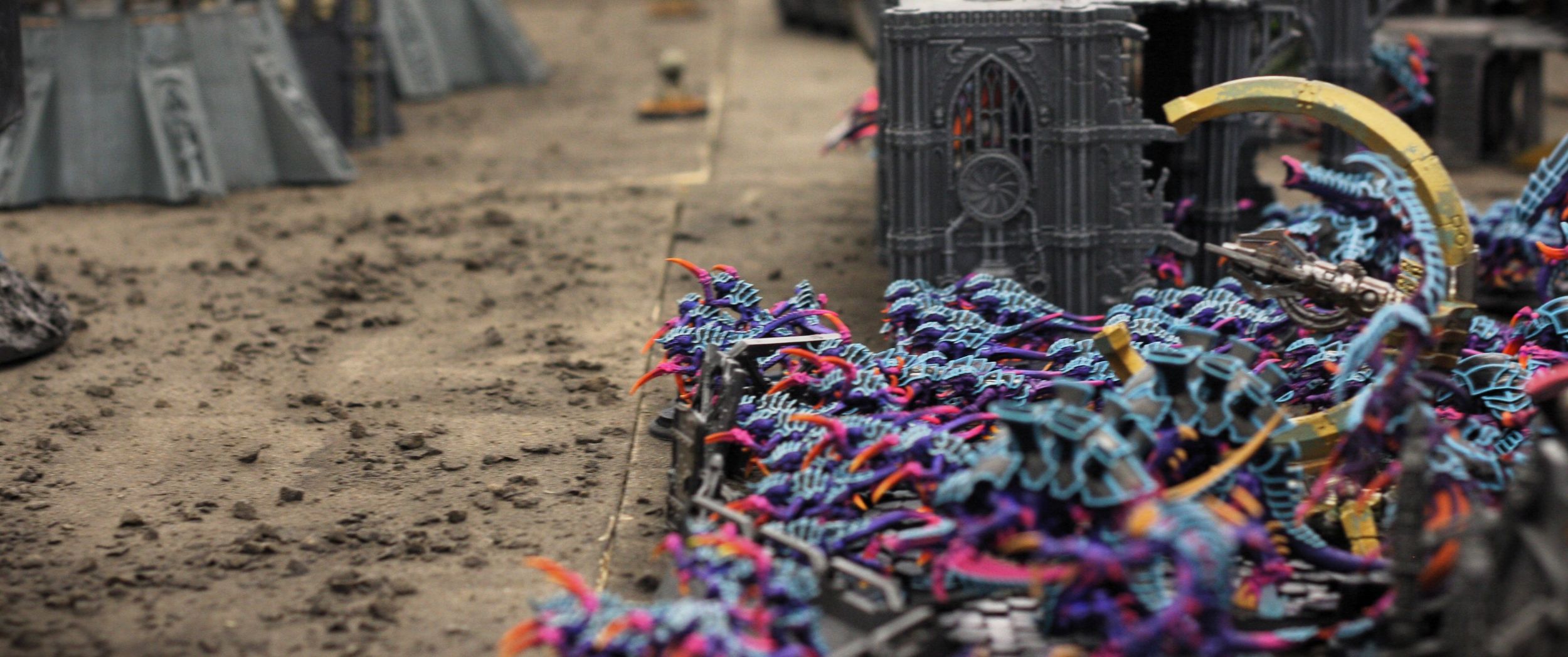
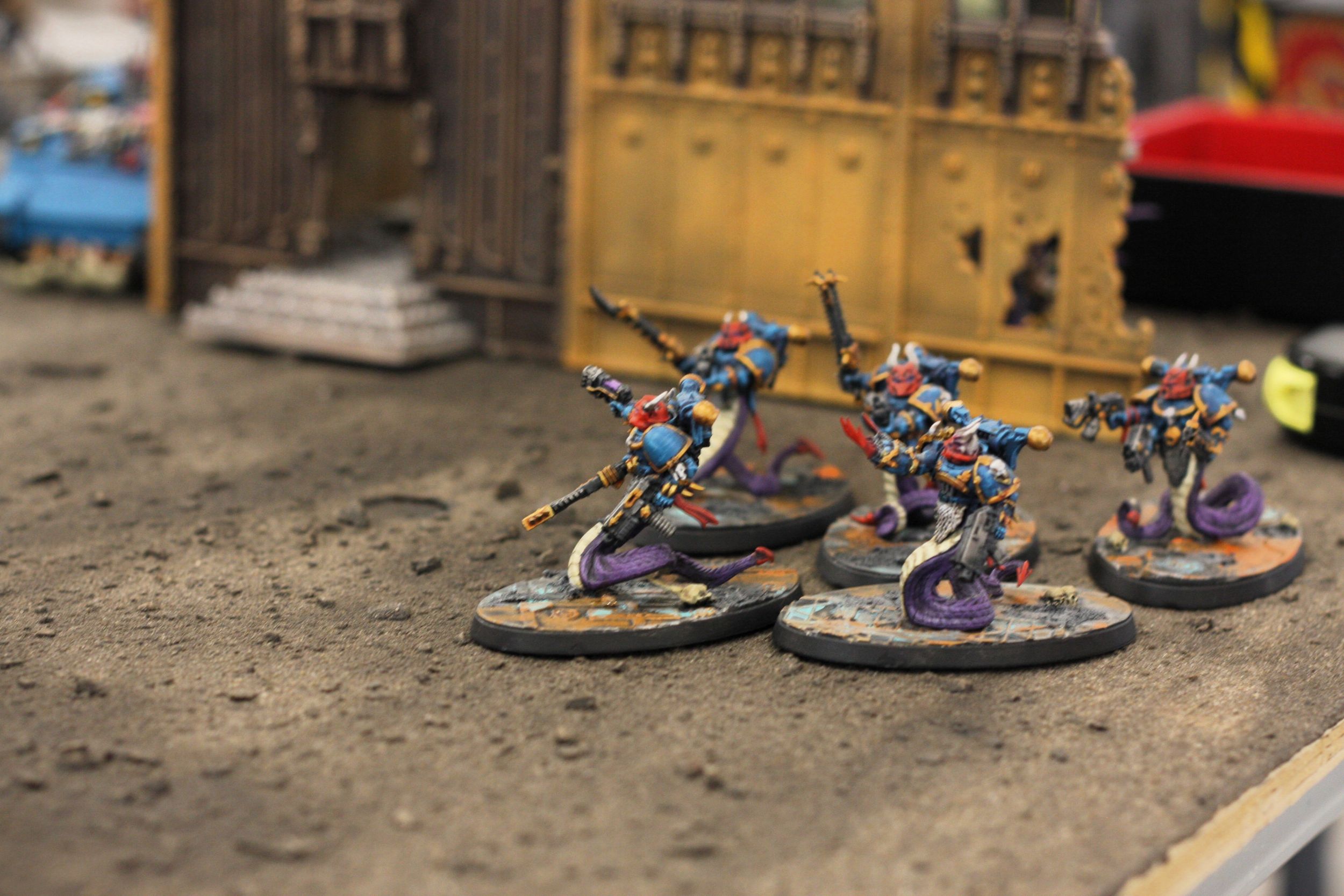
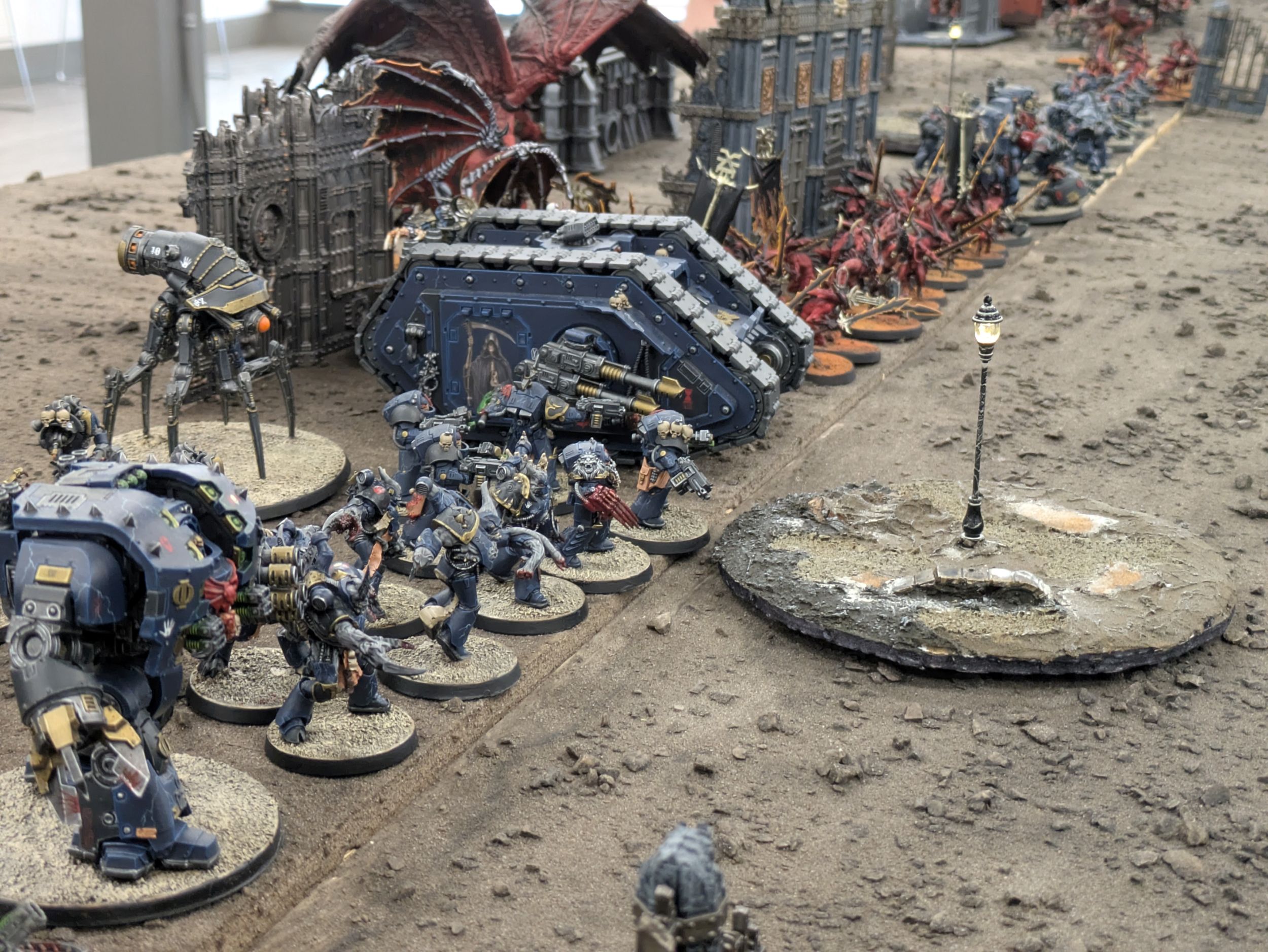
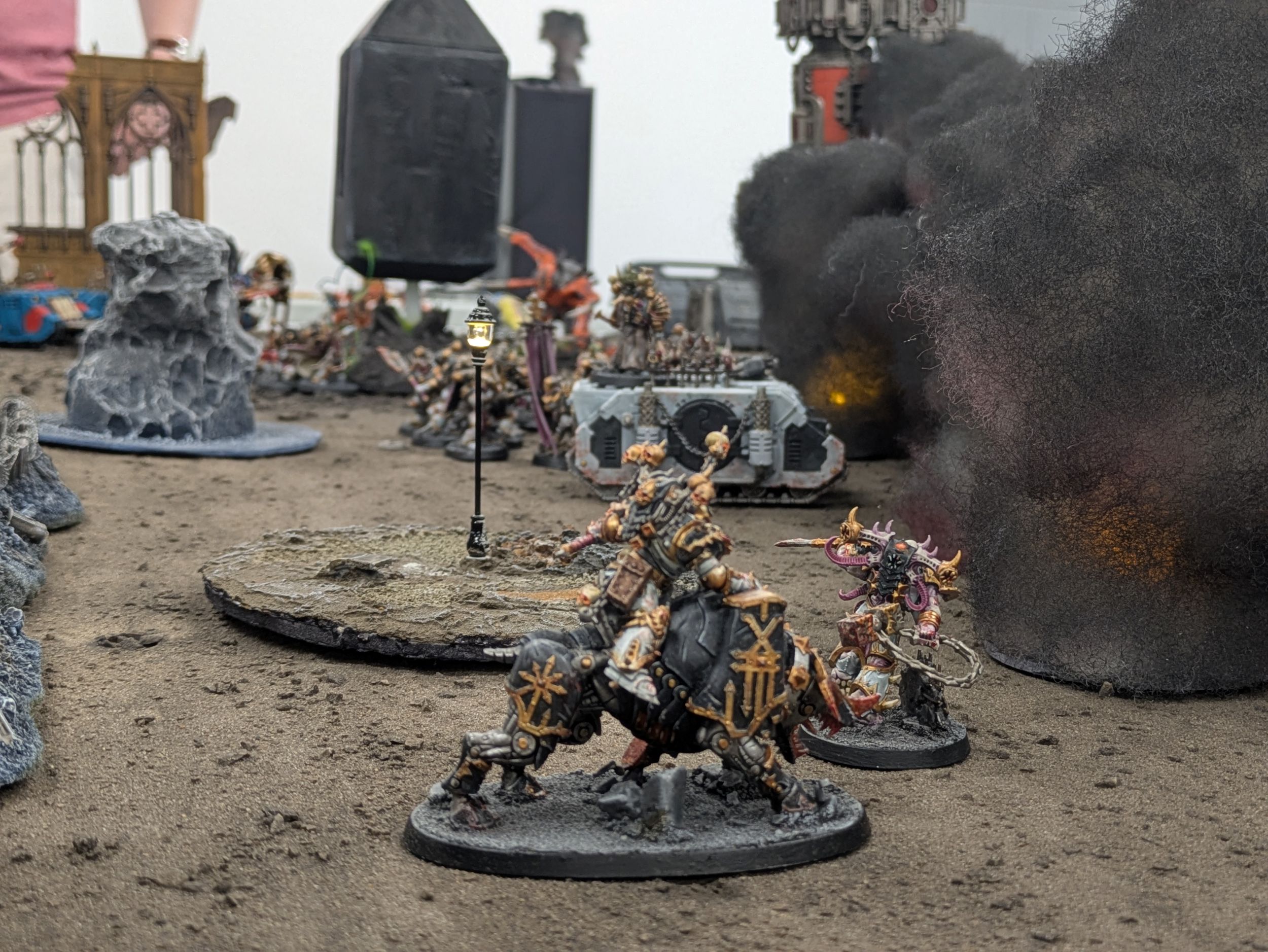
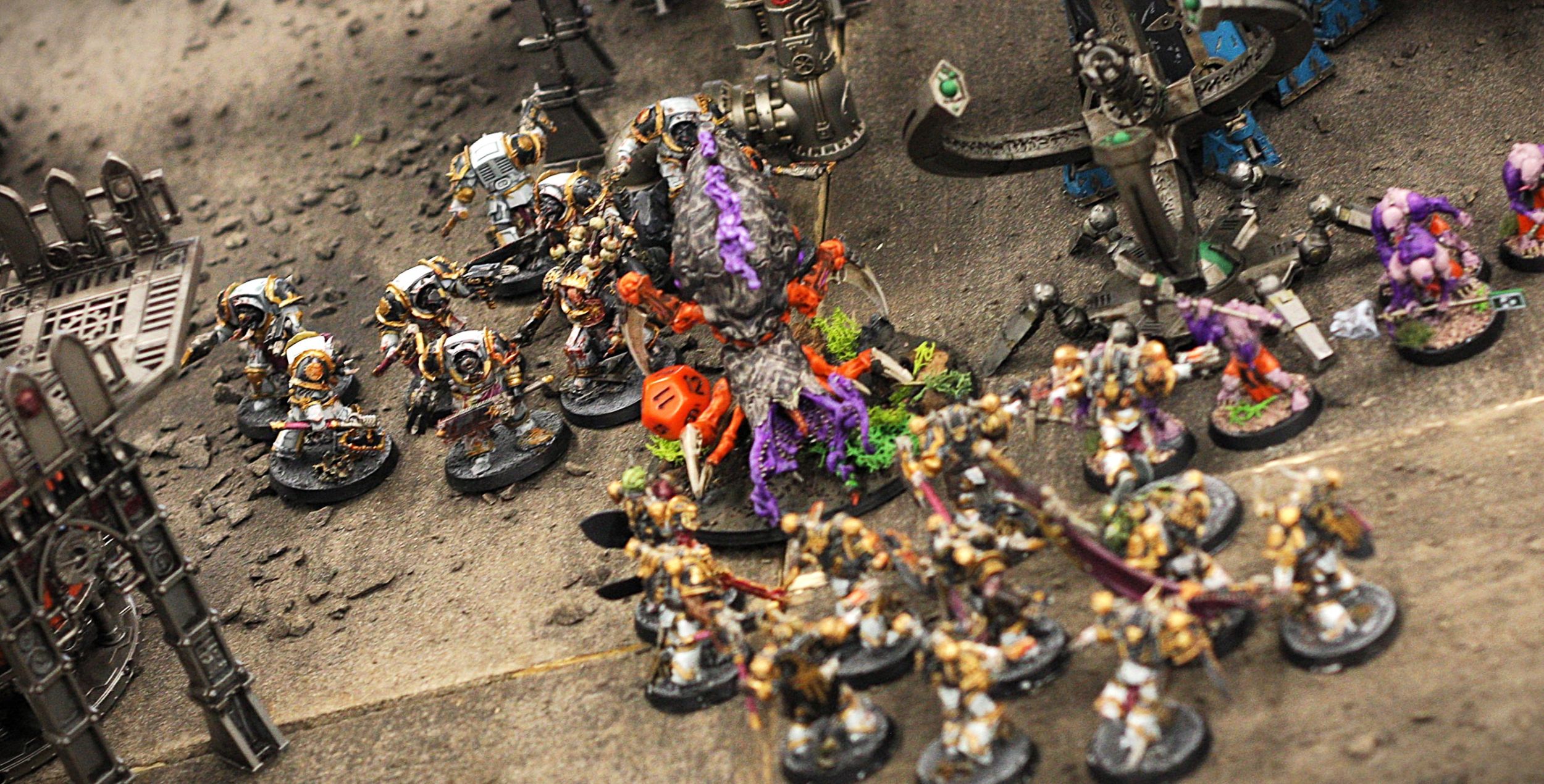
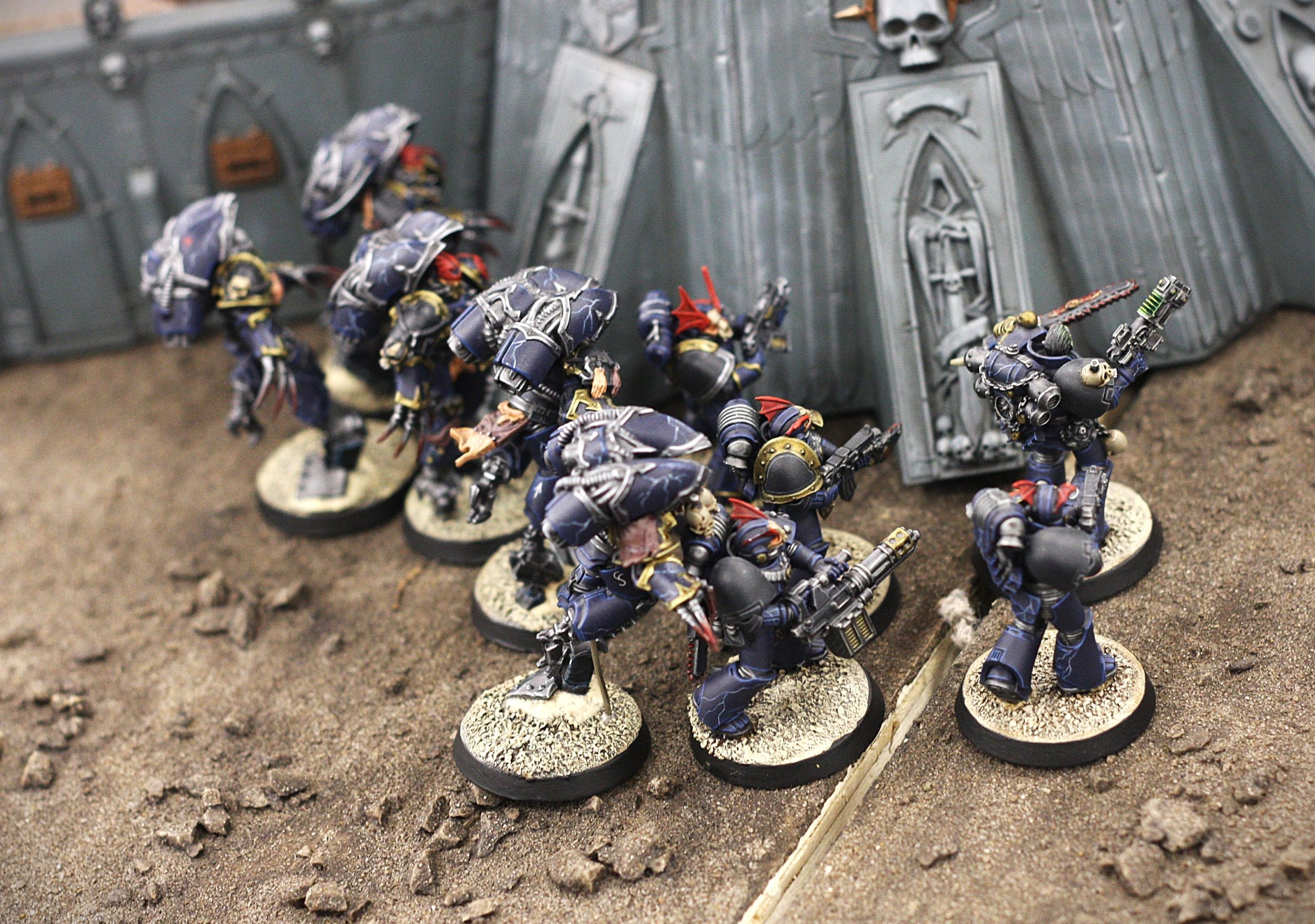
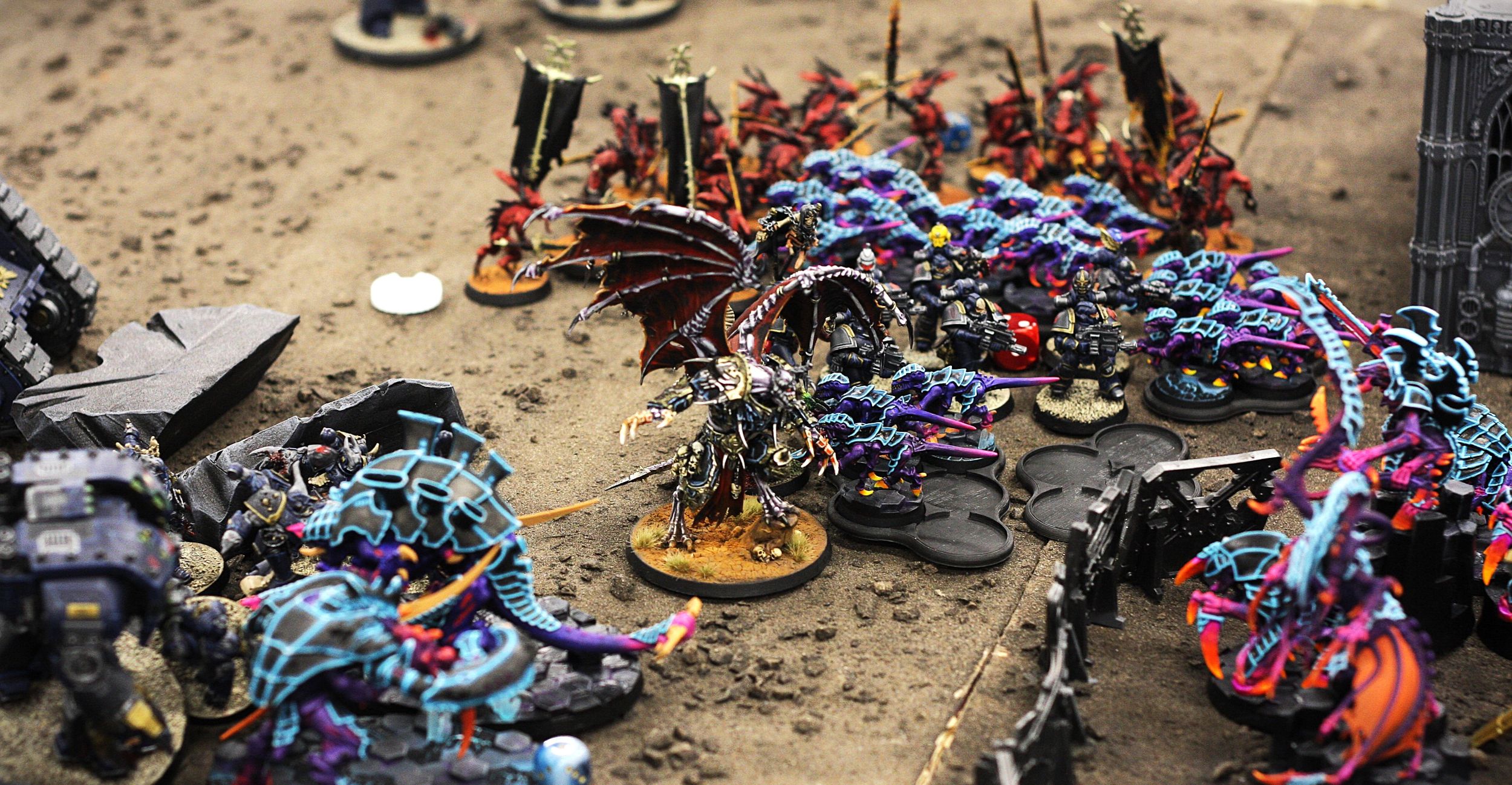
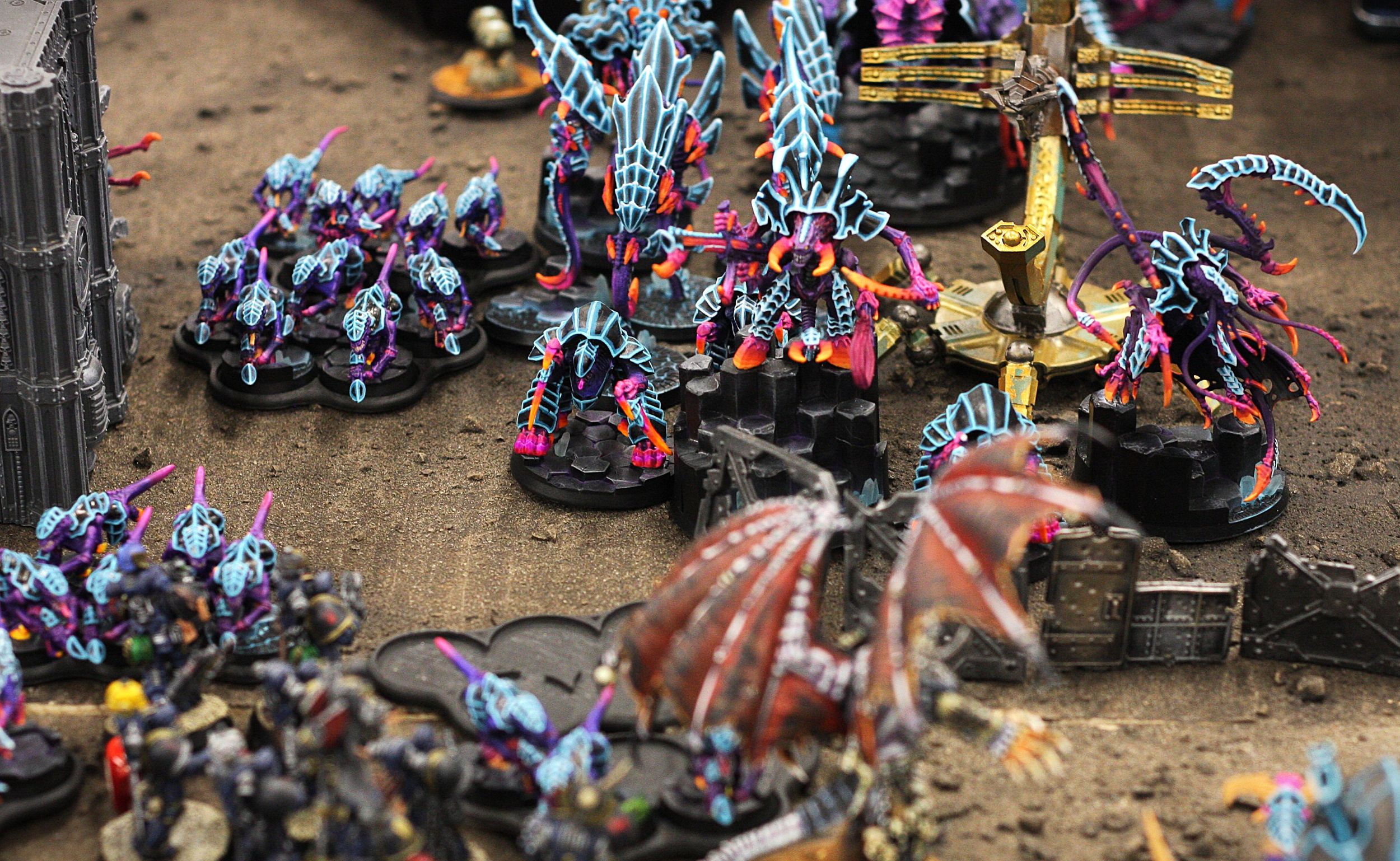
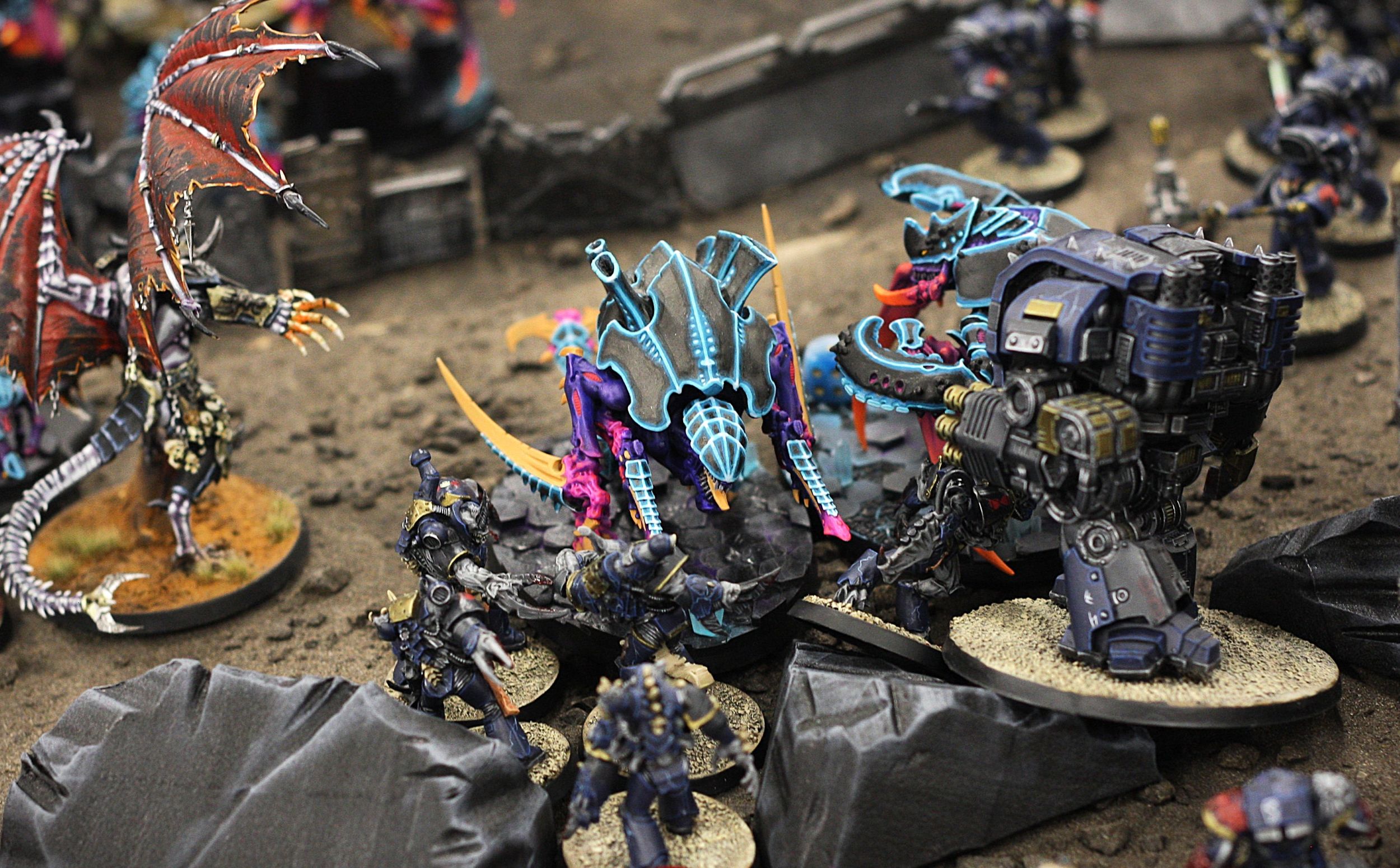
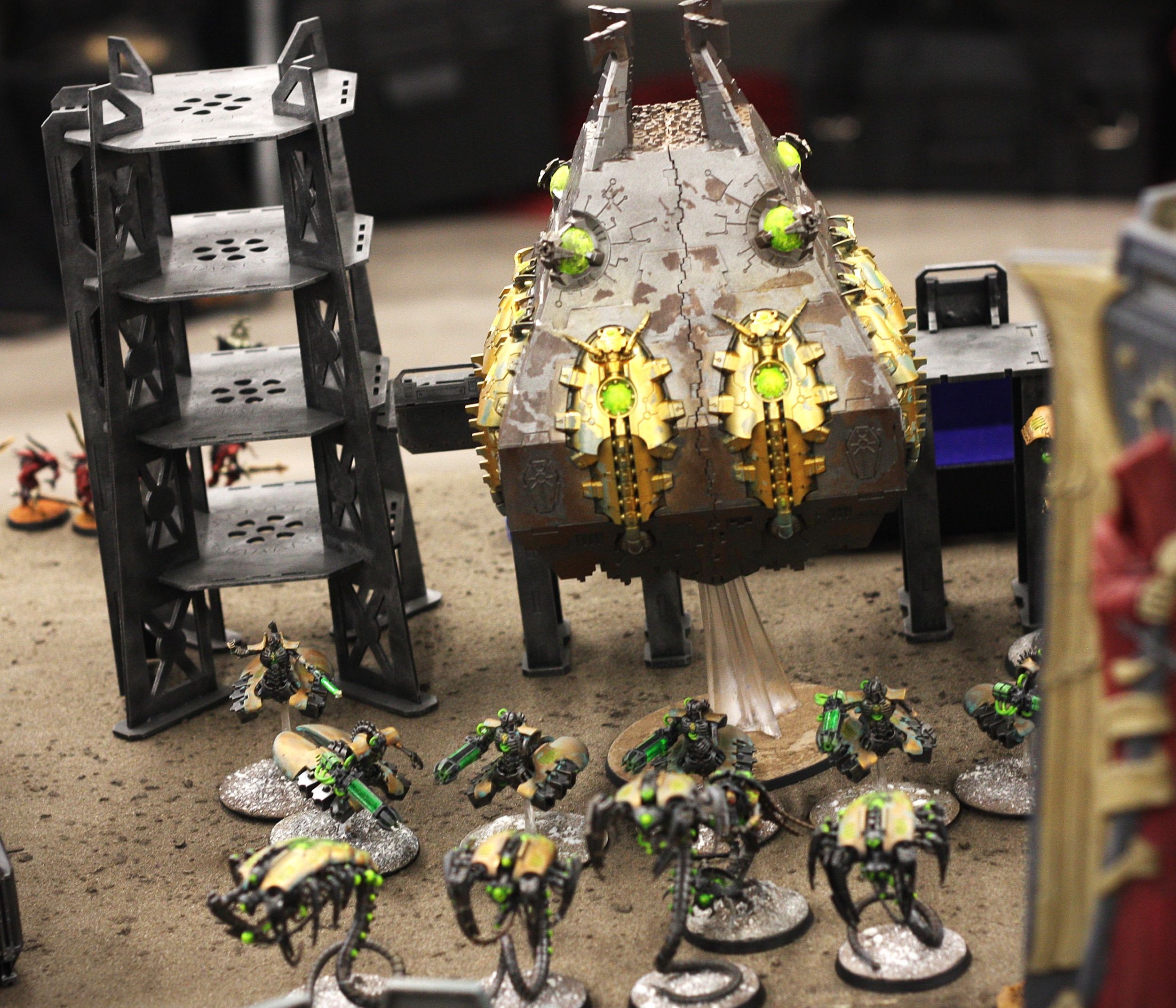
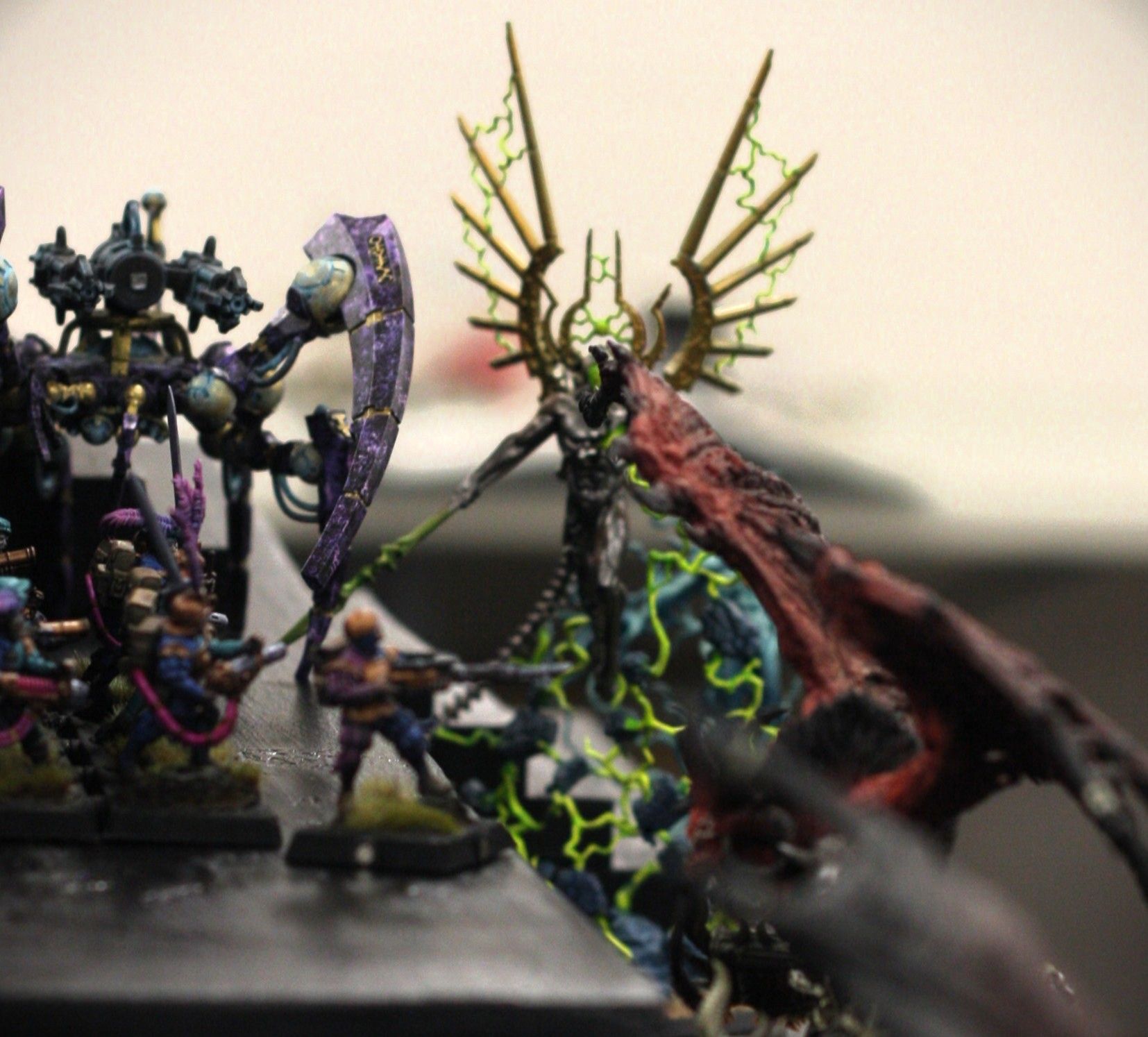
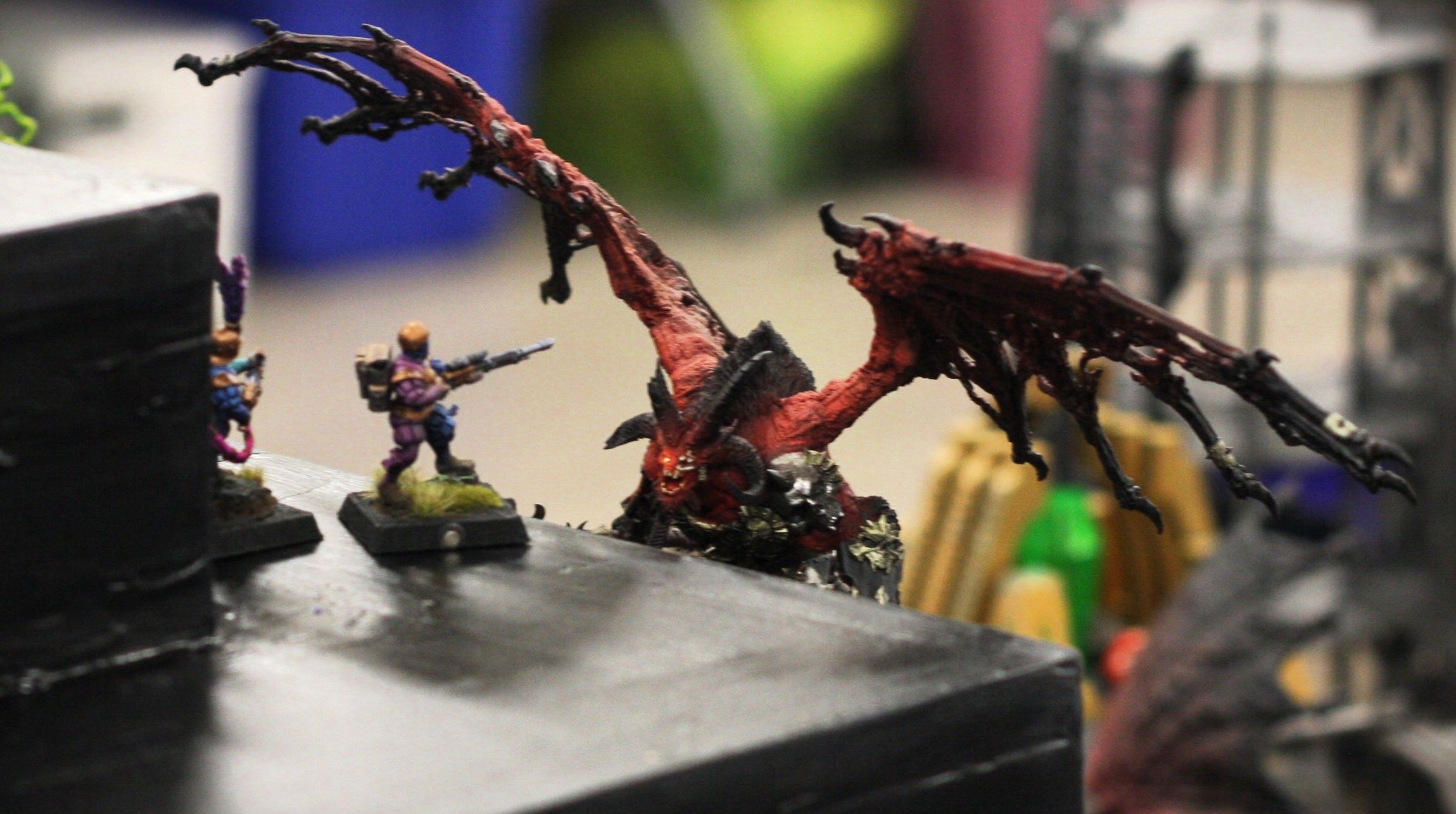
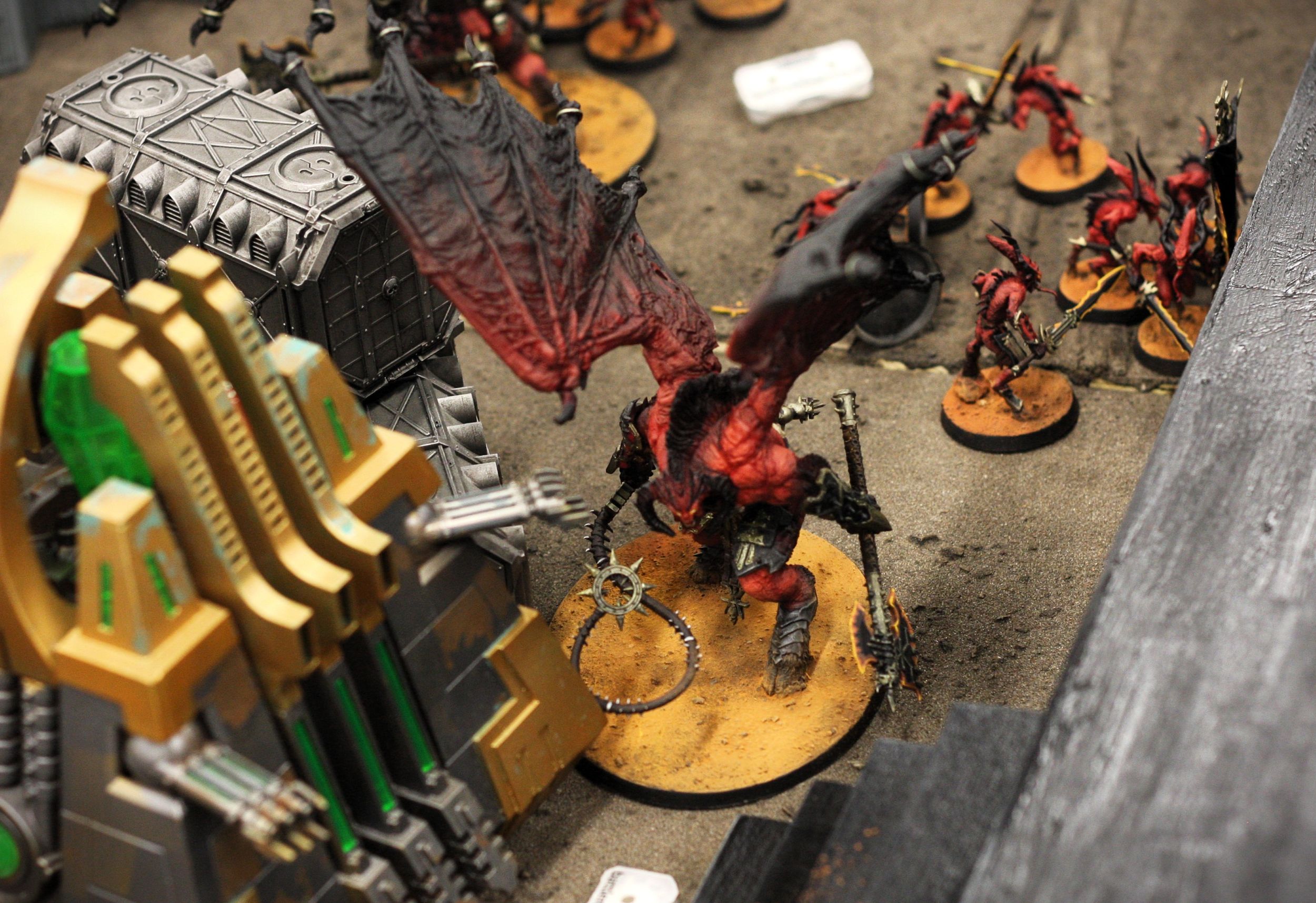
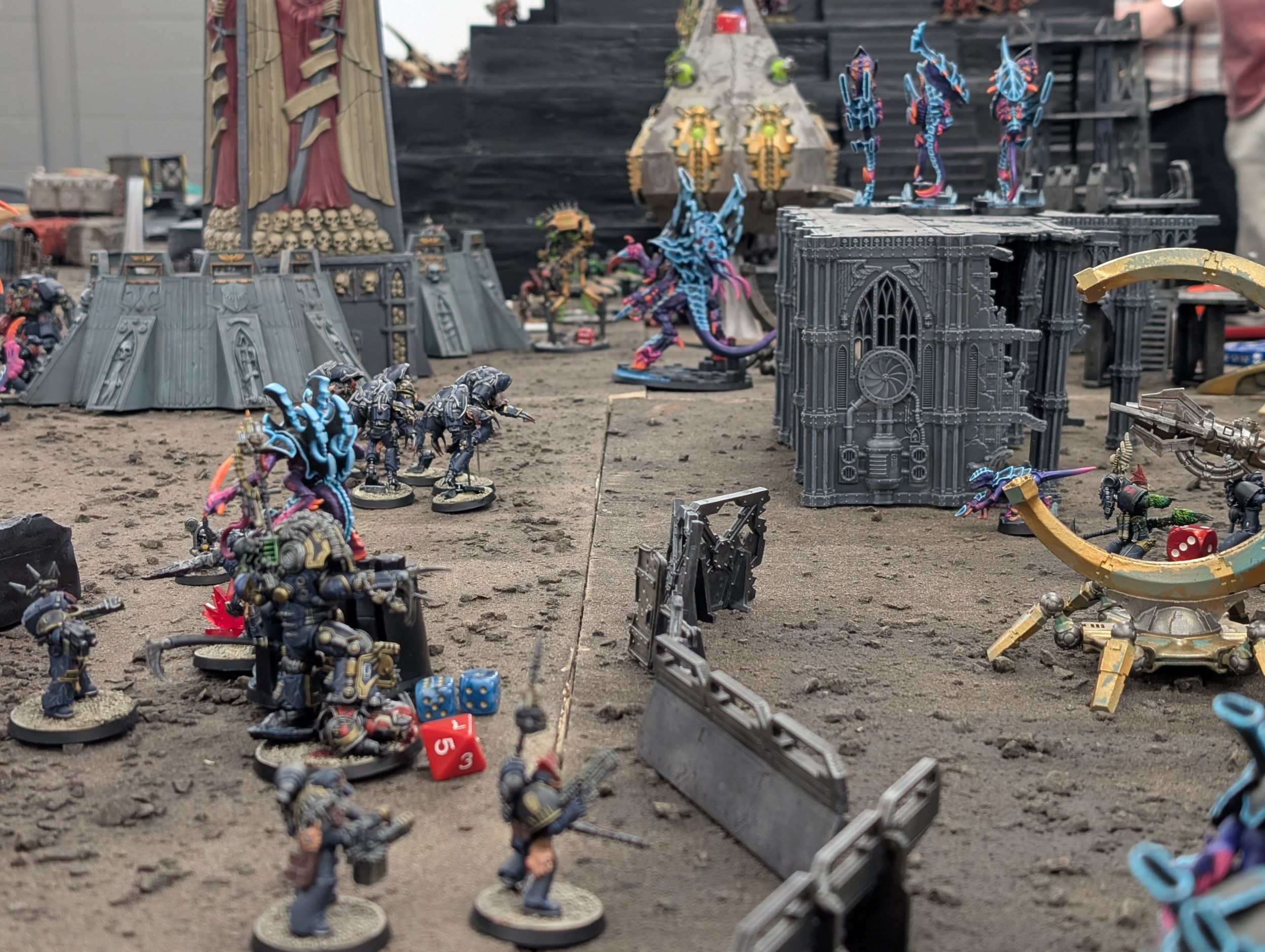
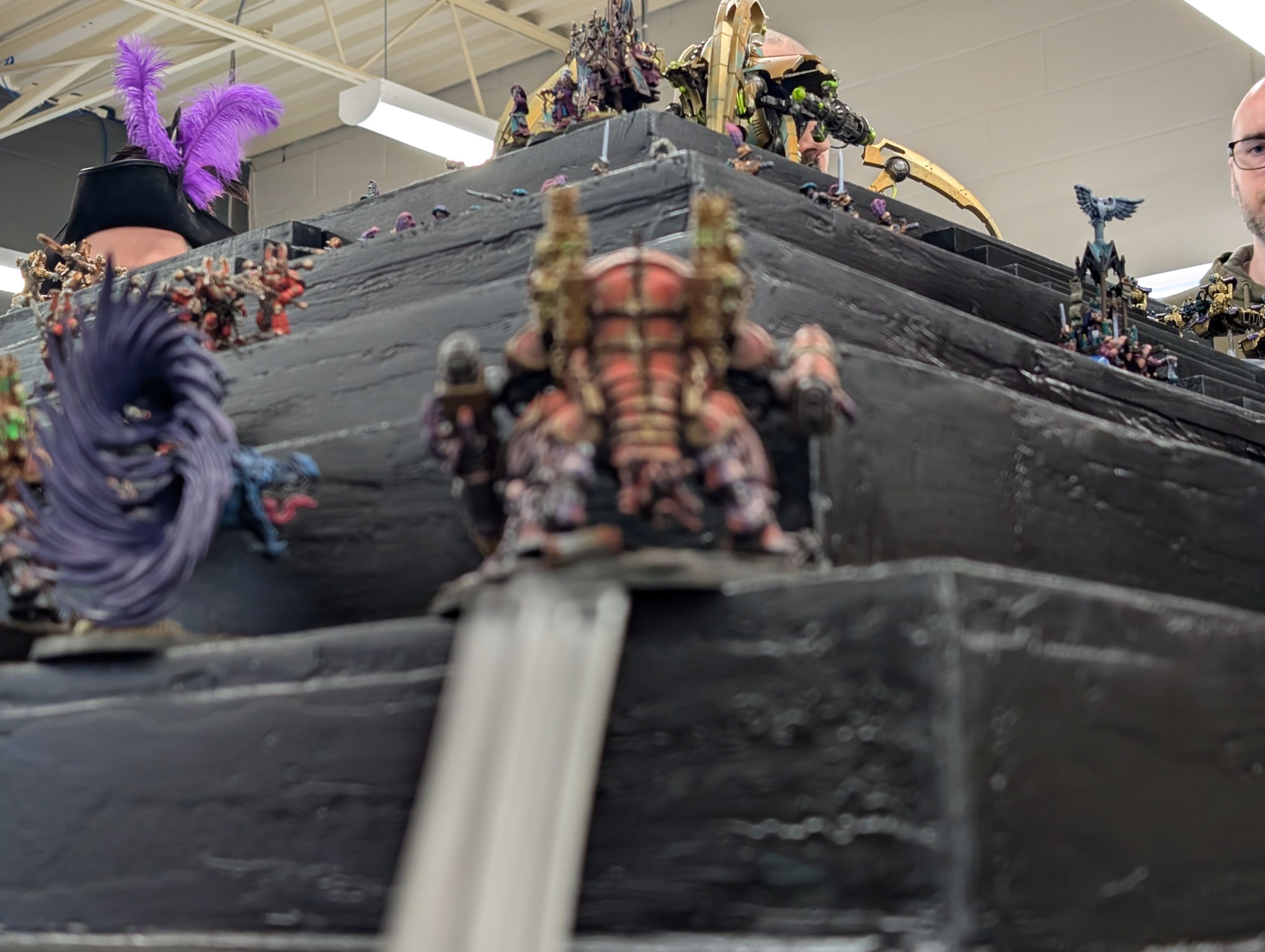
The two Necron armies mostly deployed on the pyramid (we decided walkers and fliers could go on the pyramid, but no tanks nor certain bigger models such as Monoliths), with the mind controlled Rogue Trader Guard forming a meat shield on the mid levels. Controlled knights and Nids were on either side of the pyramid. Chaos saw a World Eaters contingent push the pyramid, while Night Lords, Chaos Knights, more World Eaters and the Censured (a Chaos Space Marine warband) pushed the flanks to assault the pillars powering the pyramid’s shield.
Chaos’s early push of the pillars saw those come down in relatively quick succession, one turn after the other. We got to bust out an old scatter die to determine the direction the pillars fell, and set up some rubble representing the destroyed obelisk (with units under the fall taking mortal wounds). The Necron team had minefields, which were probably too strong, destroying some units outright. Jacen and I discussed these beforehand, and decided a small handful of mortal wounds was insignificant: originally, each time a model moved within range of a marker, they’d take a single mortal wound on the roll of a 1. This felt too weak, not even killing a space marine and barely scratching the paint on larger models. In the end, we settled on each roll of a 1 causing three mortals on the unit. Lessons were learned, however, when entire units were wiped out in the first movement phase.
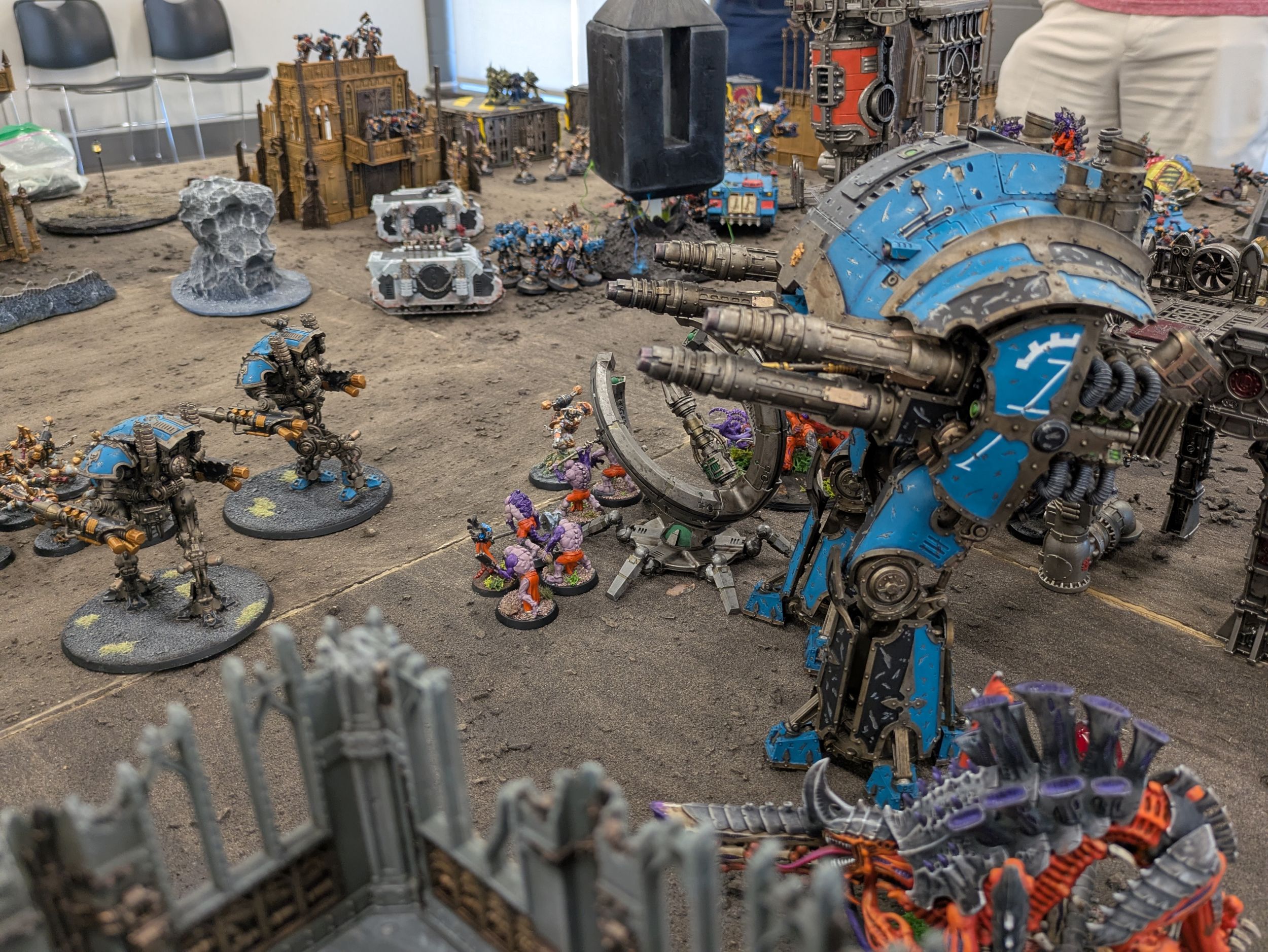
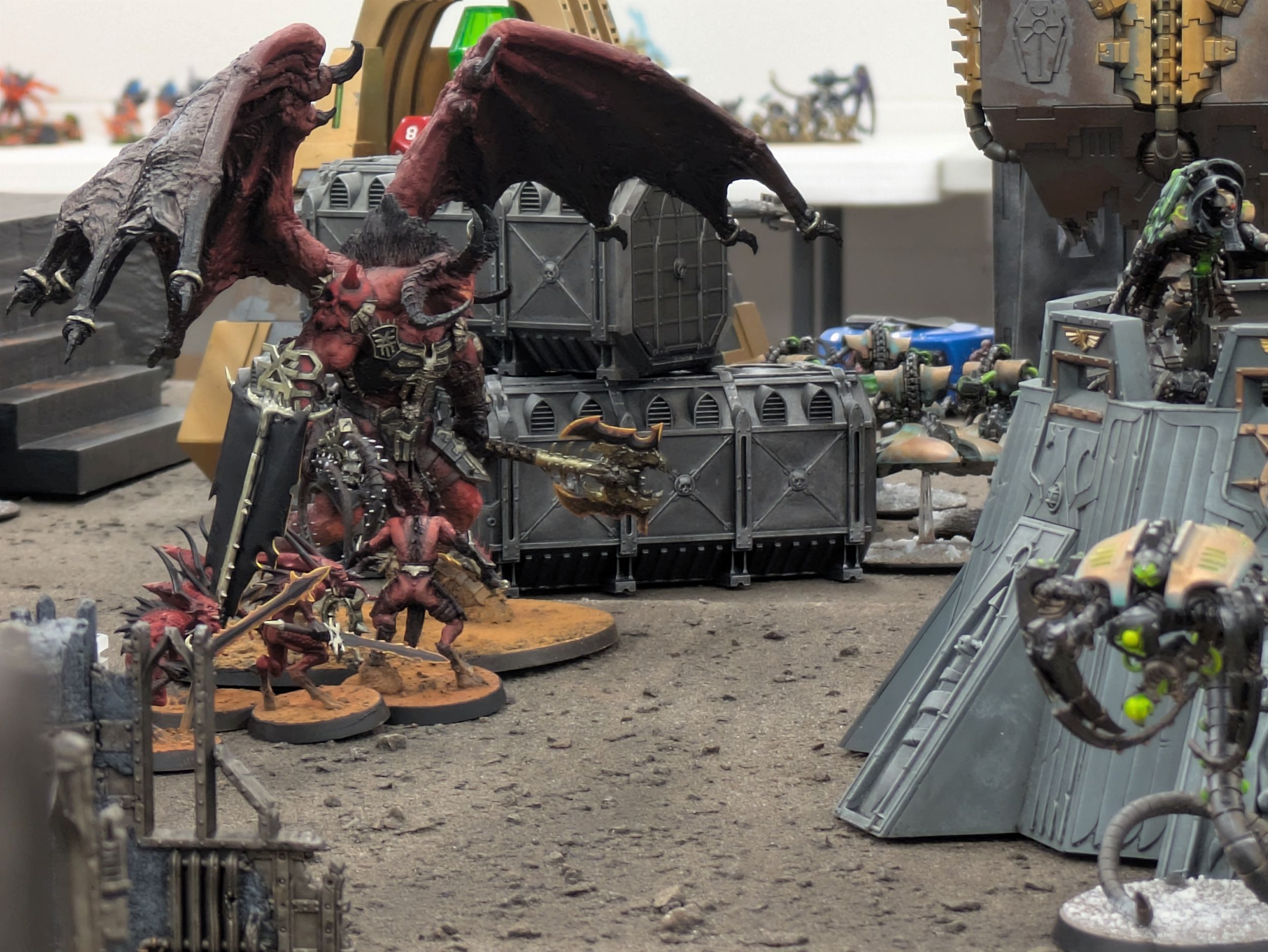
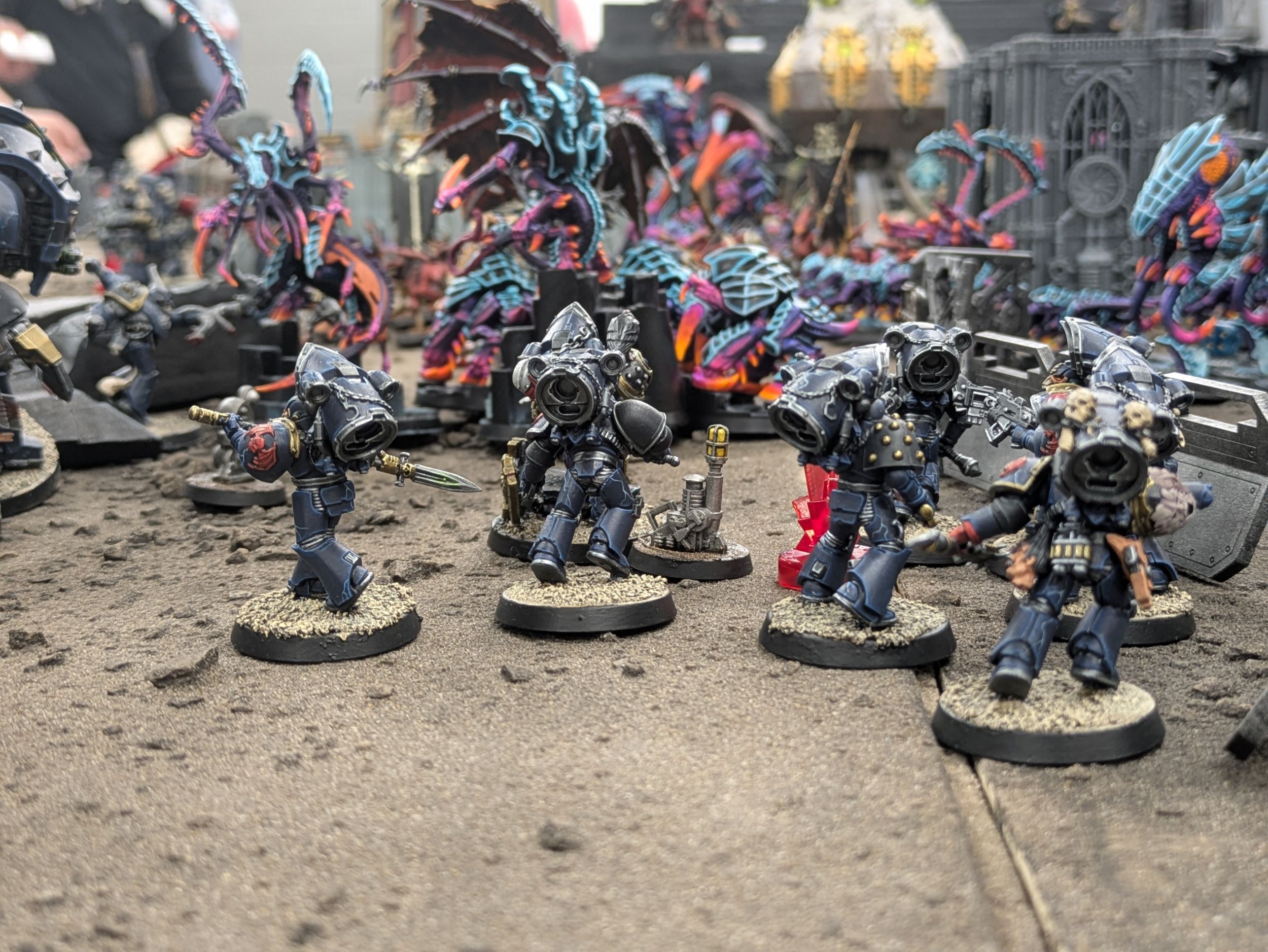
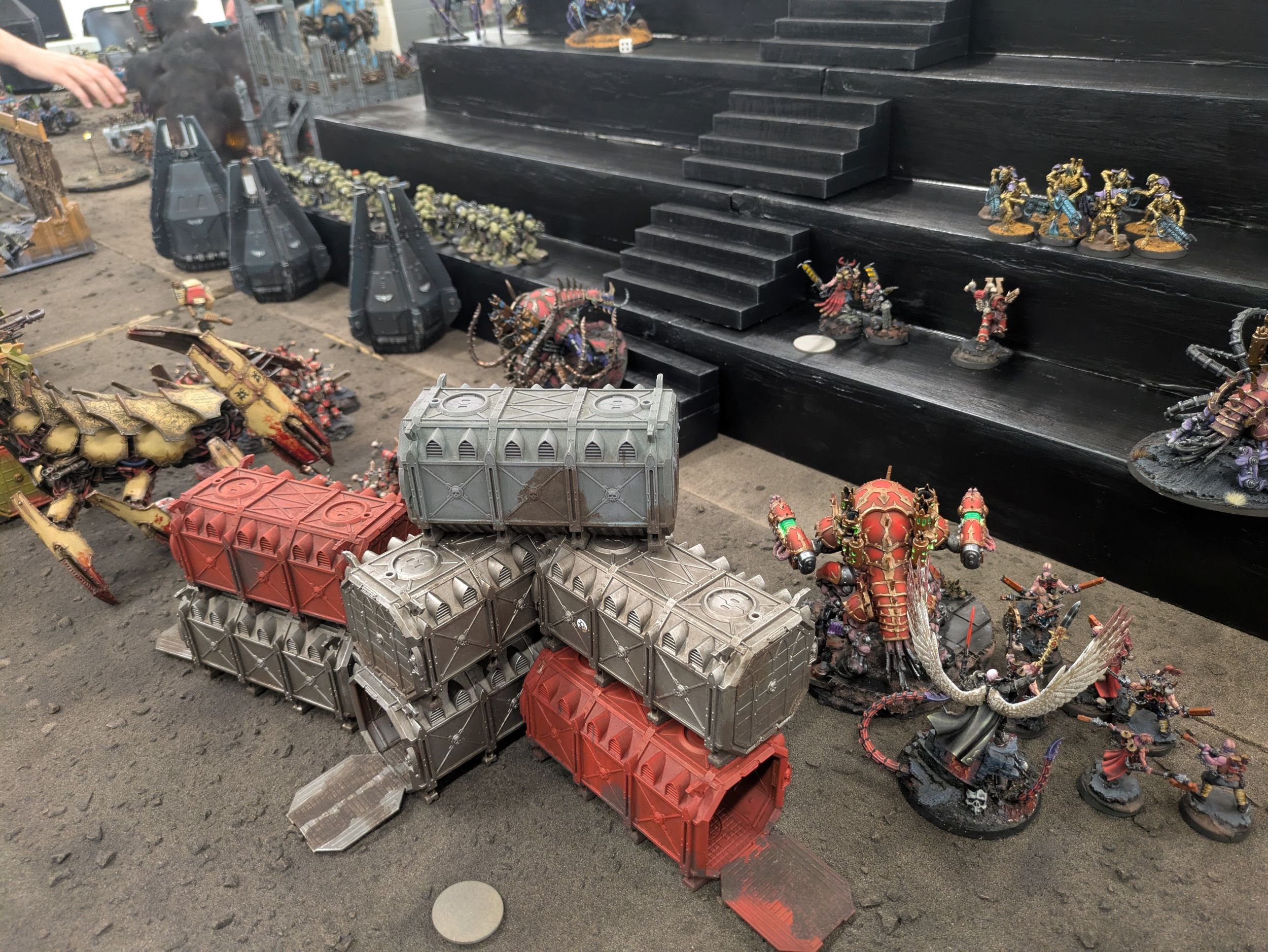
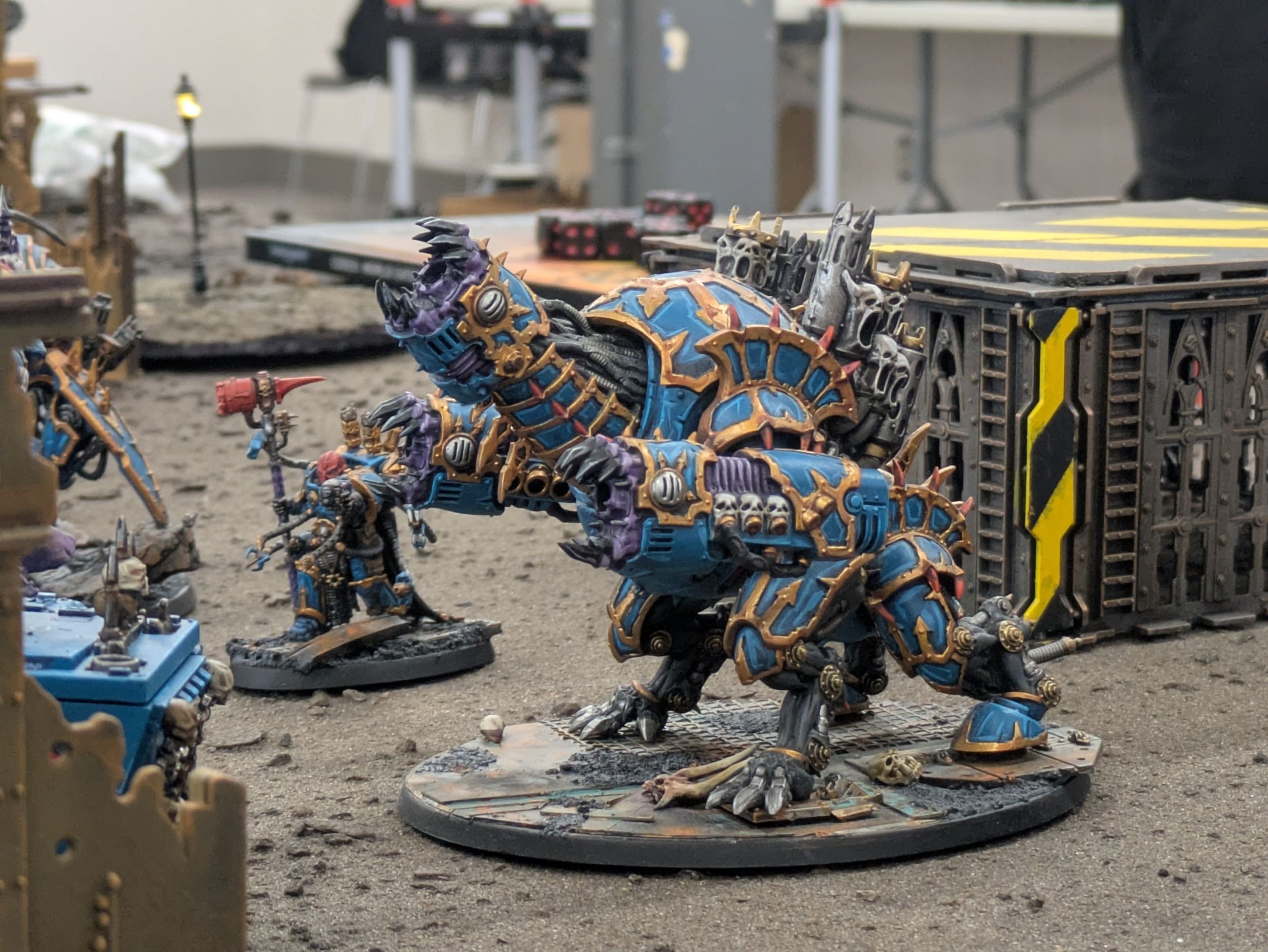
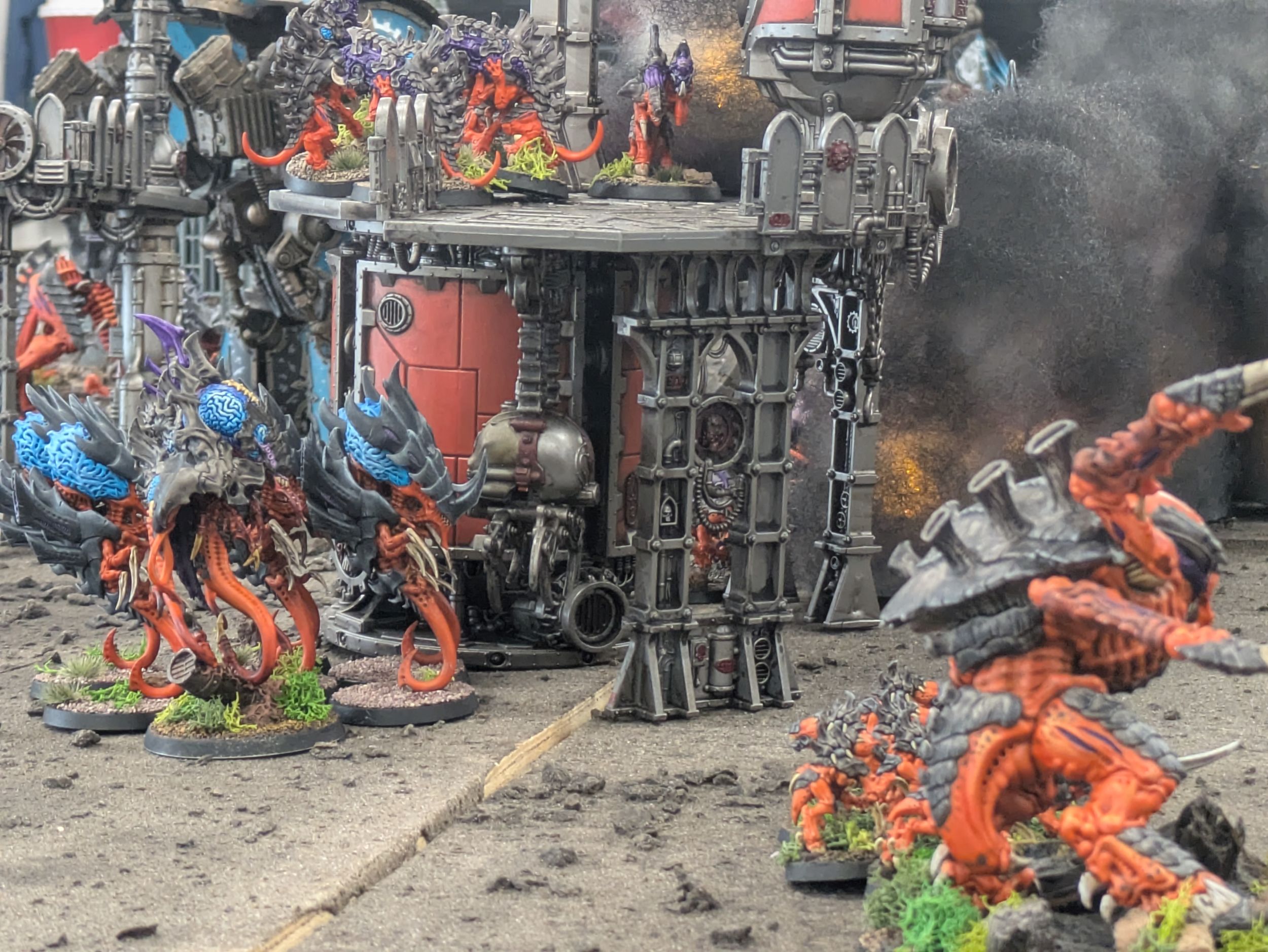
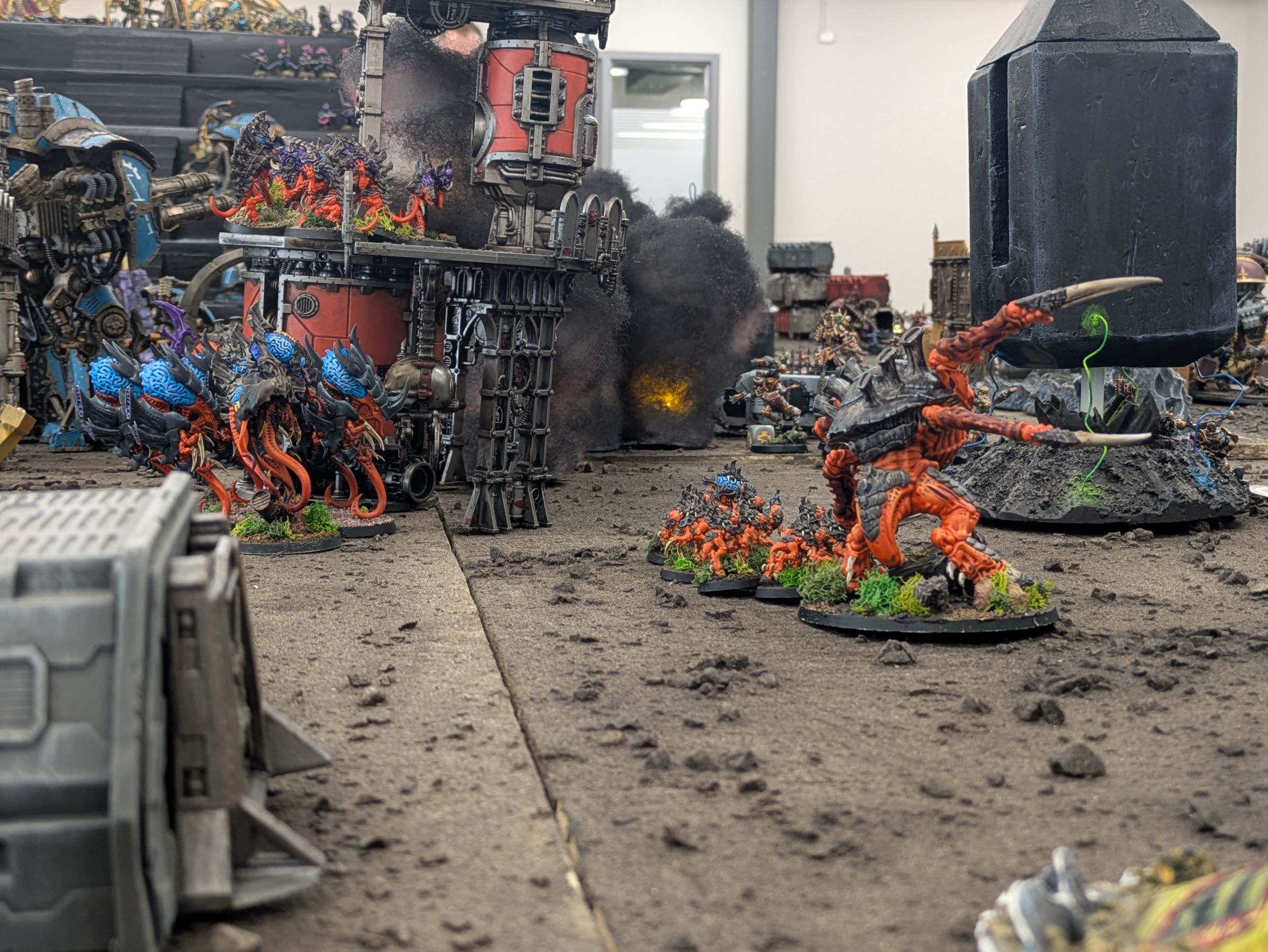
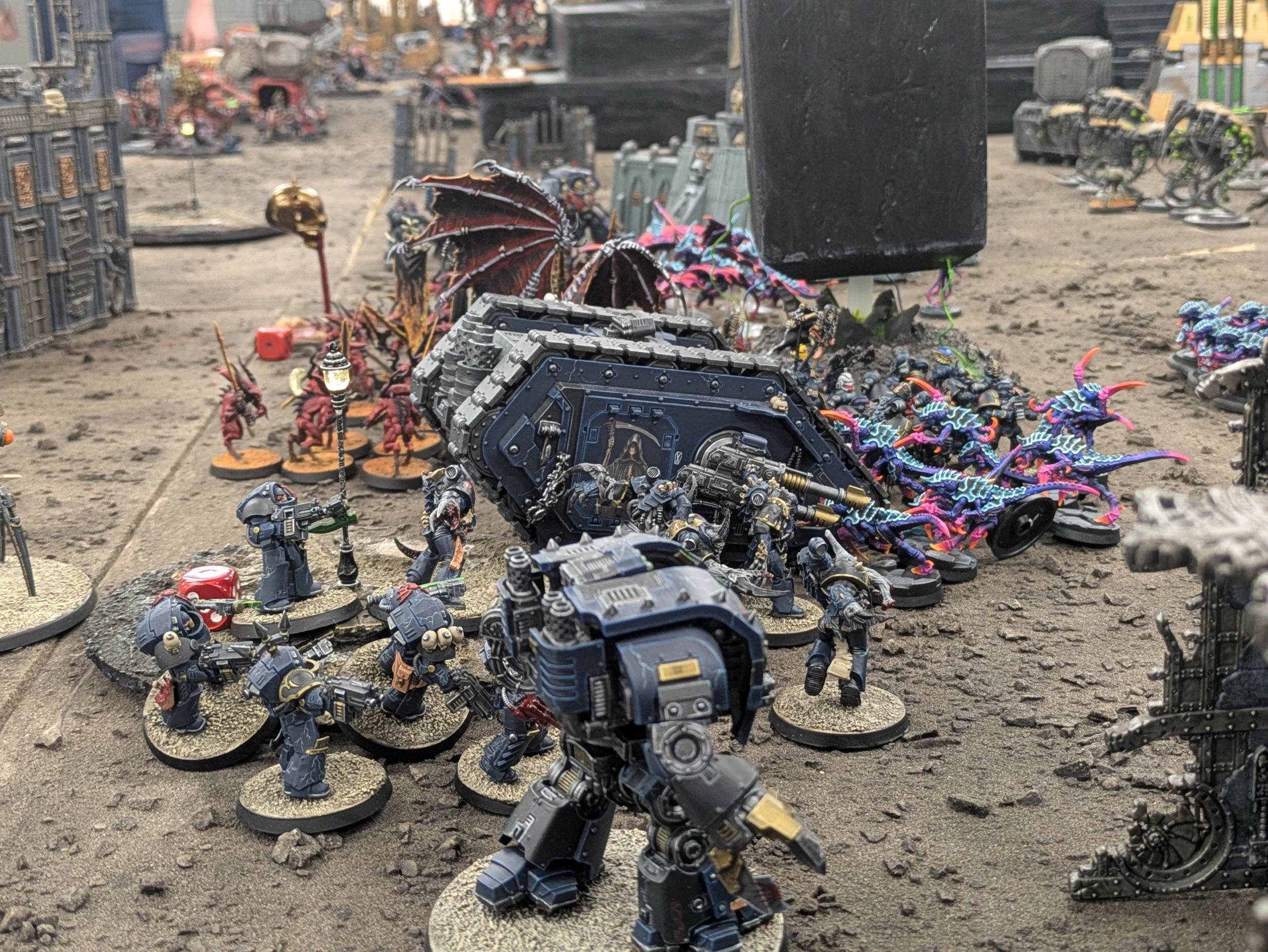
Photos by Tony
As the Engine woke up and began munching on Crypteks, the aforementioned Engine cards were dealt and passed to the Chaos team. We hadn’t specified for a GM to be informed when the card was being passed, so the first one meant only a few Bloodletters took wounds. But the next saw Chaos Knights fire on Censured assets. We were sure Mathias received a card later which allowed him to take revenge on Zach.
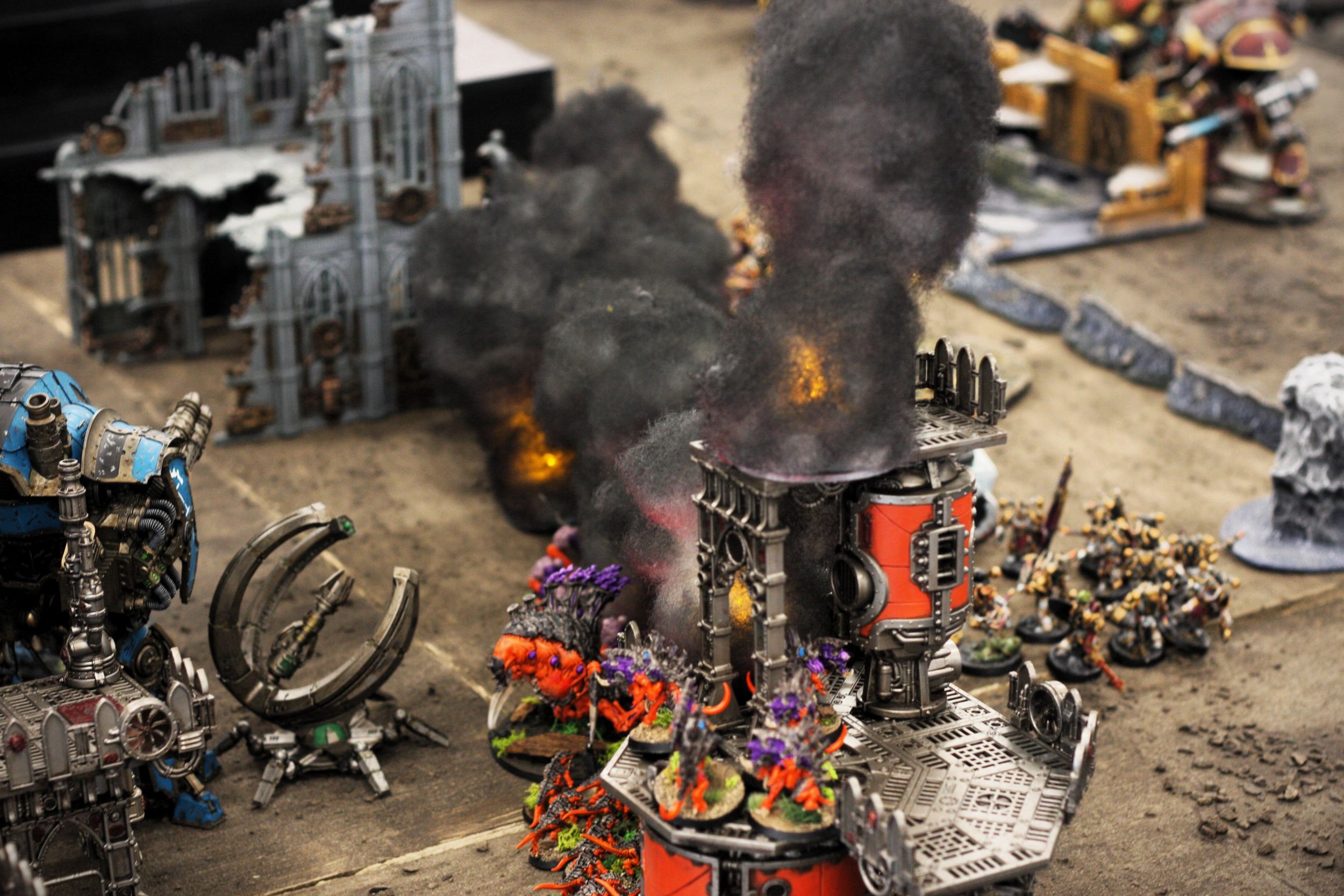
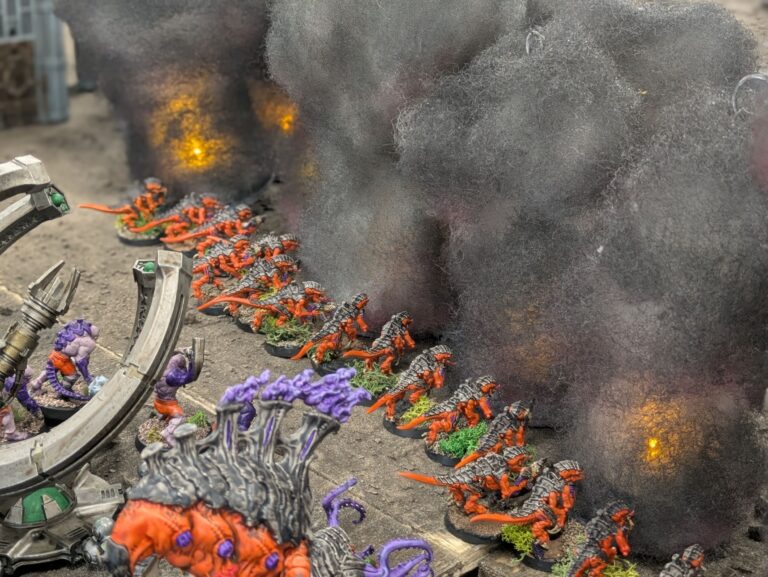
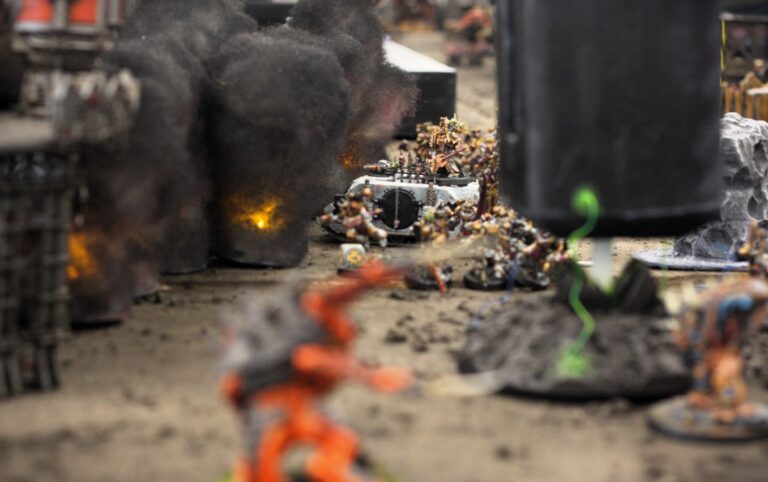
Chaos pushed deep into the flanks of the Necrons and their allies, but the fighting was hard, and we passed more and more effect cards to the Chaos team (the Necrons only received the one faction card for the minefields, but they received multiple Engine cards, which were still powerful). Players on both sides received reinforcement cards which kept some players in the game or brought back iconic units which went down early. One crowd favourite was the card having a Heldrake strafe the battlefield with a furrow of fire throwing up a wall of smoke.
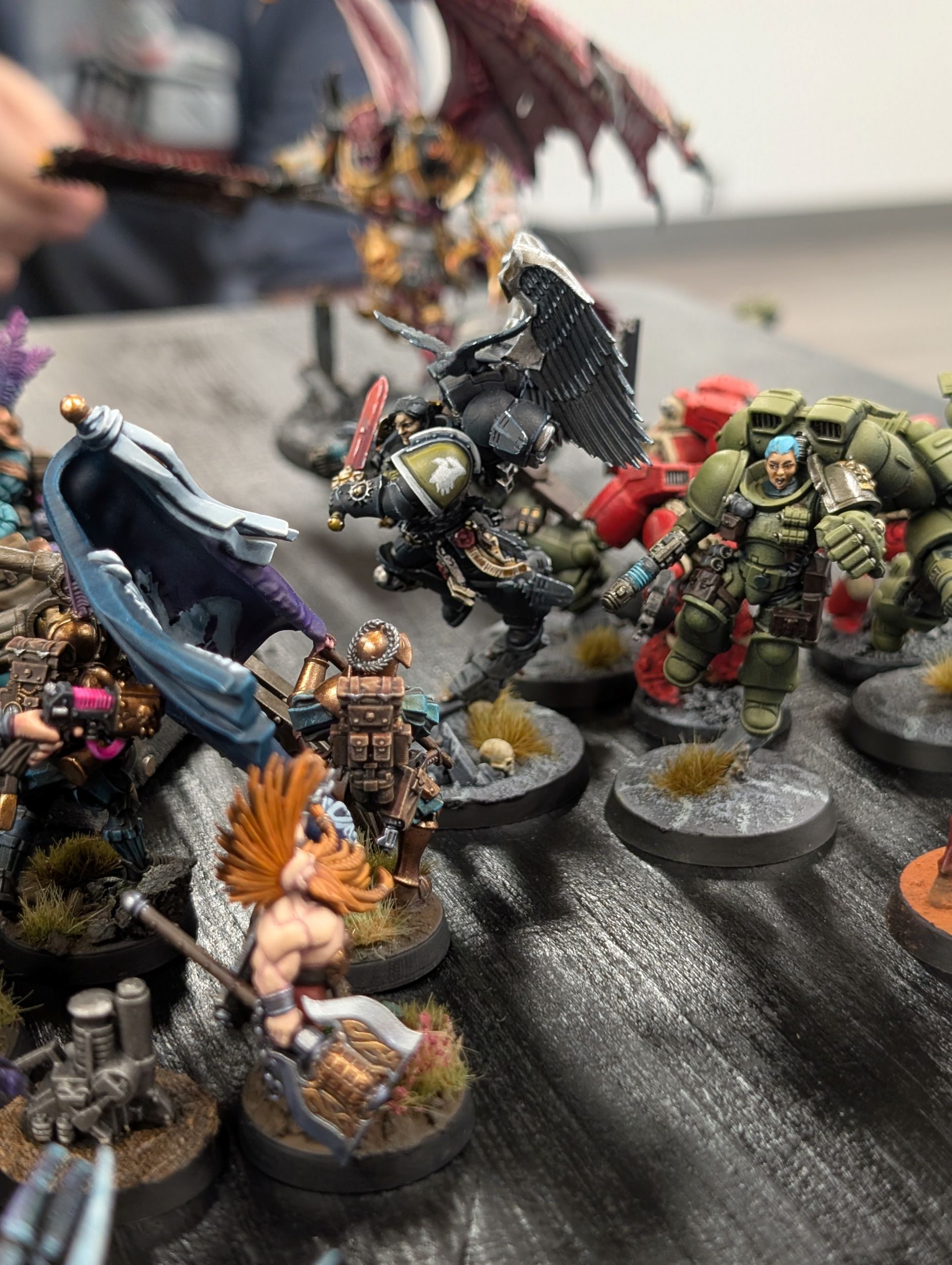
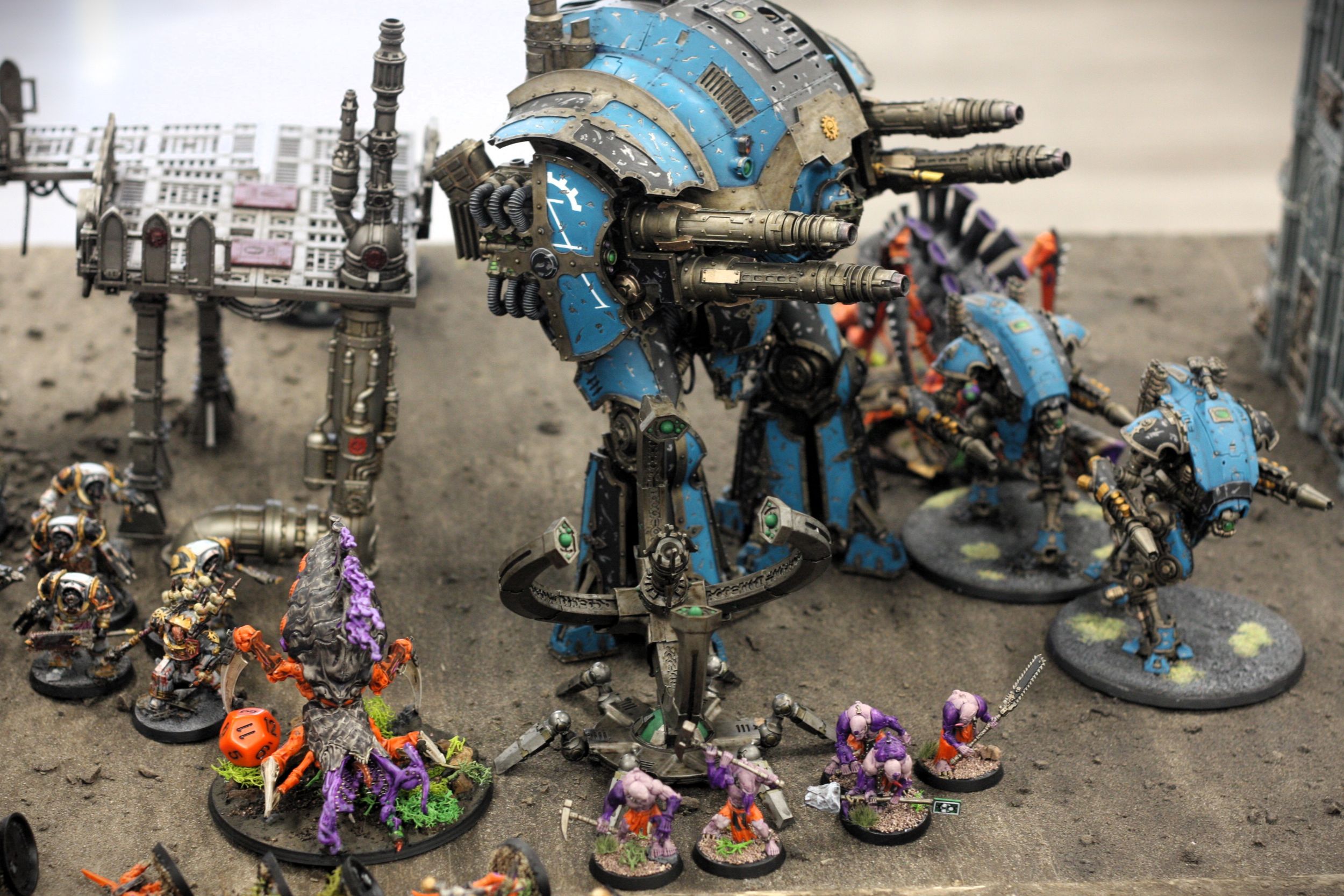
Team Chaos had held a number of units in reserve, and, with the help of cards to pull units into reserve and deep strike close to the enemy, teleported a desperate attack on the Engine directly. The Raptors also launched their own final push, with Chapter Master Branwen’s finest hour (a card based on the old Apocalypse rule of the same name) allowing her and her bodyguard to assault the beleaguered defenders. In the final turns and amidst orbital bombardment, the Necron and mind controlled Guard forces were able push the Chaos and Imperial attack off the ziggurat’s summit in a series of close range firefights and counter assaults.
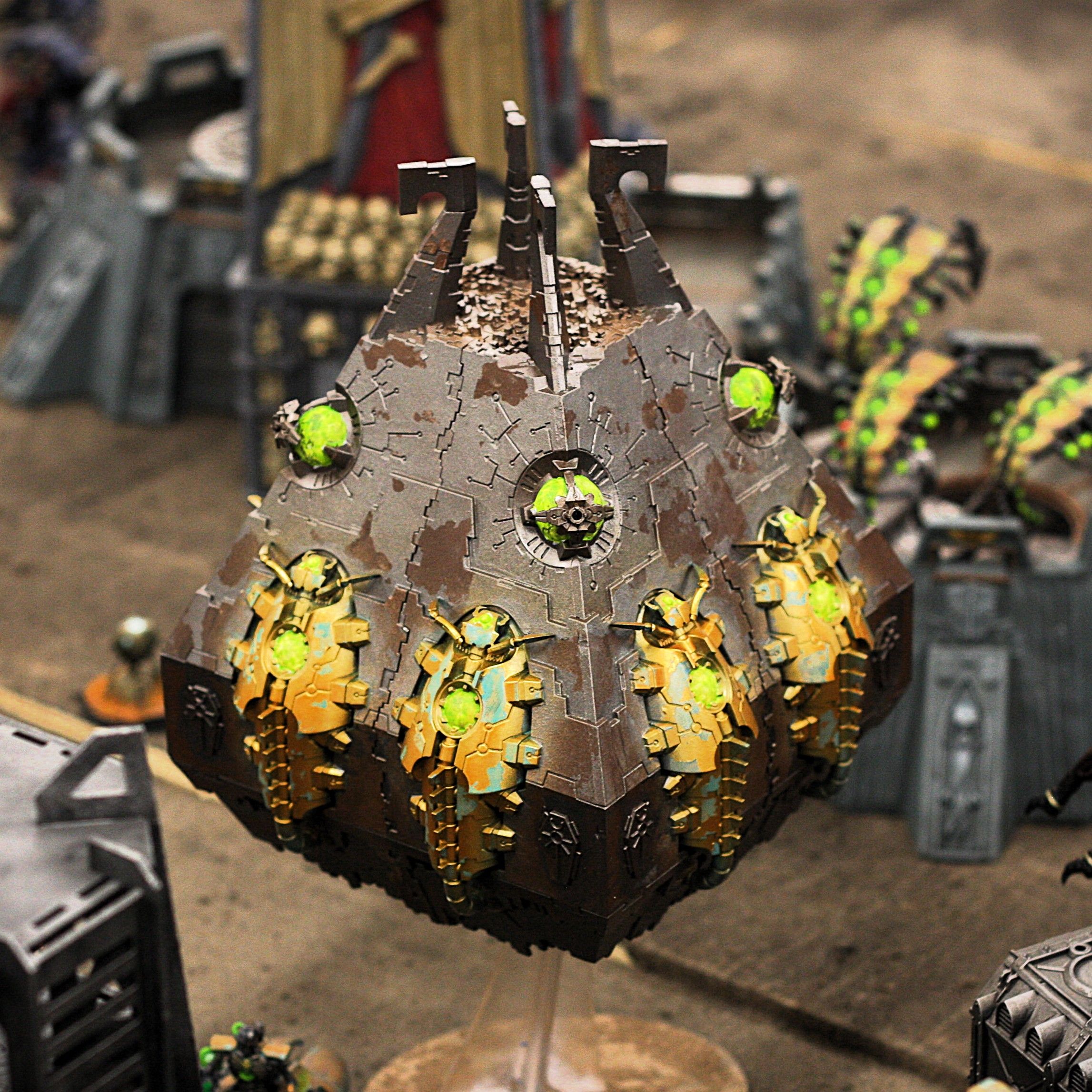
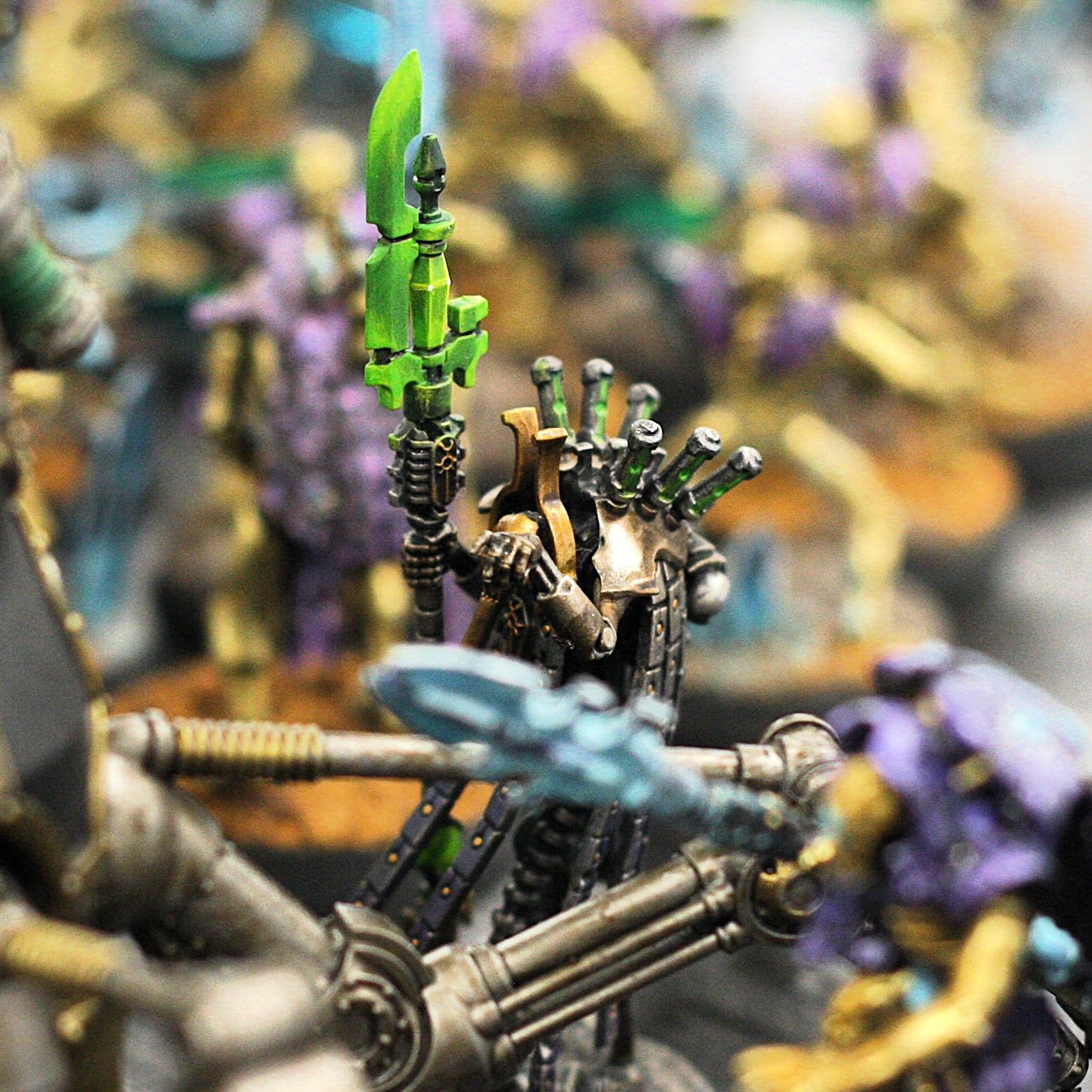
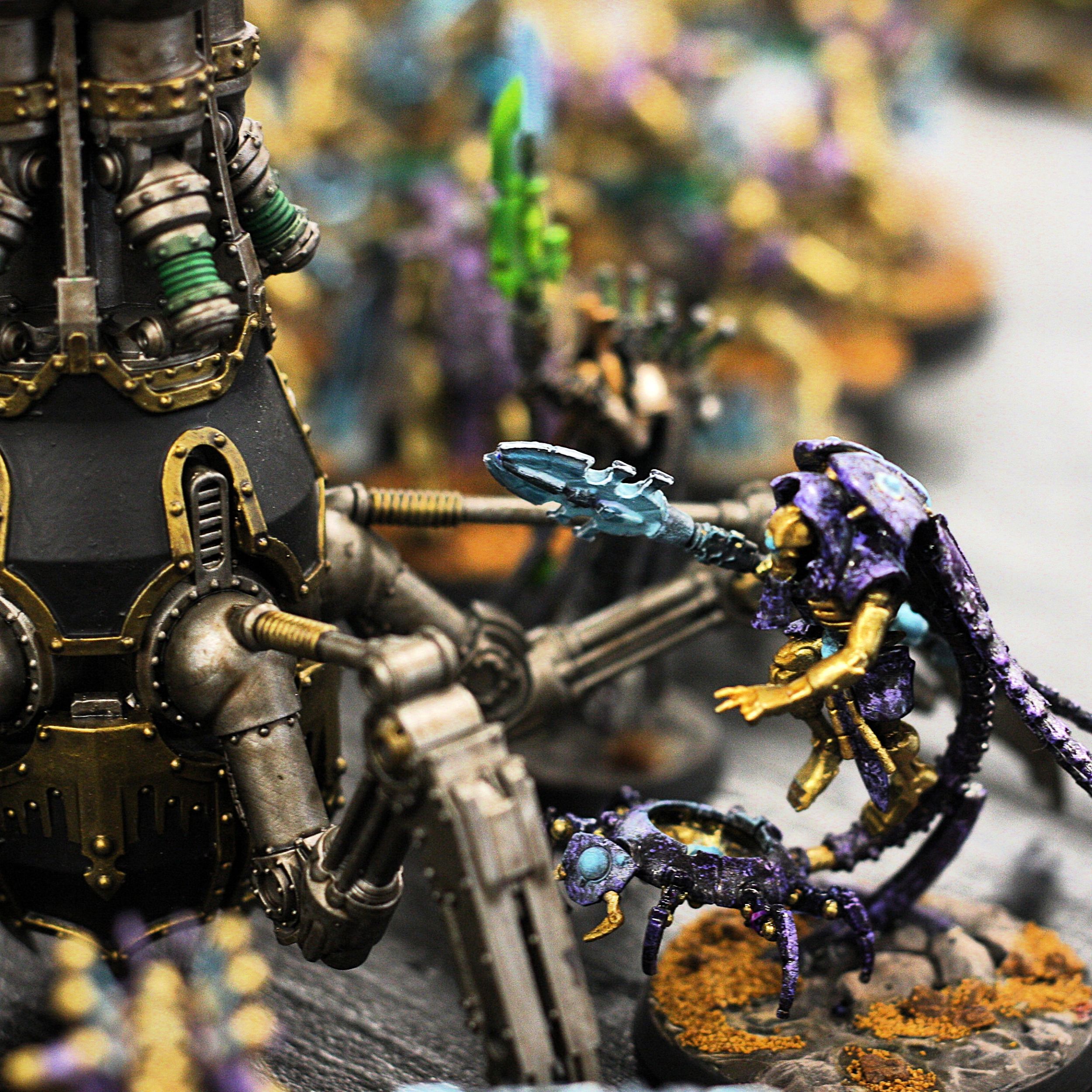
When the dust settled, the Necron Dynasties had held off the Chaos vanguard long enough to evacuate the Engine to their tomb ship and had maintained control of the orbital guns, allowing them to deliver punishing volleys into the Chaos fleet. Rogue Trader and Tyranid forces, the influence of the Engine broken, scattered, the latter now freed from the influence of the Hive Mind. Though the blunted Chaos forces would rally and eventually sweep the ziggurat, their objective had been snatched away and their void superiority–and ultimately their control of the planet–had been shattered.
Narrative outcomes
I had written a number of possibilities around the objectives. Going into the game, Chaos held the planet but the Necrons controlled the Engine. Though it wasn’t mine and Jacen’s intention to steer the story into a specific outcome (only ensure a tense and close game), I did hope that the status quo would be changed, with either the planet or Engine changing hands. The Imperials also had separate objectives: specifically to destroy the Engine, and to collect data on its psychic effects to build a defense against it. The primary objective was intentionally difficult: the Imperium had not achieved a victory in the previous event and it didn’t seem fair to give Alys an easy way to change the course of the story (though the possibility was there).
Chaos falling to infighting felt very right, and as a consequence they have lost the planet, denying them an important bastion within the Sector. With the Necrons now having a powerful psychic device loose in the Sector, this also opens up a lot of story hooks for double agents and spies. Noah’s Rogue Trader Guard now free of the Necron influence raises a lot of questions: will they broker a pact with the xenos? Will they strike out on their own? Will they seek penance for their actions?
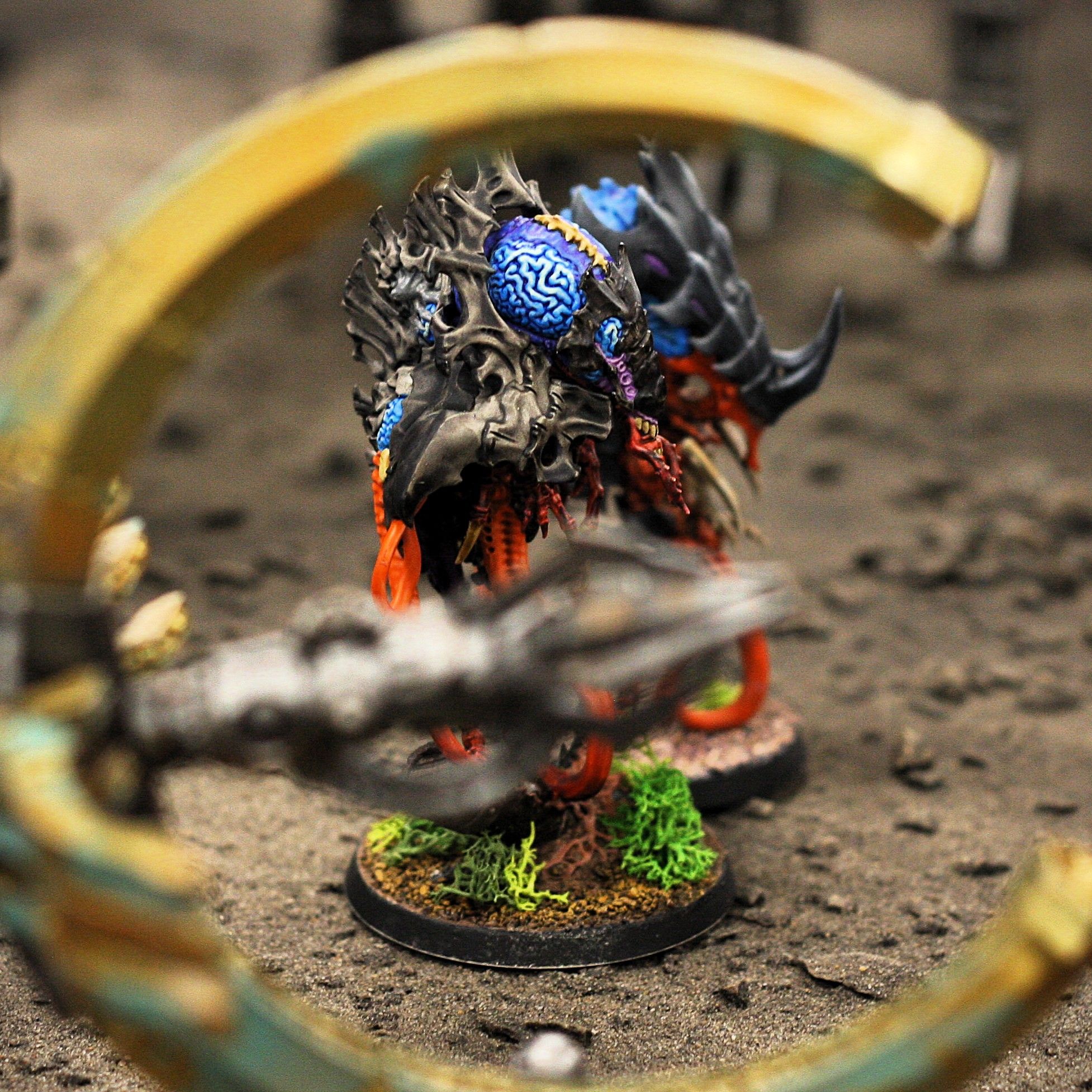
Finally, the Tyranids being free from the Hive Mind is also exciting and is giving me strong StarCraft: Brood War vibes where the surviving Cerebrates each strike out on their own. Exploring how this fits into the Sector and future stories is something I’m eager to explore. Did someone say Nid Civil War?
Lessons learned
First off, the feedback we received from players was generally very positive, with everyone enjoying the event. But there are always ways to improve.
The various effect cards were generally good, but there were several that took away agency from the players. At one point, Mike basically gave up his entire movement phase to see the bulk of his army move in a random direction, completely messing up his turn. This was probably the hardest one to swallow: by contrast, when given a choice of which units would fall to infighting or turn on their allies, players usually made the hard choice and willingly sacrificed key units. If you’re going to do such effects, involving player choice I’d say is key.
Speaking of Chaos firing on each other, our players really leaned into the narrative of the Apocrypha Engine telling them what to do. Though I’d like to take credit for brilliant storytelling and little nudges of psychology, what this really came down to was the calibre of our players: they took our ideas and theme and ran with them better than we could have hoped.
I’ve already mentioned at several points changes we’d make to rebalance the game, but one thing I’d do differently is how we’d handle bringing units back and reinforcements. Giving players cards late in the game to bring back units, and having stuff deep strike on later turns really slowed the game down at a point where we expected it to pick up. This led to a situation where only a few players were rolling dice while everyone else was waiting. We also were bumping up against the time limit for the venue. Limiting the use of reinforcement cards and/or deep strike would’ve helped with some of the time issues.
More generally, I want to make an effort to wrap up stories in one event. We hadn’t really engineered a satisfying conclusion to the ICI V and we pressured ourselves to do a capstone event. Though I think this event worked well and everyone had fun, there’s always a point in a campaign or event planning where you start thinking about the next event and what you’d like to do. Being pigeon-holed into the Apocrypha Engine story meant I couldn’t explore something new. In the end though, the narrative outcomes of the ICI VI have opened the door for some really cool story threads for future events or campaigns.
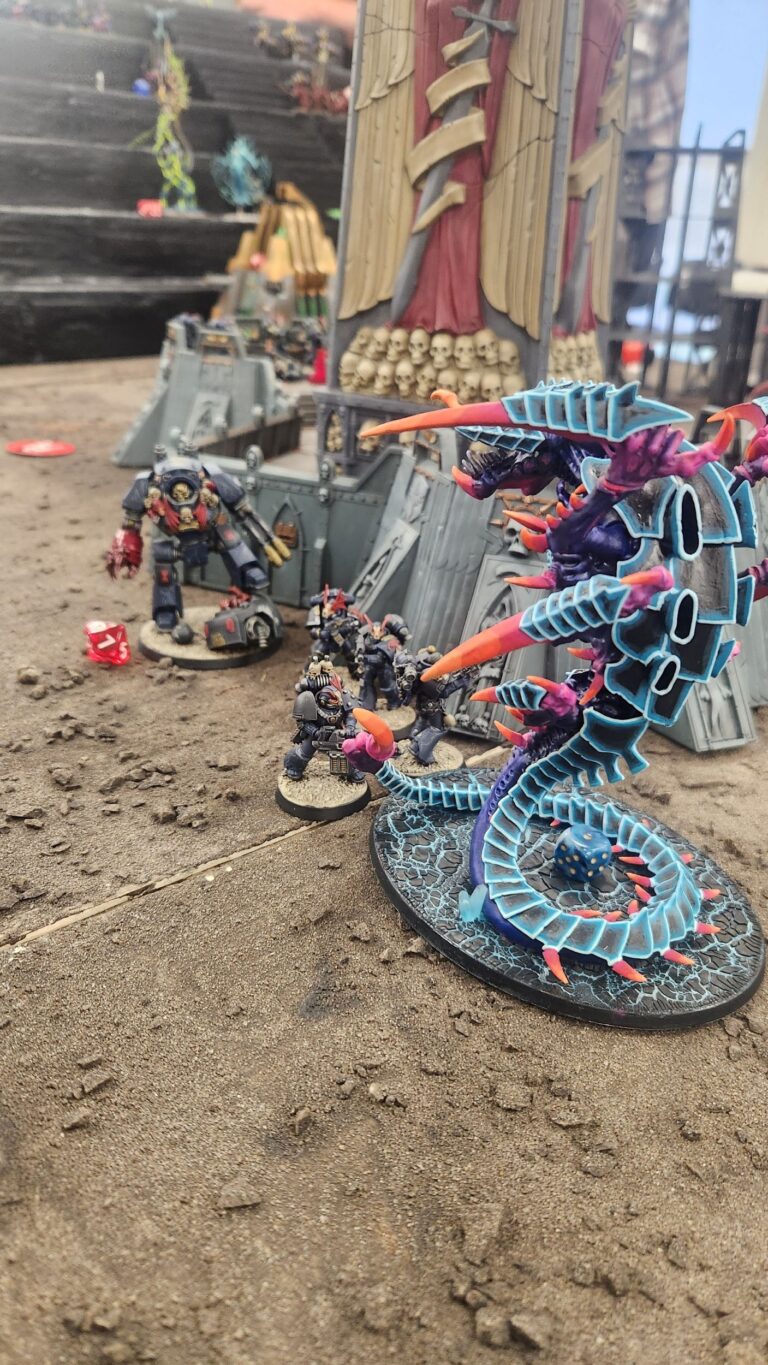
Big guns finally tire
That wraps up my deep dive on the ICI VI. As always, I hope this inspires others to create their own awesome immersive games and events, as they are immensely satisfying. In my opinion, playing spectacle games with fully painted armies and amazing terrain is really peak 40k. There obviously is a lot of work involved in pulling something like this off, but the end result is usually worth it. And if you don’t think you could do something like this, check with your gaming group and see who’s willing to help out.
And if you do run a spectacle event, we want to hear about it. E-mail us contactus@wrongsideofthemaelstrom.com: we’re always happy to check out what other groups are doing!
Credits
Unless otherwise noted, all photos by Ian.
Raptors Space Marines by Alys.
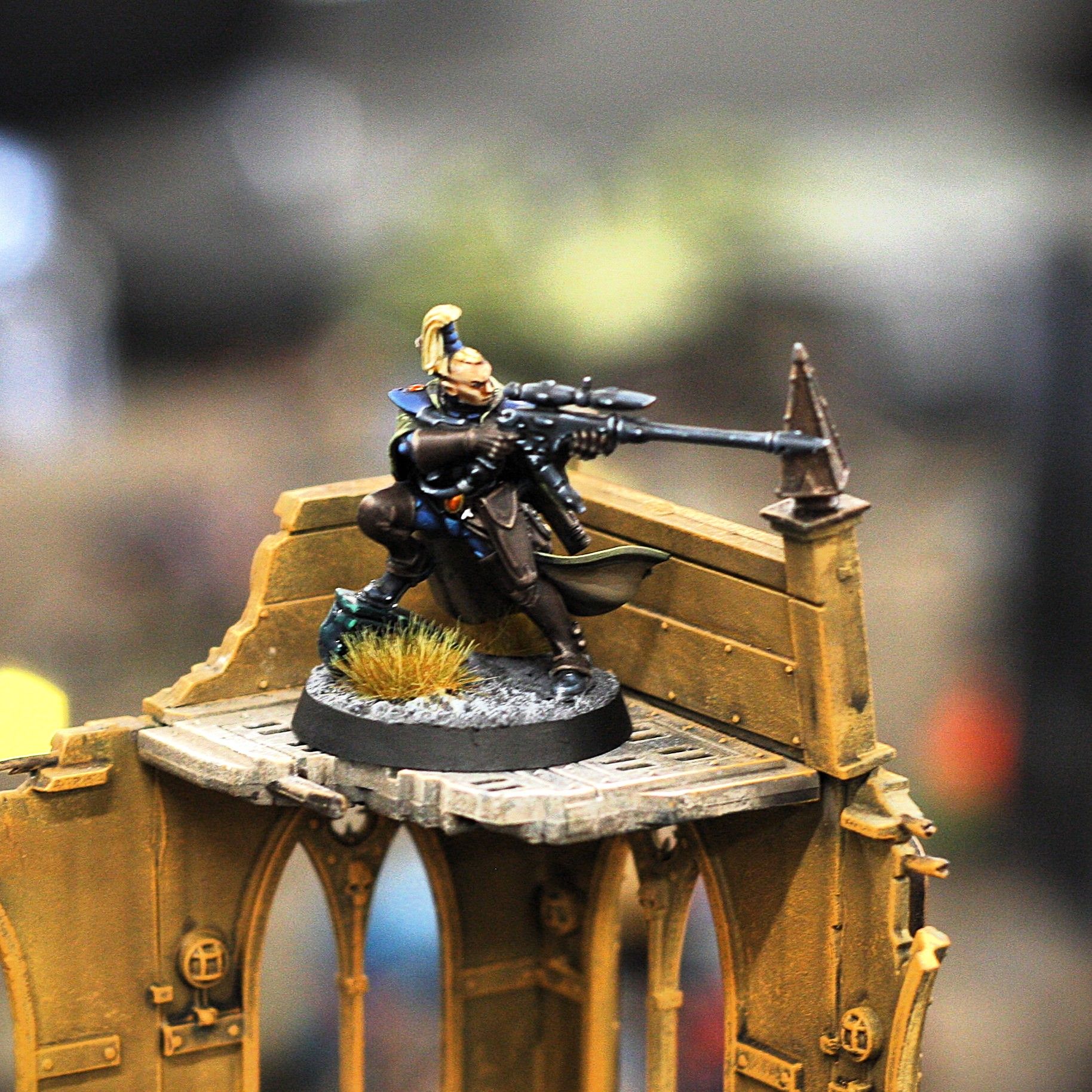
Night Lords and Imperial Knights by Jeff.
White World Eaters and Chaos Knights by Zach C.
Red World Eaters by Tony.
Khorne Daemons by Mike.
Blue and Black Neon Tyranids by Kelly.
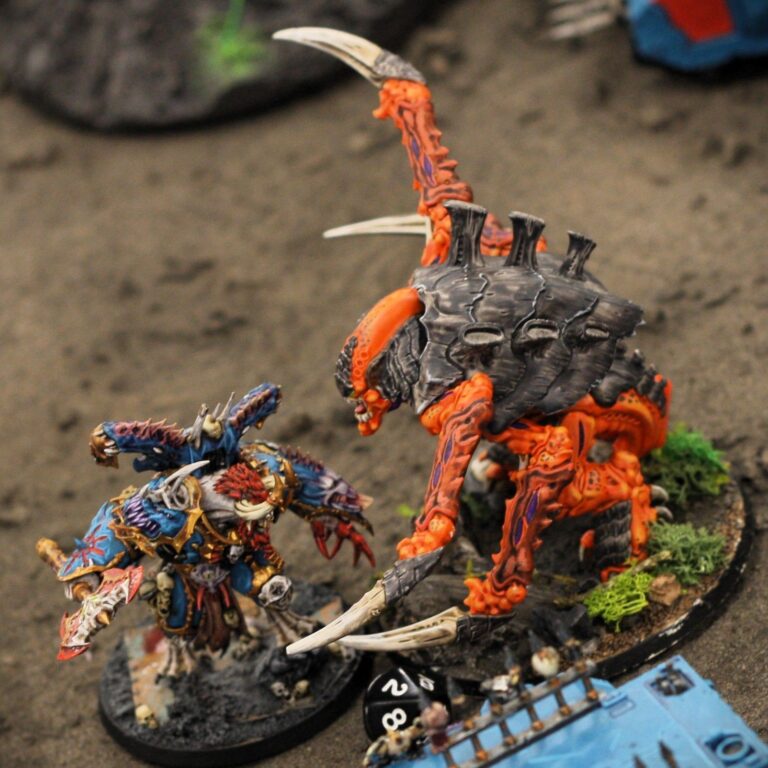
Black and Orange Tyranids by Jacen, Greg, Ian, and Elton.
Light Blue Chaos Space Marines by Mathias.
Rogue Trader Imperial Guard by Noah.
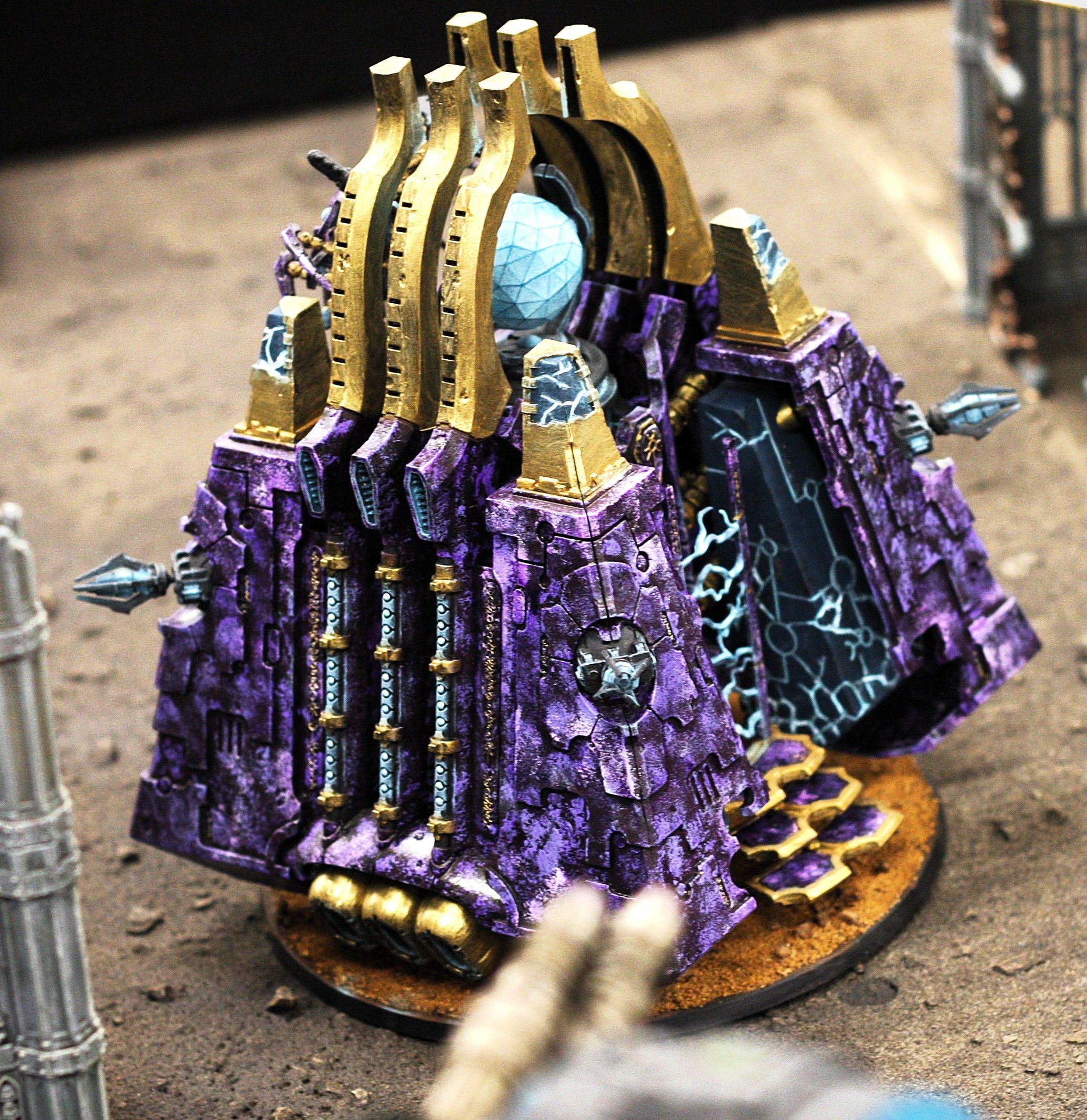
Purple and Gold Necrons by Zach D.
Gold, Silver and Green Necrons by Phonsy.
A copy of the rulespack can be found here.