Weekend and Definitive Events
By Ian
This month on the blog we did an update specifically for non-gamers and since our regular readers are (presumably) 40k players, I wanted to do a quick post for all our favourite people.
Recently on the Adeptus Terra Podcast, the hosts had a discussion about building interest in their community for Kill Team and I became the trope of yelling answers at my dashboard while listening. I have some thoughts and want to share them.
The Problem
Games are fun: specifically, Your Favourite Niche Game/The New Hotness/that-specialist-game-that-looks-really-cool-but-only-really-works-when-you-play-the-campaign-mode-for-six-months is fun. Obviously you want to get your friends or club playing because, not only do they not know what they’re missing, you need people to play with.
This used to come up a lot at our local group. We were focused around a store and every time there was a big release like a new game or new edition, people would jump in. Well, most people in this hobby can guess how often that focus shifted. It’s hard to run a nine month 40k campaign when everyone jumps ship for Shadespire halfway through.
Your “Main Game”
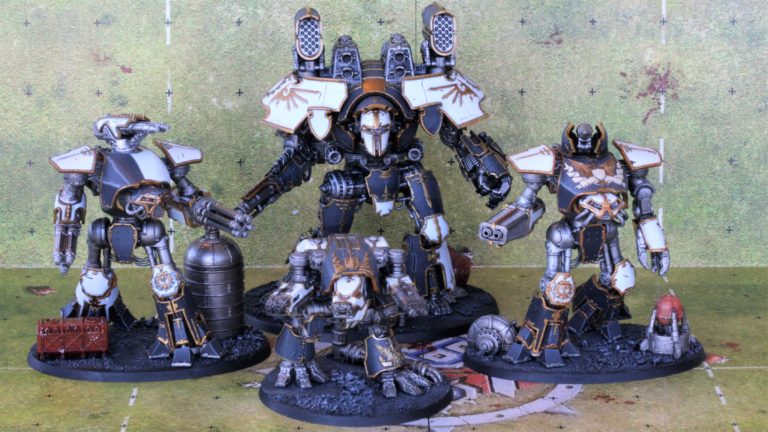
I have a lot of games, and have fond memories of playing others too that I no longer touch (RIP X-wing and Armada, those were good days), but at the end of the day I play 40k. Even when I’m drawn to another system for the gameplay (looking at you, Titanicus), or the vibes (*glances sideways at Heresy*), the lore, the armies, and, if we’re being honest, the amount of time and money I’ve sunk into my collection draw me back to 40k. Though there’s plenty of people in my group who play other games and are happy to play them with me, everyone has a 40k army: it’s the unifying game for our little club.
Whether or not it’s 40k, most people in the wargaming hobby will have a “main game”: the one they love and they’ll always come back to. If you want people to try something new, you’re asking them to take time away from their main game (and that time may already be limited by real life commitments). How do you draw people in and make it appealing?
Everything old is new again
Though I’m framing this piece around getting people involved in a new game, this could also apply to getting people into new modes of play: i.e. if you want to run a 40k campaign.
Look, we all have that grand vision of our favourite mode of play: whether it’s starting a whole community that exclusively plays Titanicus or running a long-time 40k campaign that tracks supply routes and has changing army rosters and unit experience and sector maps and…
These types of things are certainly possible, but they’re long term goals that need to be broken down into manageable chunks, or are just not realistic for you and your group.
Whatever your goals are, I’m going to suggest a few key points. These are applicable to a few aspects in our hobby, whether it’s community building, crafting a long running narrative, or getting people into a game.
Game days and weekenders
There was a time in my life where I was a member of a thriving wargaming club and regularly attended their twice monthly meetups, getting in games every week, and running campaigns with other dedicated hobbyists. That time is not now. I count myself lucky when I play one game a month: I’m just at a different point in my life.
What I can do though is nail down a day or weekend where I’m able to get multiple games in. I think this is really something the narrative community can learn from tournament organizers. Where narrative players tend to want to run long-time, sprawling campaigns, a weekend tournament is a one time commitment: you paint your stuff, show up for the weekend, have fun, and it’s done. A tournament is a manageable, easy-to-consume gaming experience.
If you’re drumming up interest in a new game, a one day event is similarly a great way to get people interested. They don’t need to ditch their main game, just get a force ready for a single event (and if it’s a skirmish game, that’s a pretty low painting commitment). Running these regularly (whether that’s monthly, annually, or somewhere in between) is a solid way to build up a community. If the game catches on, you’ll see more people playing it spontaneously and you’ll have available opponents. Finally, it’s important to run a few of these events before giving up. You may be disappointed by the initial turnout at your first few, but try it a few times before calling it quits. Asking for (and listening to!) feedback from attendees is also important to make sure you’re improving your events.
Running a campaign in a day is more challenging than setting up a tournament, but doable. You can tell a story in two or three games (or four or five if over a weekend): you could start with the initial invasion/planetfall/meeting engagement of patrols and finish with the final stand of the previous loser. If you’re doing more than two games, add some stuff in the middle: sabotages, ambushes, assassinations, take and hold, literally whatever you want to do. Setting up a simple tree campaign is a good way to plan this out, and I do suggest planning it out in advance so you don’t need to think on the fly (though you can always adjust depending on the results of the games).
Curtailing campaigns
This has been said by a lot of people on the internet, but it is worth repeating: plan the ending for your campaign. You should map out the ending early on in the planning, and, even if you don’t reveal the details to your players, you should know the ending by the time you’re releasing the campaign player pack. Again, this doesn’t mean you can’t tweak as the campaign goes on, but you should have a finale ready to use.
When I say ending, I don’t mean who wins: I mean how and when you’ll finish the campaign. Are you ending with an Apocalypse game? A team game? A three round gaming day? Again, the players don’t need to know (though if you expect people to bring fully-painted armies to an Apocalypse game, give them a heads up), but you should know what you’re building towards.
When the campaign ends should be communicated to your players. Make the expectations clear so players can plan around this. Are you asking for a game a week from each player for the next six months? Or one game a month for the next three? To participate, do they need to show up to every campaign day? All of these should be communicated to your players in advance.
We all have been in a campaign that didn’t finish, and, though we may have fond memories of those games, there’s no satisfying conclusion. Being able to point to a completed campaign and tell the story of what happened is rare and should be considered a point of pride.
Having an end point and knowing how long the campaign will last can also inform the rules you’re using. Maybe Crusade rules aren’t appropriate for a two-game campaign-in-a-day. Or perhaps there’ll be too much opportunity for players to build powerful Crusade rosters and you need a stronger balancing mechanic than what’s published in the core rules. Is there a chance for one side to have a runaway victory?
All of these things can be informed by the length of the campaign, and once you’ve decided the former the rules will follow more easily.
Bringing it all together
Finally, if you want to run that grand story with a sprawling campaign, you’re not precluded from doing that by using short campaigns or game days. Game day number one can be three games representing the invasion of the world, a two month campaign can be the counter offensive, and another game day can represent reinforcements entering the warzone. Each of these can have a definitive, satisfying conclusion while still taking place on the same planet and being part of the same war. You could even allow players to carry over Crusade rosters, if that’s your jam, letting storied characters and units really grow and develop their legend.
For me, I wouldn’t run my next campaign without setting up predetermined game days. I don’t know when I’ll get an opportunity to run this, but the schedule I would use is the following:
Day One: Kick off Game Day, two or three 1,000 point games
Day Thirty: Game Day Two, two or three 1,250-1,500 point games
Day Sixty: Game Day Three, two 1,500-2,000 point games
Day Ninety: Finale, one big team game, 2,000-3,000 points
Each game day would be a capstone to a campaign round. Players can play games between game days and have them count towards the outcome, but the game days are where an organizer can really add some flair with special terrain pieces or wacky rules.
This also gives players a nice roadmap: three months’ commitment, with game days on the last Saturday of every month. I’ve set it up as an escalation, but that’s not something I’d be set on. Communicating the schedule ahead of time would also allow players to ensure they’re free for the various game days (not that attendance would be mandatory) and set painting goals.
Lastly, if you like that schedule, feel free to use it! Consider permission granted.
Same plan, different applications
Though there’s a few different ideas I’ve touched on in this post, I think the take away is that if you’re trying to build a community or interest in a game, planning a game day, or running a campaign it’s important to be intentional and organized. We may have big dreams of our favourite game taking off or a campaign of epic proportions, but setting realistic, achievable goals will get you much further than half finished stories and rushed events.
If you have your own idea about how to plan a great campaign or build interest in a game, why not drop us a line at contactus@wrongsideofthemaelstrom.com?